
The Palio di Siena is a historic horse race held twice a year in Piazza del Campo on July 2 and August 16. The first Palio dates back to 1482, making it one of Italy’s oldest and most beloved traditions.
Siena’s neighborhoods, known as contrade (singular: contrada), compete in these races and spend the entire year preparing for them. The contrade are at the heart of Sienese culture. These close-knit communities play a major role in local identity. Think of them as a blend of neighborhood pride and hometown sports loyalty. If you ask a local where they’re from, they may tell you the name of their contrada before mentioning Siena or even Italy.
As one of Italy’s best-preserved medieval cities and a UNESCO World Heritage Site, Siena offers visitors a chance to step back in time. The Palio is one of the most exciting ways to experience the city’s traditions firsthand. Whether you’re visiting for a few days or studying abroad in Siena, witnessing the Palio is an unforgettable experience.
Siena Doesn’t Just Host the Palio—It Lives It
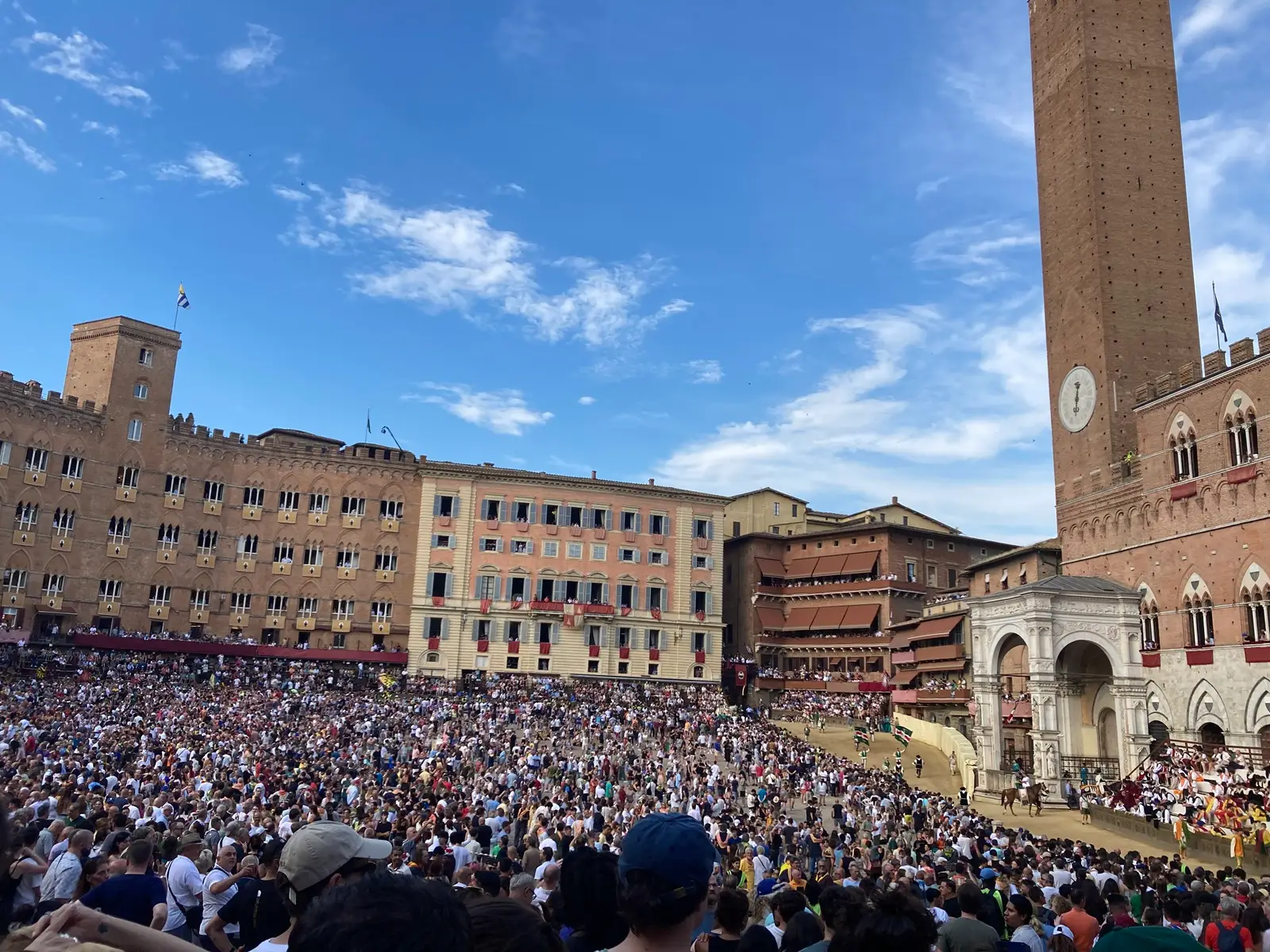
The Palio isn’t simply a festival that happens in Siena. It’s woven into everyday life. The city’s 17 contrade each have their own history, symbols, traditions, museums, and fierce sense of pride. Throughout the year, you’ll see contrada flags hanging from buildings, locals gathering for community dinners, and celebrations that honor centuries-old traditions.
As race day approaches, the entire city transforms. Streets fill with colorful banners, drummers and flag throwers rehearse for the historic parade, and conversations everywhere center around rivalries, predictions, and race strategy. Even if you’re only studying abroad in Siena for a few weeks, it’s impossible not to get caught up in excitement.
One CET Siena student reflected on the city’s enthusiasm: “My 9 a.m. class was cancelled that morning because my professor wanted to watch, so we were able to watch from the Piazza.” Want a closer look? Read about what a week during the Palio is like.
Palio Vocabulary to Know
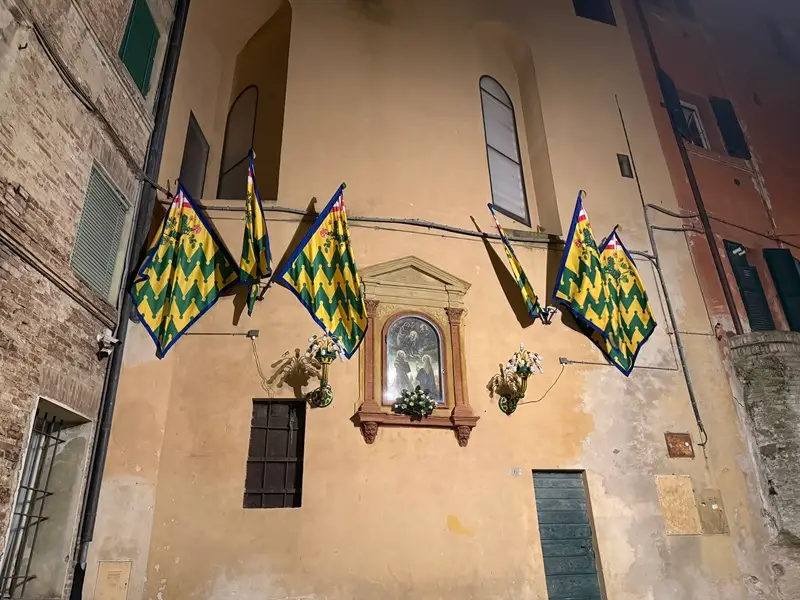
Contrada – A neighborhood of Siena. Each contrada has its own traditions, symbols, and community identity.
Piazza del Campo – The main public square in Siena’s historic center and the location of the Palio race.
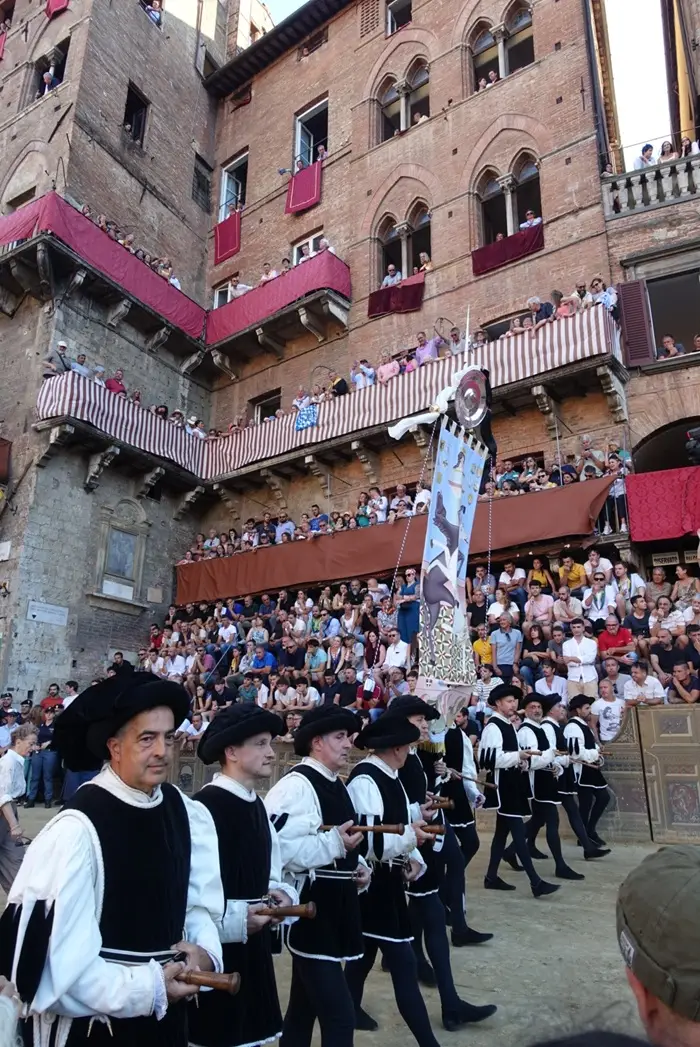
Corteo Storico – The historic parade that takes place before the race, featuring participants in medieval costumes who celebrate Siena’s heritage.
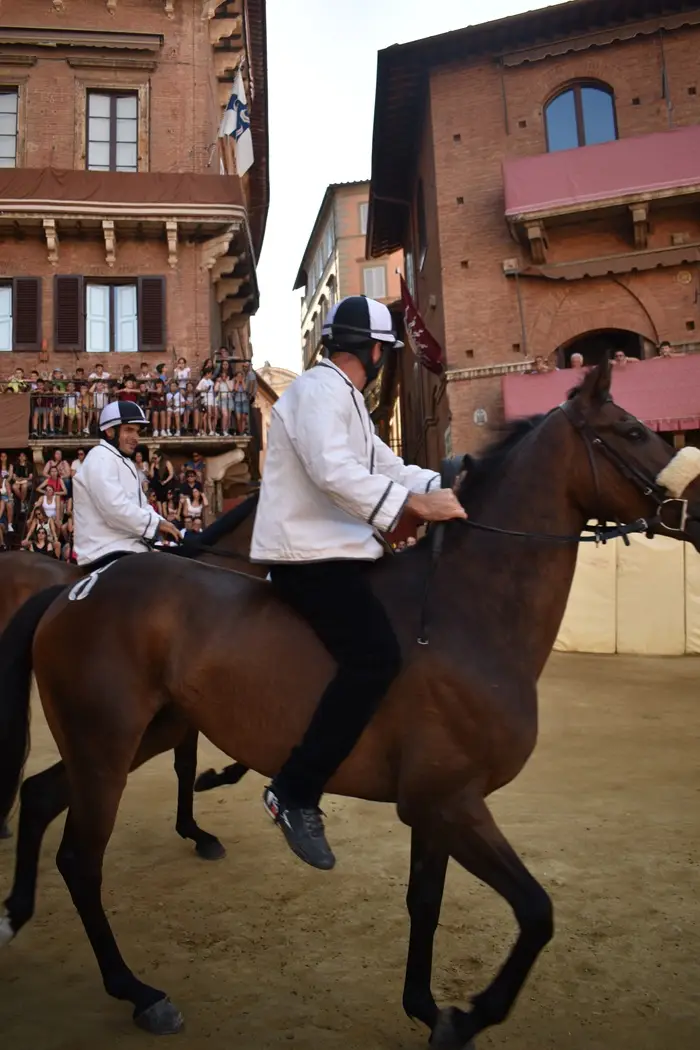
Fantino – The jockey who rides in the race, often bareback and sometimes representing different contrade from year to year.
Barbero – The term for the racehorse that runs in the Palio.
Cavallo Scosso – A horse without a jockey. Sometimes a jockey falls off their horse during the race. A riderless horse can still win the Palio!
Canapo – The rope that marks the starting line of the race.
Mossa – The official start to the race.
Drappellone – A hand-painted silk banner awarded to the winning contrada. A different artist designs the banner for each race.
What Is the Palio Like on Race Day?
Morning: The city begins filling with spectators. Locals dressed in their contrada colors gather throughout Siena while visitors make their way to Piazza del Campo to secure a viewing spot. Cafés and streets buzz with predictions and excitement.
Afternoon: The Corteo Storico, Siena’s historic parade, winds through the city. Lasting around two to three hours, the procession features hundreds of participants in Renaissance-era costumes.
Evening: The race begins. Despite all the anticipation, the Palio itself typically lasts only 75 to 90 seconds. Horses race three laps around Piazza del Campo, covering roughly 1,000 meters (about 0.6 miles). It may be one of the shortest sporting events in the world, but it represents centuries of history and months of preparation.
Night: Celebrations continue throughout Siena as the winning contrada gathers to celebrate its victory long into the evening.
Tips for Attending the Palio
- Wear Comfortable Shoes – Siena’s historic center is filled with steep hills, uneven stone streets, and cobblestones. You’ll likely spend several hours on your feet, so comfortable walking shoes are essential.
- Bring Water – July and August can be very hot. Public fountains are available throughout Siena, but lines often become long as race time approaches.
- Arrive Early – If you want to stand inside Piazza del Campo, plan to arrive at least three to four hours before the race. Once the square fills up, movement becomes limited and viewing opportunities decrease.
- Keep Valuables Secure – Large crowds are part of the experience. Use a zippered crossbody bag or another secure option to keep belongings safe.
- Learn Which Contrada You’re Staying In – Ask your host family or CET staff which contrada you’re staying in. Understanding its colors, symbol, and history adds a richer local perspective to your experience.
- Plan Transportation Ahead of Time – Many streets close on race day and public transportation schedules may be modified. If you’re staying outside Siena, check train and bus schedules in advance and prepare for crowded departures after the race.
From the excitement of race day to the deep-rooted pride of the contrade, the Palio offers a unique window into the culture that make Siena unlike anywhere else in the world. For study abroad students, it’s an opportunity to experience a centuries-old tradition alongside locals and gain a deeper understanding of Sienese life! Whether you’re planning a summer or a semester abroad, CET Siena offers housing in a homestay or apartment, Italian language classes for all levels, and a wide range of electives that allow you to immerse yourself in the city both inside and outside the classroom.