
Written by Laura Segura (University of Virginia), Student Correspondent for CET Siena, Summer 2026
What is Palio?
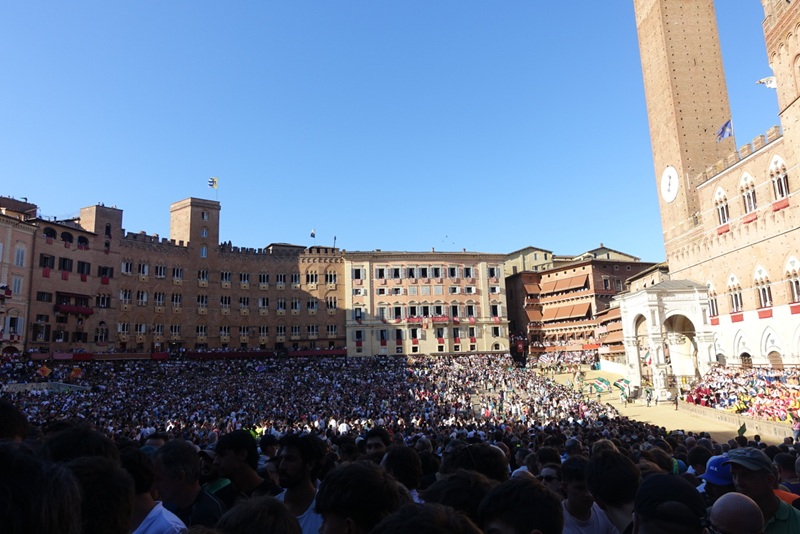
Palio Palio Palio. I kept hearing this word leading up to my departure date for Siena. A quick google search showed it was a horse race that happens twice a year, once in July and once in August. How could a horse race that lasts 90 seconds be so important to a city?
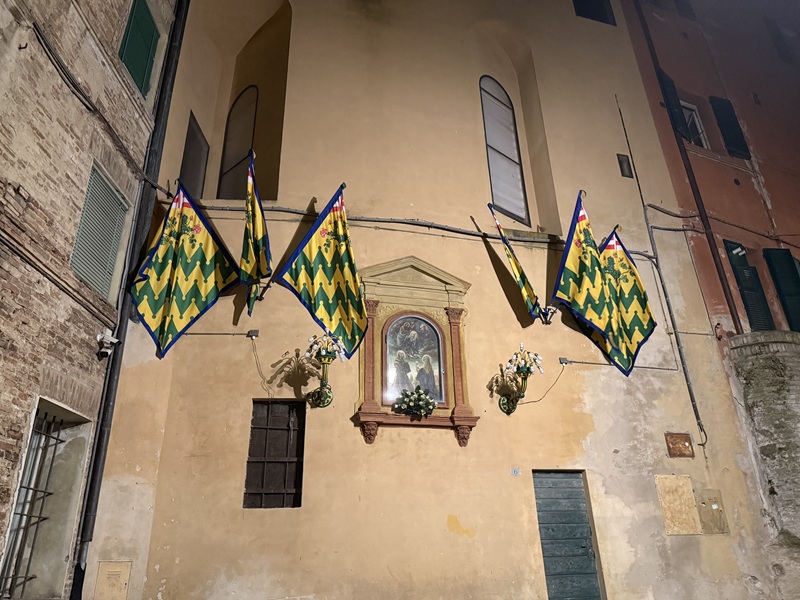
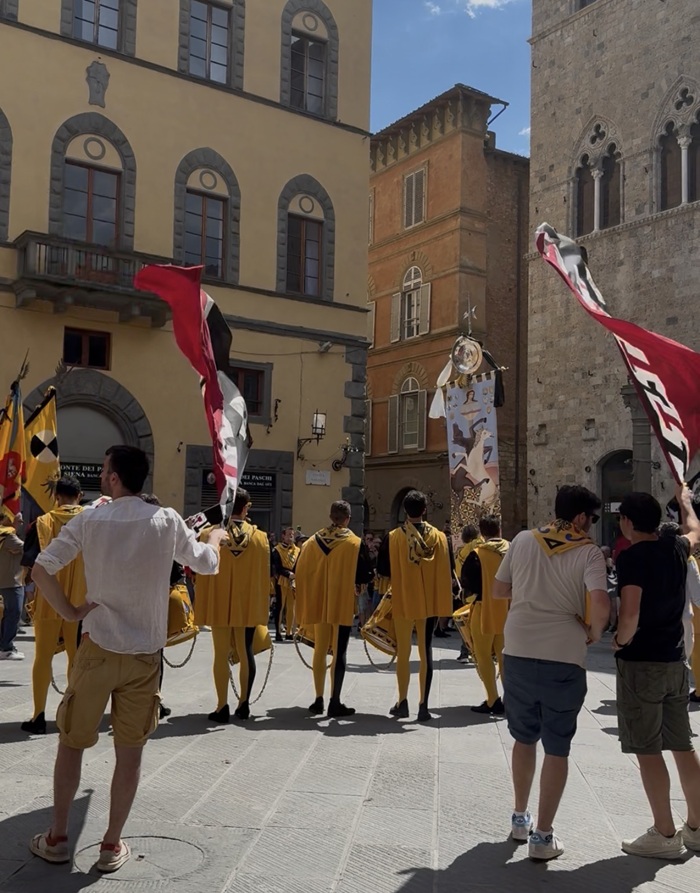
To understand the Palio first you have to understand contradas. Siena is divided into 17 contradas, or districts. What contrada you are in is an important part of the identities of the Sienese. They’re very close-knit communities that almost act like a city-state with a captain that handles everything Palio. For a contrada, winning a Palio is like being reborn.
This year the contradas running the July Palio were chosen May 31. I could feel the excitement rumbling in the Piazza del Campo that day as the remaining four contradas were randomly chosen. As the July 2nd Palio date got closer and closer, this excitement grew.
What Does Palio Week look like?
Three days before the Palio, at 9am potential new horses are ridden around the Piazza to test how they would race Palio day. My 9am class was cancelled that morning because my professor wanted to watch, so we were able to watch from the Piazza.
Pro-tip: Show up at least 30 minutes before any trial run to get into the Piazza and make sure to bring lots of water and a hat because even at 9am it can feel like 100 degrees outside.
The captains of each contrada will then discuss what horses should be chosen for the Palio. Later that day, after the captains have chosen, the horses are randomly assigned to a contrada. I was lucky that my Italian language professor took us because it was happening during class time. She was able to give us insight into which horses were considered the good horses and which weren’t.
You could also tell from the chosen contrada’s reactions or their rival contrada’s reactions. When the Torre contrade got assigned a “bad” horse, their rival, the Oca contrada, were cheering as loud as possible. Jockeys are chosen quickly after the horses are assigned and at 7:30pm every evening there is a trial run leading up to July 2nd. I made the mistake of not showing up 30 minutes before the trial run, so I ended up having to watch it on the TV.
Palio Day
Palio day was finally here.
It felt like my whole summer had been leading up to this big day. By 1pm, my friends were ready to camp out at the Piazza and stay there until 7:30pm race time. This preparation and excitement was quickly cut short when my homestay family texts me, Il Palio rimandato a domani. The Palio was postponed. So, I take the rest of the day to relax since classes had already been cancelled.
Palio Day For Real This Time
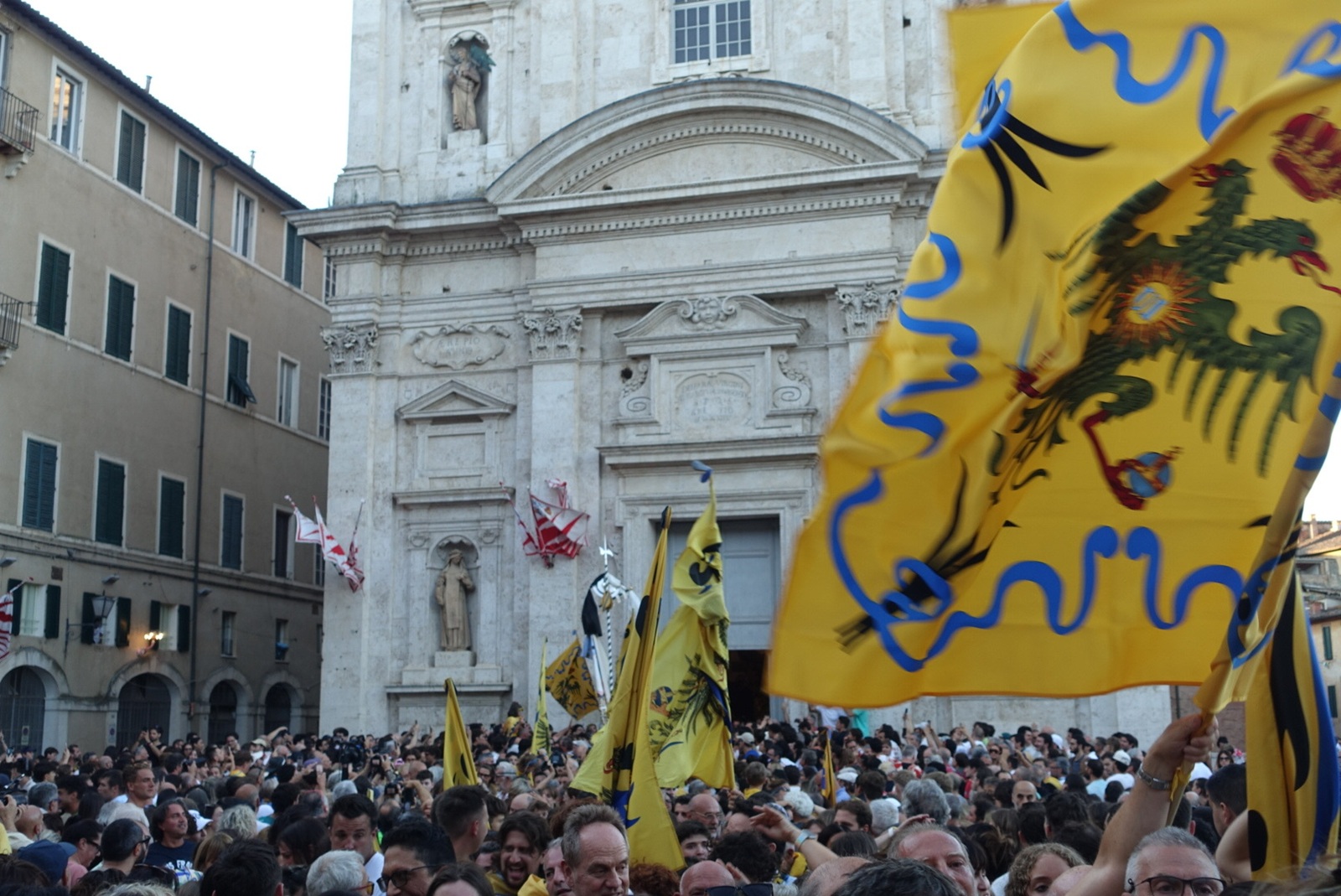
The next day, I got no texts saying it’s been postponed, so we show up at the Piazza around 4:30pm and camp out until the 7:30pm race. By this time, the Piazza is packed full.
Pro-tip: if you want a better viewing spot, go towards the edge of either side where it is slightly elevated higher than other spots.
The horses come out and the racing order is randomly chosen. After some back and forth, the race finally starts and the Aquila contrada wins!! This is huge because this contrada was the nonna, or grandmother. This means they were the contrada that hadn’t won a Palio in the longest amount of time, 34 years to be exact. There was so much cheering but especially crying. It was something very beautiful to watch, and I feel lucky that I was able to witness it. For the rest of that night, they were celebrating all around the city.
Some Important Things to Remember
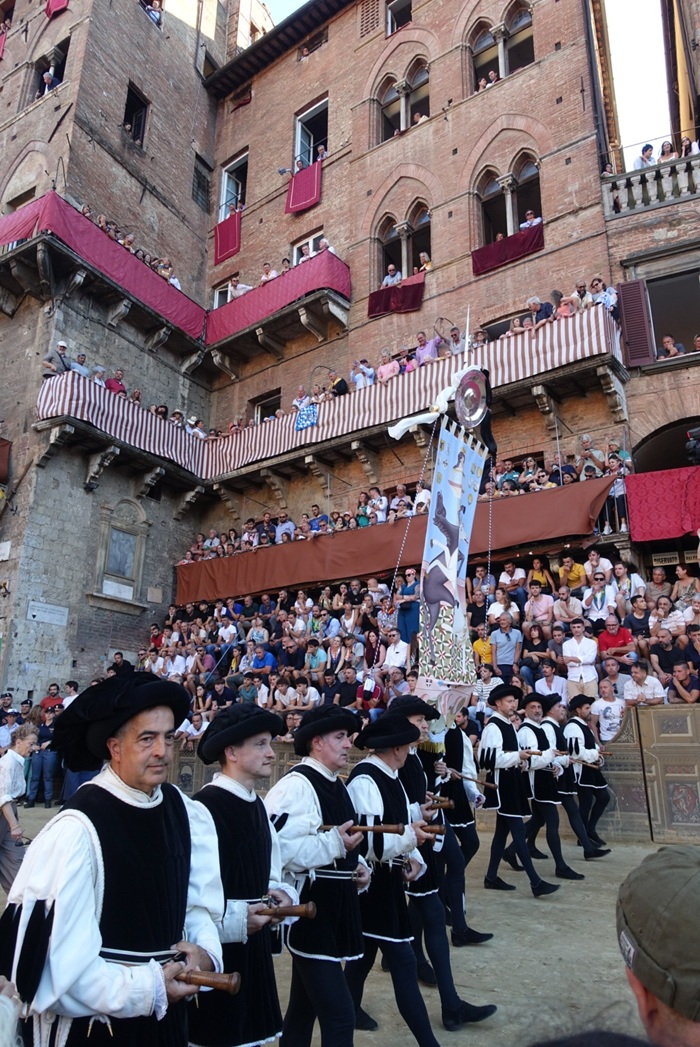
First and foremost is that the Palio is by the Sienese people and for the Sienese people. It is a privilege to be able to watch the Palio in person as an outsider, so don’t overstep any boundaries or try to insert yourself. Be respectful when watching, and most importantly never laugh at anyone because the strong emotions contrada members might display are very real for them even if you can’t fully understand them.