Written by Aaditya Kotadia (University of Virginia), Student Correspondent for CET Siena, Spring 2026
Mosaic Viewing and Making in Ravenna
During our CET-catered weekend in the Emilia-Romagna, all of us CET students visited Ravenna—a mid-sized city which blew us away from the first mosaic-embedded street sign. During the start of our tour, we were all also surprised to learn that Ravenna was actually the capital city of the Western Roman Empire during the early 5th century due to its strategic defensive geography. It was actually because of this, and the following empires of the Ostrogothic, and Byzantine which inhabited Ravenna that brought immense wealth, resources, and master craftsmen from the East to the city. These conditions made Ravenna into the home of some of the most significant mosaics in the world.
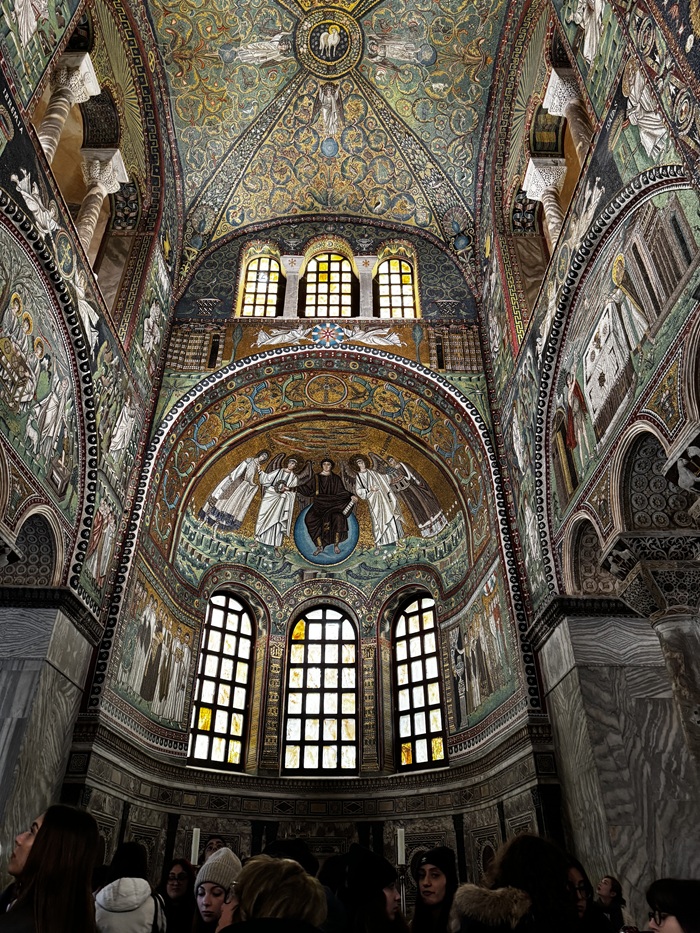
One of the most incredible sights I’ve seen during my time abroad was in the Basilica of San Vitalie, where the gigantic walls and roofs were covered with incredibly masterful mosaics—so detailed that I thought they were paintings at first. I later learned that this Basilica is also a UNESCO World Heritage Site!
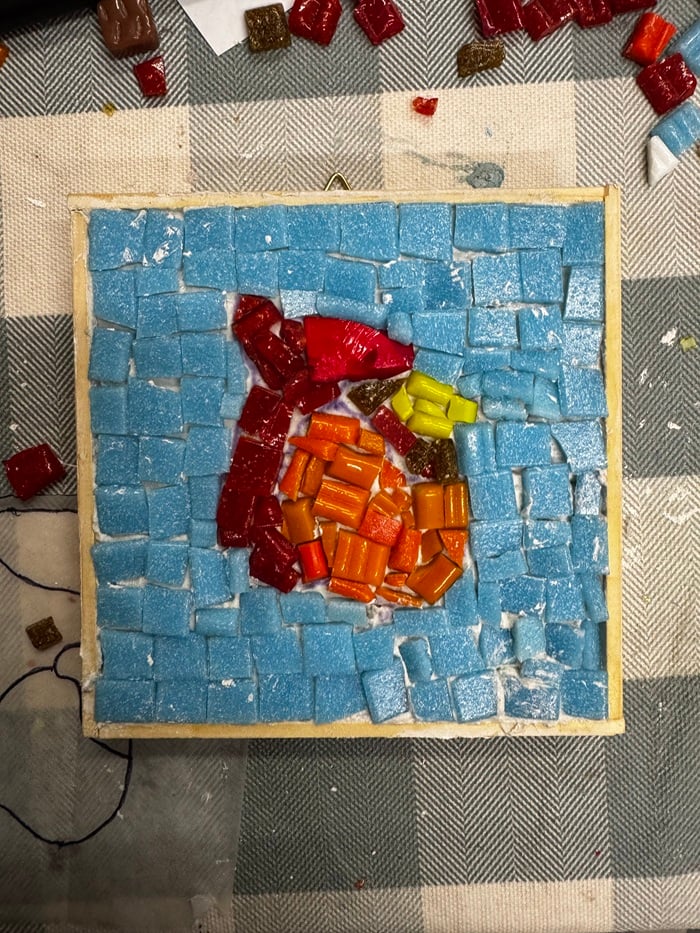
To end off the day, we were able to make our own mosaics and learned first-hand how hard it is to make a mosaic, much less something as emotionally-invoking as those we saw just a few hours earlier. The mosaic I made was meant to represent a Cardinal, the logo for the app I’m developing, although it was mistaken for a pear and a fish by those around me.
The Most Vinegar I’ve Had in a Day
The day after our trip to Ravenna, CET took us to Modena, a city famous worldwide for its traditional balsamic vinegar. During our tour, I was surprised to learn that genuine Modena balsamic actually relies on just one type of grape. To create its complex taste profiles, producers age the vinegar for 12 to 25 years in a “battery” of different wooden barrels arranged in descending order of size.
Each type of wood, whether it’s chestnut for a rich dark color, cherry for delicate aromas, juniper for a distinct fragrance, or oak, mulberry, and acacia for durability, infuses the vinegar with its own unique essence over the years. We learned that these recipes and techniques vary from family to family, and it is a long-standing tradition to dedicate a specific set of inscribed barrels to a family “heir.” However, the final product is strictly regulated: it must be validated by one central agency (Consorzio Tutela Aceto Balsamico Tradizionale di Modena DOP) to ensure quality and can only be sold in that agency’s uniquely shaped bottle.
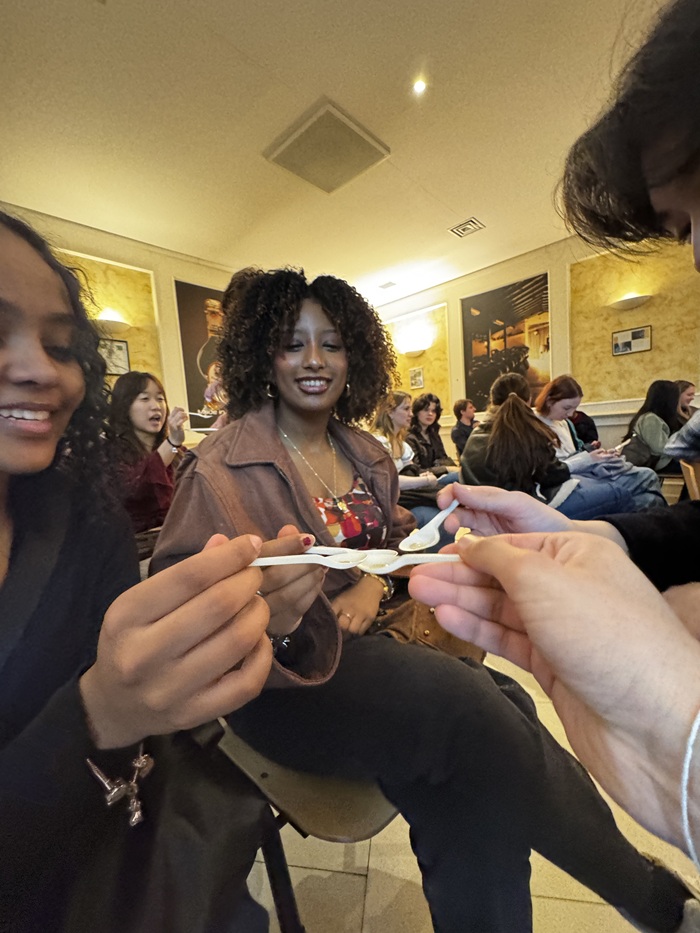
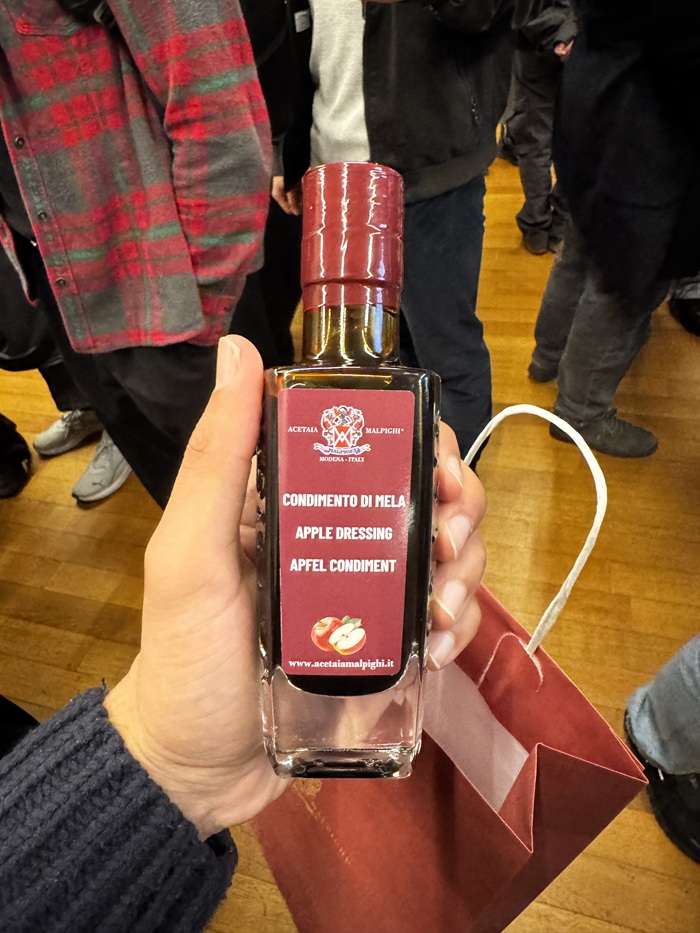
We got to see this fascinating process firsthand at Acetaia Malpighi, a family-run production house that has been producing vinegar in over 3,500 barrels since 1850. After learning about the decanting techniques and seeing the historic barrels (some dating back to the Napoleonic era!), we did a “vertical” tasting. We used small spoons to sample everything from their youngest vinegars to the oldest traditional balsamics.
Since the certified traditional balsamic vinegar was quite expensive, I ended up taking home a bottle of their Condimento di Mela (Apple Dressing). It uses very similar aging and creation techniques to the traditional grape vinegar but swaps out grape must for Italian apple juice, and ended up only being 12 euros.
Ferrari Museum Tour
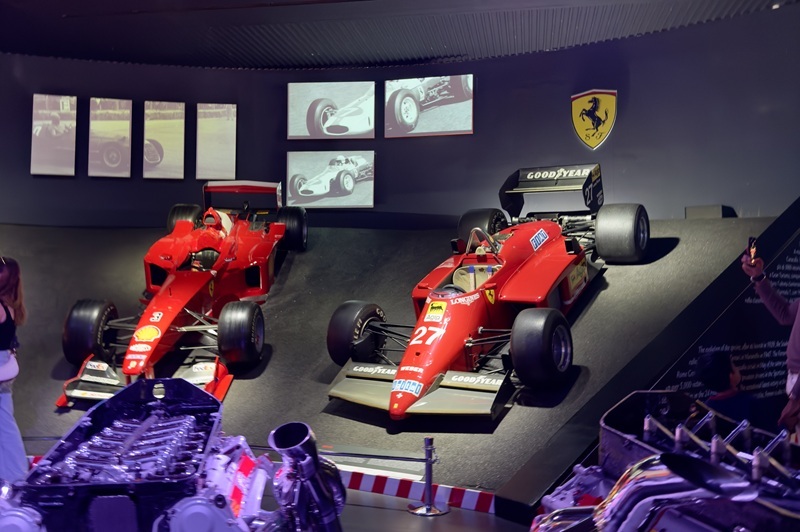
Right after our vinegar tasting in Modena, CET took us straight to the Ferrari Museum. Walking through the sleek, dimly lit exhibition halls, we got to see the evolution of these machines up close and the evolution from Ferrari’s vintage classics to the modern Formula 1 racecars. Seeing the massive, intricately designed engines fully exposed right next to the cars really put into perspective the incredible level of mechanical engineering and precision required to build them.
What I also found pretty interesting was unexpectedly many of the sponsors on the Ferrari F1 car. Looking at the nose of the modern F1 car, it was cool to spot logos for AWS and IBM front and center. It was a great reminder for me of how much cloud computing power, telemetry, and real-time data analysis actually drive the sport today, with many considering F1 to be the most technologically advanced sport in the world.
Carnival Floats and Parades in Foiano della Chiana
The following week after Emilia-Romagna, CET took us to Foiano della Chiana, the hometown of Valentina, one of the Italian roommates in our program. Here, we got to experience their famous Carnival, which went way above almost all of our expectations.
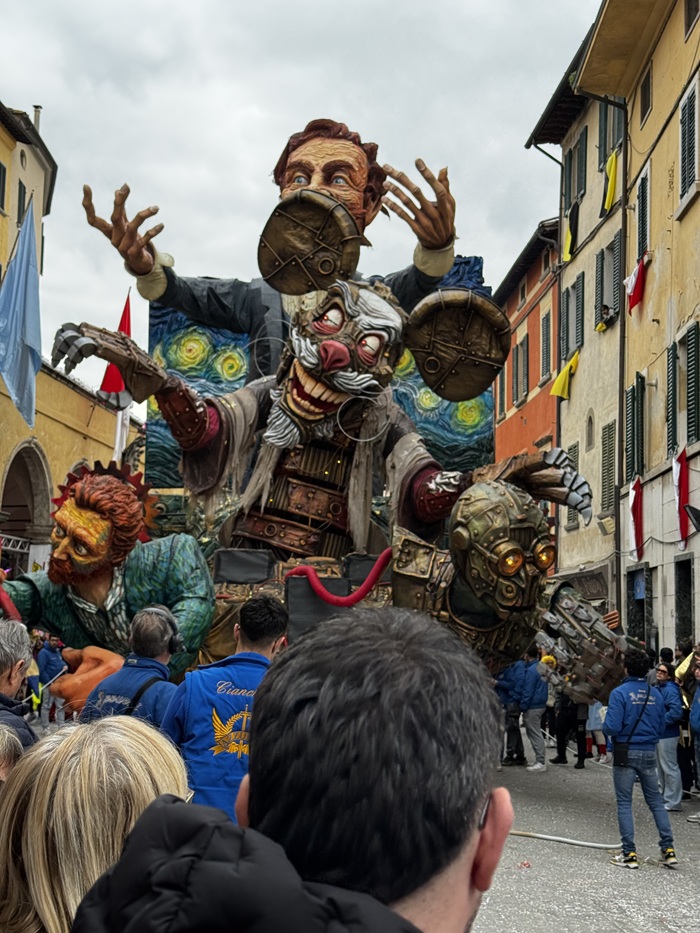
What made this parade so incredible was that the massive floats weren’t just static, but instead physically evolved as they moved through the streets to showcase a shifting perspective. It was amazing to watch the contrast between the booming music and towering animatronics against the graceful, choreographed community dancers below. The dancers added a deeper layer of interpretation to what each float was expressing, and seeing the whole town dedicate themselves to creating something so artistic and inquisitive was so cool to see in person
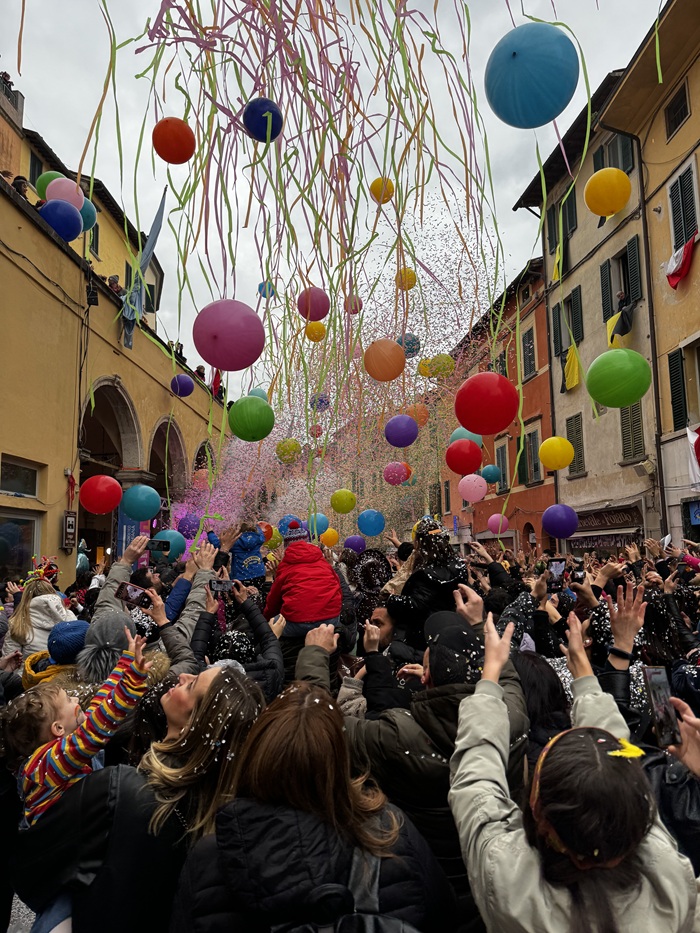
The first float of the parade was the one which spoke to me the most. This one explored the theme of artificial intelligence versus human creativity. It featured classic figures like Vincent van Gogh pitted against a harsh, mechanical robotic rat. As the parade progressed, the float transformed, with Van Gogh eventually revealing himself and rising above the machinery to symbolize human creativity ultimately coming out on top. The event ended with a massive, vibrant celebration in the narrow streets, filled with giant bouncing balloons, colorful confetti and streamers as the entire community came together.
Surprise Birthday
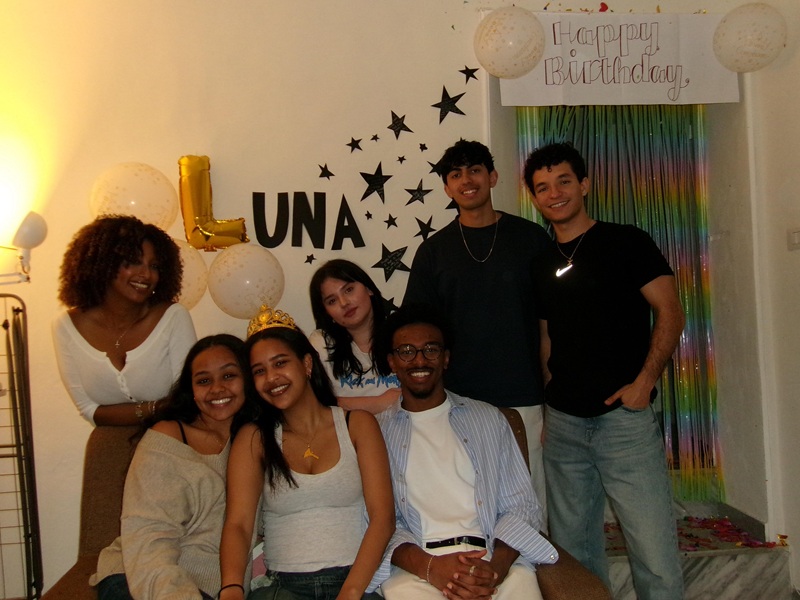
March 16th was a very special day for one of my close friends here in Siena! I first met Luna at orientation on one of the first days of the CET program, and that day, she turned one year older! With her roommates and a few more of our friends, we organized a surprise party for her at her house, with Maya (one of her roommates), insisting they go out for gelato to celebrate while we decorated.
Rushing home from class a 15 minute walk away, we cut out and hung up stars, wrote messages, blew and taped up balloons and got our confetti cannons ready. Her Italian roommate, Erica, also baked this incredible cinnamon roll cake which filled the apartment with an incredible inviting and warm aroma. When Luna got back (and got covered in confetti and hugs), all of our faces were filled with smiles (and cinnamon rolls)!
Mug Painting
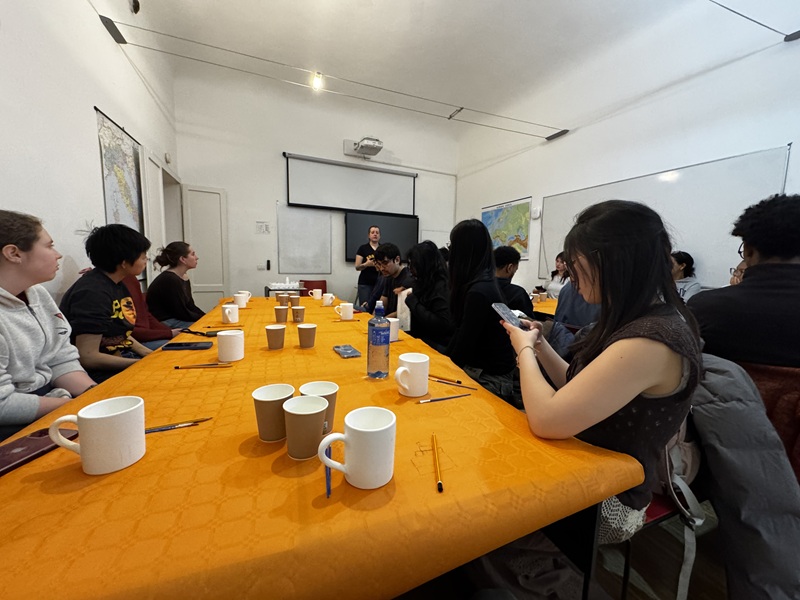
Although I’ve attended almost every single CET event, this one was definitely one of my favorites. CET brought in a local Sienese mug painter, who walked us through the entire process. From explaining the material on the mugs, to how the mugs get baked (and why that affects how we should paint mugs), it was a really fun experience to learn about the whole world of mug painting. We even found a few tricks of our own to cover up our mistakes, like using the other side of the paintbrush to chisel away the top most layer of paint before washing it off with a wet paint brush! Although it wasn’t a perfect fix, it got the job done!
A few days before this event, I realized that I didn’t have any souvenirs from Siena yet, so I made this event the perfect time to make an extra special one. Although I practically have every detail of the Piazza del Campo (the central square of Siena ) engrained in my mind, I still pulled it up on my phone to make sure I got every detail right. Since the tower of the Piazza is almost as tall as the rest of the Piazza is wide, I had to get creative with how to design it on my mug! I ended up having the tip of the tower wrap around the top and upside down on the other side of the mug, making my souvenir truly unique.
It was also really inspiring to see the designs everyone else was able to create, and I was fully blown away by how artistic and creative everyone in the program was—I mean, I would have expected some of their mugs to be sold in stores! After about a week, we received our baked mugs (fully cradled in bubble wrap), and I’m super happy with how it turned out. It’s definitely gonna make a good addition to my kitchen cabinet!
Thessaloniki, Greece
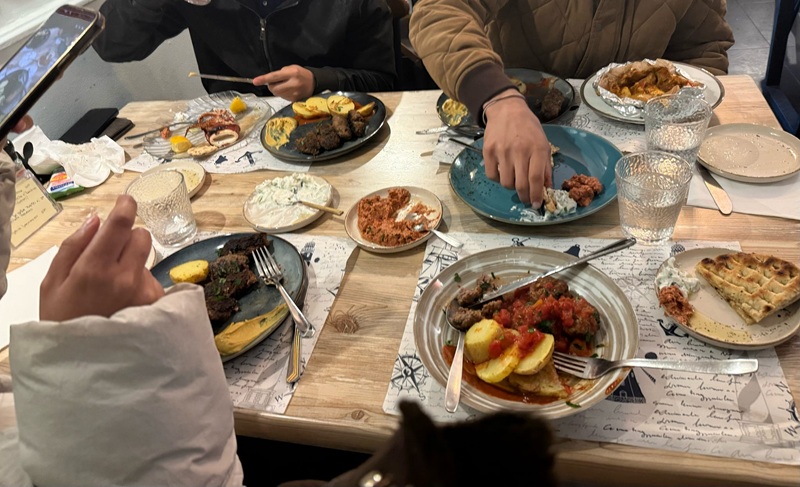
When I pictured myself going to Greece, I imagined white buildings with blue domes, and clear water with white sand. When I landed in Thessaloniki at 8 PM (after my friend Maya recovered her contacts which she left on the plane), the first thing me and my three CET friends did was get some snacks at the airport convenience store. This basically set the tone of the whole trip. While we knew that Thessaloniki was the food capital of Greece, we were truly blown away by the assortment of food available almost everywhere in the city.
On our first night, after dropping off our stuff, we took a bus to the Rotunda, which is one of the oldest and most important religious monuments in Thessaloniki. Built around 306 AD by the Roman Emperor Galerius, it was originally intended as his mausoleum or a temple dedicated to Zeus—which I thought was super cool!
However, while we thought this would be what took our breath away, we were even more impressed by just how many restaurants and food stops surrounded it. It was truly endless, practically in every decision as far as you could see there was food. I ended up getting a 2 euro gyro, honey soaked donut holes, and a pineapple-banana smoothie! We also met some other exchange students who lived in Thessaloniki for the semester, and got their food recommendations for the next night.
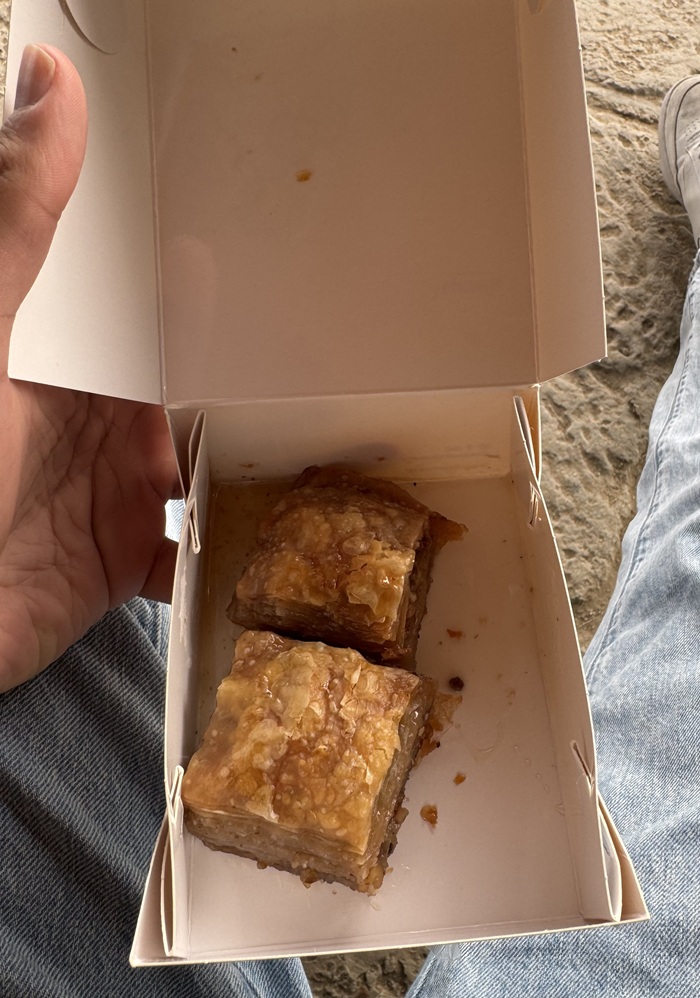
On the second day, we took a day trip to Afytos, a hilltop village of stone houses and cobbled streets overlooking the Toroneos Gulf. Here, I had the best baklava of my life, filled with honey that made each bite truly magical. It was just firm enough to have a bit of resistance at the start of the bite, but beautifully melted and exploded with honey once you started chewing. While Thessaloniki had an incredible amount of friendly (stray) cats, we met around 15 of the little guys right outside the bakery, all with unique patterns and colors!
On our second night before our 6 AM flight, we decided to get one last bite to end the trip off, and I’m very glad we did. We had some of the best pita bread of our lives, and I got some Souvlaki, which are Greek grilled meat skewers! Very tasty. While I had to skip out on gelato for the next week to try and recover, Thessaloniki was one of my most laid-back trips, which was much needed after Spring Break!
Biking and Cheesing in Pienza
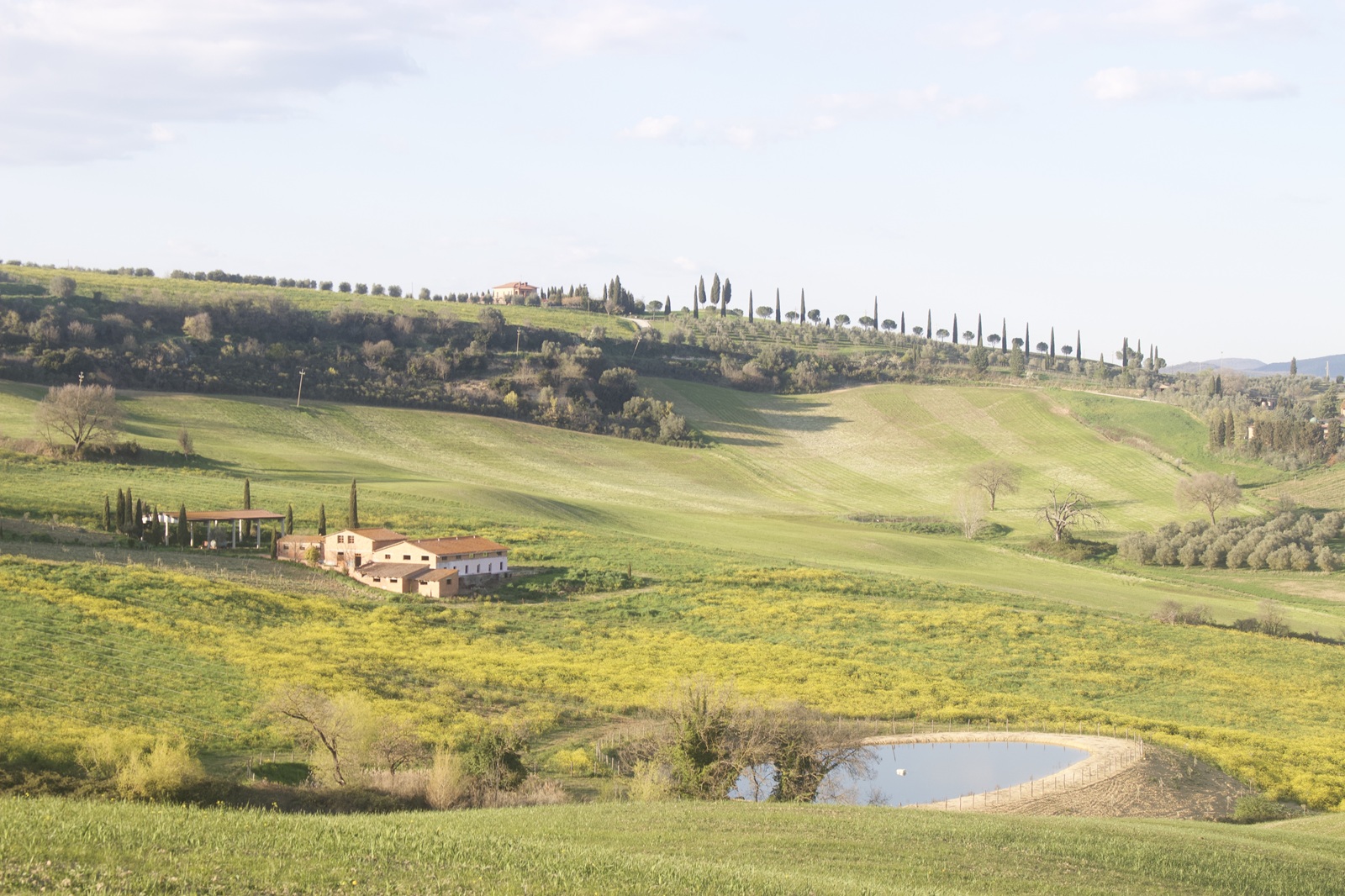
Pienza is widely celebrated as the “Ideal City” of the Renaissance. Located in the heart of the Val d’Orcia in Tuscany, the small hilltop town of Pienza was redesigned in the 15th century by Pope Pius II, who transformed his birthplace, Corsignano, into a model of urban harmony. Beyond the city itself, Pienza was so vividly incredible.
For the entire bus ride from Buonconvento to Pienza (there was no direct travel to Pienza from Siena), my camera app was open and my eyes were wide. It was absolutely stunning and surreal being nestled between the greenest green hills and tuscan trees on a warm, breezy spring day. Pienza is also world-famous for its sheep’s milk cheese, Pecorino di Pienza, which we found out went even better with their honey! Even their Pecorino-flavored gelato was super tasty!
We were also lucky enough to bike through the rolling Tuscan hills of Pienza, which was an adventure of a lifetime. Riding side by side on gravel roads with Tuscan trees guiding our path was something straight out of a movie, and every new path had its own charm. I’m definitely gonna go back one day to bike and eat the Pecorino gelato!