Written by Charlotte Dixon, (Pomona College), CET Prague, Fall 2026
As a prospective student, I remember the idea of taking classes in a foreign country with Czech professors feeling daunting. Having reached the halfway point of my semester at CET Prague, now feels like a good time to reflect upon my academic experience.
The Basics
Most CET students take five classes while abroad:
- One Czech language course (required)
- One core course (Economics, Business Management, Global Security Studies, Central European Studies, Jewish Studies, or Psychology)
- Three elective courses
- I am taking Czech Resistance: Dissent, Punk, and Parallel Cultures, Nationalism, Minorities, and Migrations in Europe, and Internship Seminar course which supplements my internship.
Each course meets either twice a week for 90 minutes or once a week for 3 hours (with a few short breaks) between Monday and Thursday. Classes span from 9am to 7pm each day, but most people are in class for around 3-4 hours per day. Having a four-day week means that students can travel starting Thursday evening. This is particularly nice because Thursday flights are often cheaper than Friday ones!
Each of my courses has a slightly different character, and has a different approach to teaching. Below is some information about two of my favorite courses with CET.
Core Course: Economics
My core course is economics, which automatically enrolls me in the Central European Political Economy in a Global Context course. While many students in the economics core course are economics or finance majors, significant prior experience in econ is not required. I am a philosophy major, and came in having taken only principles of microeconomics and principles of macroeconomics. This was more than sufficient!
The econ core course meets twice a week for 90 minutes on Mondays and Thursdays. The course features a midterm and a final exam, but most of my coursework centers around our debates. At the beginning of the semester, the class split into four country teams: Czechia (my team!), Poland, Hungary, and Austria. Once every two weeks, three country teams (with the fourth as moderator) debate different dimensions of the Central European political economy (financial institutions, markets, etc). The debates present a meaningful opportunity to apply the theory knowledge we learn during lectures to real-world economic systems.
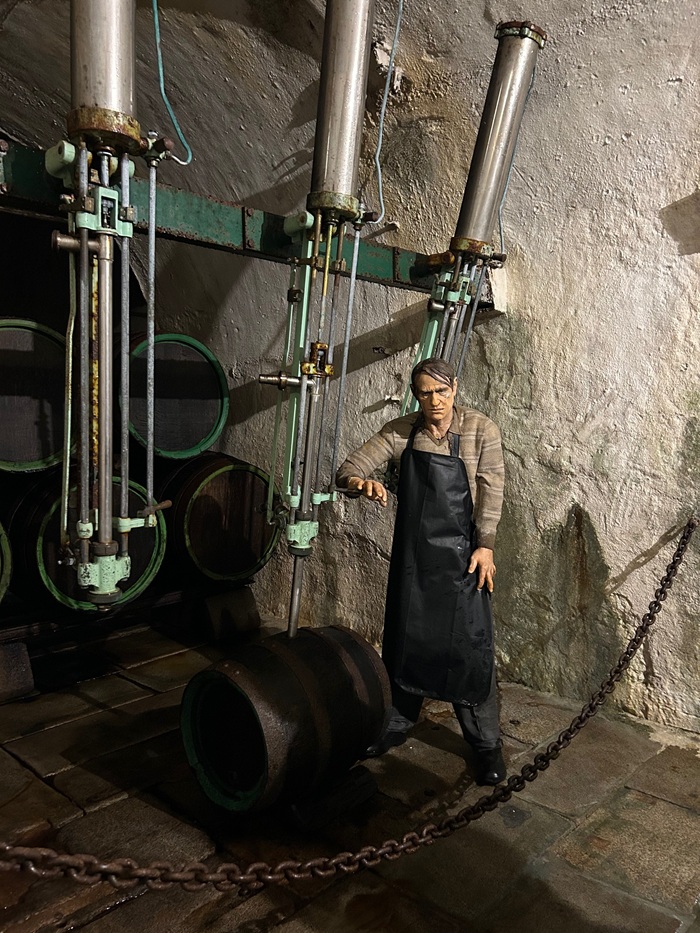
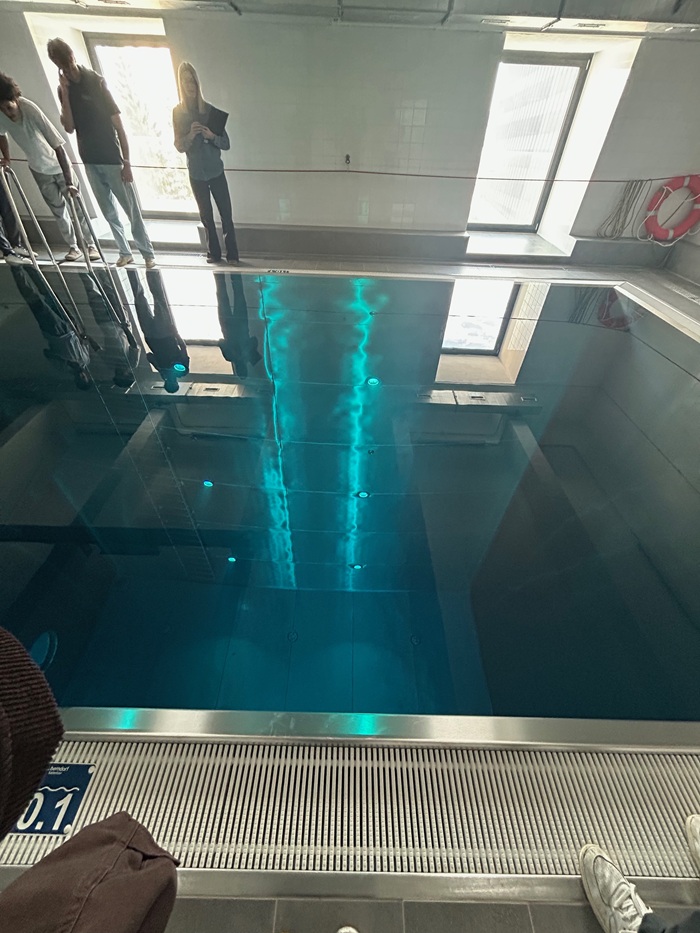
The economics core course also features field trips and Traveling Seminars as an experiential learning component. In September, we took a field trip to Plzeň. It is the fourth largest city in the Czech Republic and home to the Pilsner Urquell beer factory. In the morning, we toured the Pilsner Urquell factory, which has a large underground complex of tunnels and filtration equipment. We learned about the economic development of Pilsners and got to sample the beer! Later in the afternoon, we had a tour and short lecture at SIT Port, an innovation center that helps young people learn technical and entrepreneurial skills.
Czech Resistance: Dissent, Punk, and Parallel Cultures
My elective course on Czech Resistance is a 3-hour seminar held once a week. The professor of the course was a member of the Czech underground music scene during the communist regime, and continues to produce music and involve herself in alternative culture spaces. As a result, she has a unique perspective on Czech resistance and dissent. Our course centers around the alternative music scene, but includes units on psychedelic research, graffiti, and street art.
For each class, we are expected to complete readings, write a short, informal blog about what we learned last class during lecture or a field trip, and a short dialectical map write-up about one of the readings for the course. In class, we start with a short lecture from the professor, then have a student-led presentation and discussion, and finally we go on a field trip to a site related to the unit we are working on.
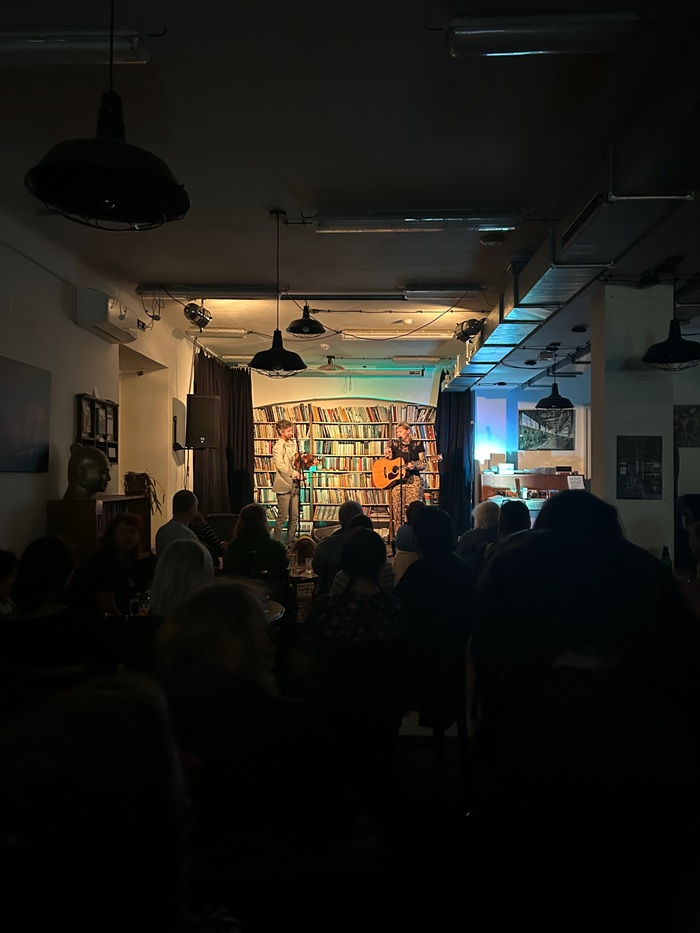
One of my favorite field trips was to an alternative culture space called Citarna Unijazz. We went to see the “baptism” of an alternative music band’s new album, which featured lots of political messaging. The songs were sung in English, Czech, Irish, and Danish. The performance took place in a cozy reading room, but the venue also featured an art gallery and a small garden with lots of political graffiti and sculptures.
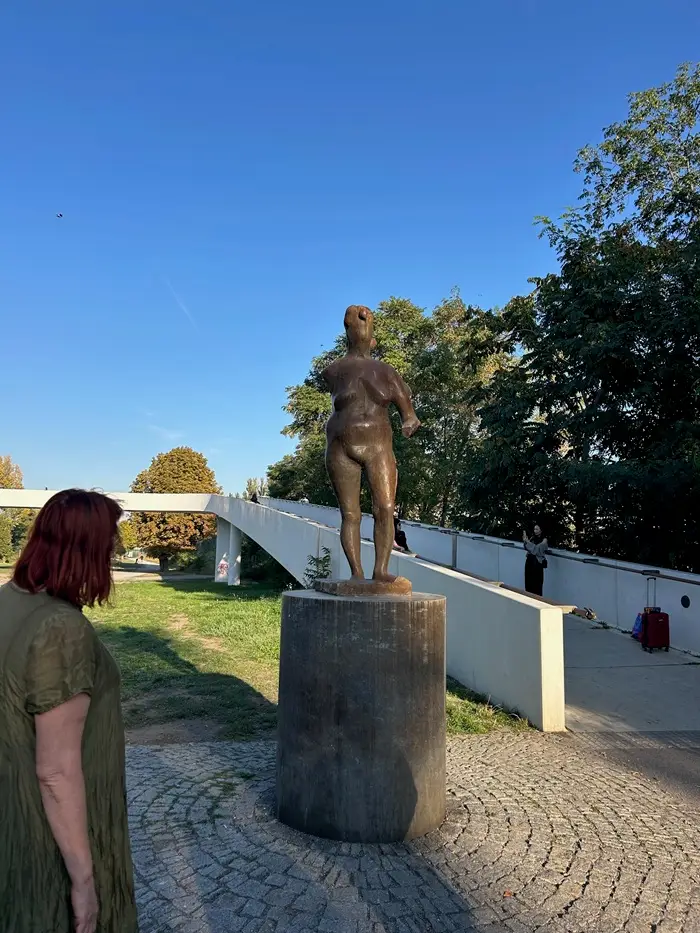
We were also able to take a field trip to Štvanice, an island on the river Vltava. Our professor explained that the island’s roots as a space for alternative culture dated back to the 17th century, when a wooden arena was constructed for animal fights. The island has come a long way since then, and now hosts community events that promote free speech and inclusivity.
We first saw Fuchs2, a queer music club that hosts performances by alternative and minority artists. Attached to Fuchs2 was BikeJesus, a multipurpose space that hosts techno concerts and political debates at night, and functions as a bike workshop during the day. Next, we saw Villa Štvanice, a 19th century building owned by a local theater group that hosts cultural events. Finally, we saw a skate park and a public beach on the river Vltava, which function as important third spaces for locals. Our professor helped us translate the political graffiti that covered most of the spaces and led discussions about alternative culture.