
Written by Joanne Chen, Local Roommate for CET Taiwan, Fall 2025
I am a fifth-year student double majoring in Sociology and Anthropology. At the end of August 2025, I moved into an apartment on Wuxing Street, Xinyi District, and met my six new roommates: Helen, Ivy, Wren, Emily, Eden and Valentina. Their existence was like a string of sunshine, not too blazing but always bright, sweet, and warm, lighting up my days throughout the whole three months.
Living Under the Same Roof
Cross-language communication was not always easy, but motivated by our close relationships and desire for understanding, we were always willing to take our time listening to each other and explaining things. We had a wall of sticky notes in multiple languages, witnessing all the slang and vocabulary we exchanged.
Sharing a house wove us into each other’s lives day by day. We gradually learned the little habits of each other and became the type of friends who could mutually cover for one another, have the same taste in humor, or be each other’s beauty advisers.
Cultural Exchange in Daily Conversation
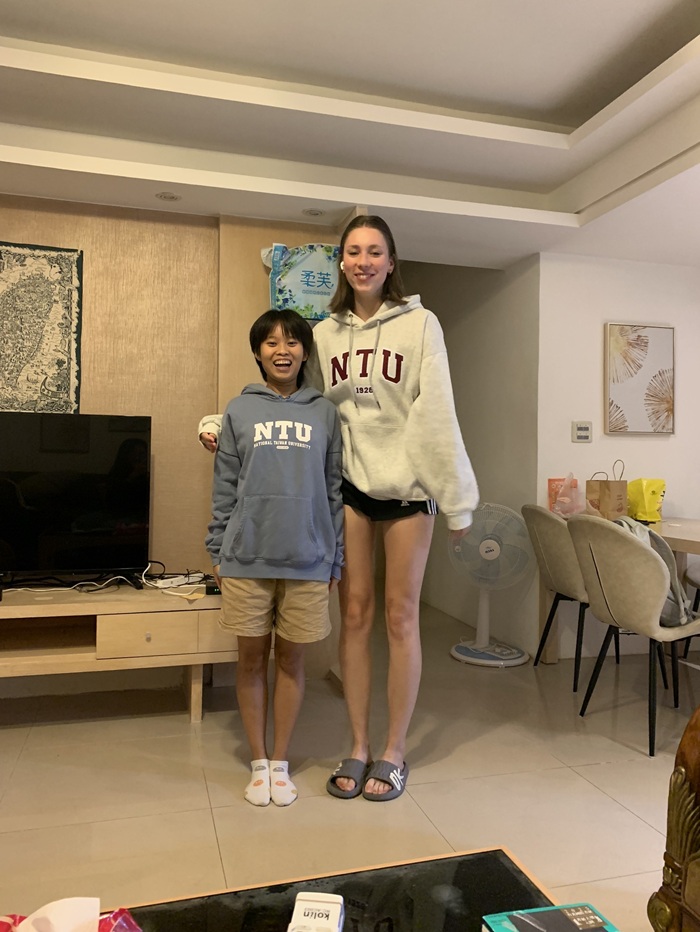
One of my favorite memories in the house was the precious cross-cultural conversation. Helen and I shared a room. On several nights, we chatted until 2 a.m. She is very humorous and talkative. She is known for playing arcade games in our home. Once, when we hung out in Taipei City, she got me a basketball from a claw machine. Our chatting topics went from dating culture nowadays, pop music, current trending slang, homeless issues, racial experiences, family immigrant stories, sexualities, and so on, covering a wide range. We made comparisons between the phenomena of our countries. I may have heard some stories in my major, but it was the first time for me to actually have dialogue with someone who lives under that social context in person, and to explain those issues in Taiwan in English.
One night, Valentina and I (the other Taiwanese roommate) got the flu. We discussed the concept of Chinese medicine in the living room. Ivy, my cute roommate studying medicine, showed great interest in it. Therefore, I invited her to a Chinese medicine exhibition in 大稻埕 to take a look at the medical ingredients and the history behind them. Emily, a global health student, also showed her curiosity. She accompanied me to the Chinese medicine clinic three times, letting me introduce how the doctor did pulse diagnosis and the division of heat/warm/cold food. She also supervised me to take the medicine on time until I recovered, taking considerate care of my sickness.
During the autumn of 2025, the U.S. government shut down once because of the conflict between the two parties on the federal budget. Furthermore, under Trump’s administration, the U.S. government kept cutting subsidies for public welfare and strengthening Immigration and Customs Enforcement (ICE). Eden, who studies Political Science, as well as Emily, whose major is also highly related to public issues, explained the changes in the U.S. political scenario in recent years for me patiently, and how their lives and future career planning were affected. I still remember that those conversations happened in our room, on the sofa, accompanied by breakfast, or even when I was playing on the skateboard. It felt both trembling and thrilling to get close to international situations in daily scenes—things I mostly read on online media—through the lens of my roommates’ professions, and reflect on our domestic politics.
House Activities: Tea Workshop, Ice Skating, and Experiencing Taiwanese Traditional Festivals
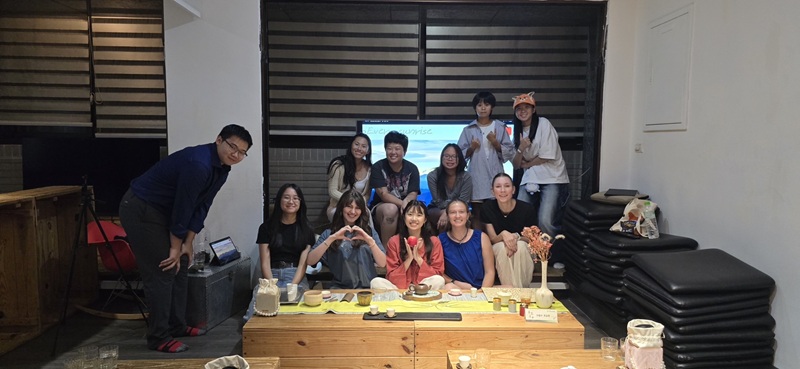
Thanks to my talented Taiwanese roommate Valentina, we had two house outside-our-door activities: a Taiwanese tea workshop and ice skating. Valentina and her team are working on a project introducing Taiwanese tea to the global market. Therefore, she hosted a tea workshop for the house, bringing a variety of teas for us to taste and presenting local farmers’ stories, teaism (茶道), as well as the medical efficacy of daily tea. Sip by sip, we learned more about the charm and specialty of the Taiwanese tea industry; even I, as a Taiwanese, was very impressed.
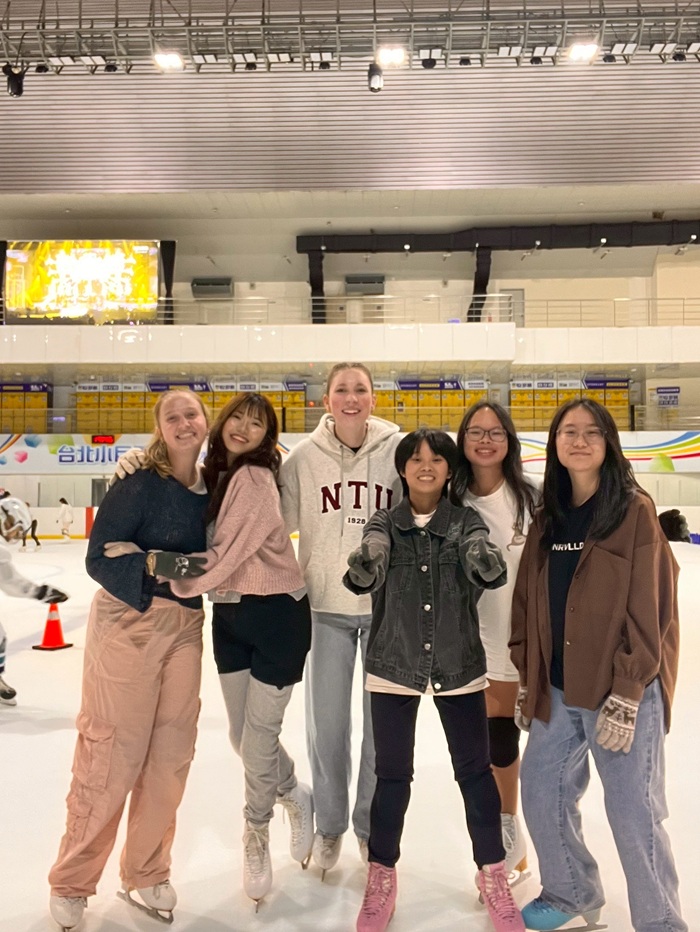
Valentina’s interest is not limited to tea but also ice skating. She invited the whole house to the ice rink in Taipei Arena, where she usually practiced. (Eden joked: “It’s also a cultural experience, OUR CULTURE!”) In the rink, we held each other’s hands tight while moving. Although the field was cold and slippery, we always had each other side by side, spinning and drifting.
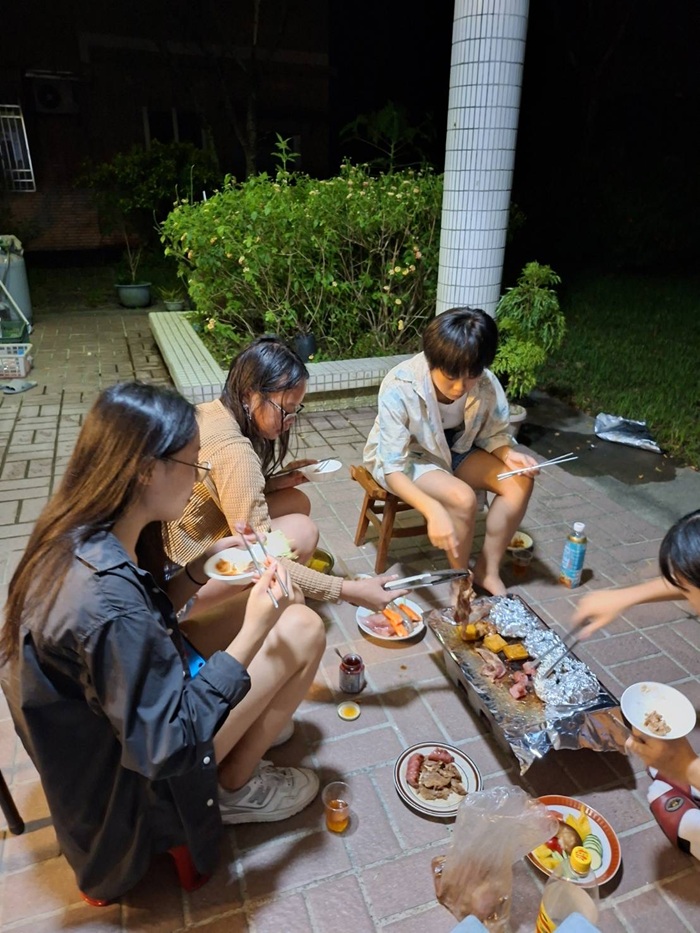
I also invited Wren and Emily to experience Chinese Ghost Month and the Moon Festival. (I wanted to do it in the house, but our schedules didn’t meet.) I took them to Keelung for the water lantern parade on lunar 8/14, and we watched the lantern burn upon the sea, lighting up the dark night. I brought them to my grandparents’ house in Yilan in October, barbecuing with my big family, playing with sparklers, and traveling around the county. My grandparents were very hospitable and kept telling them to visit Yilan again.
Flourishing in the Program
The program gave me a good environment to learn to express myself in English and explain the details of my own cultural identity. It was also a good opportunity for me to experience living in a cross-national environment. But the most important thing for me was the friendship it brought. As it says in The Little Prince, “It is the time you have wasted for your rose that makes your rose so important.”
I can picture clearly how we used our clumsy languages—of words and of love—to get close to each other from the very beginning. We can all tell the progress of each other speaking foreign languages, not only because of school and the work we did, but also very much because of the time we spent on each other. Since this autumn, we are each other’s roses in the world, no matter how far apart we are.