
Written by Reign Williams, (Syracuse University), Student Correspondent for CET Brazil, (Social Justice), Fall 2025
Brazil is home to many Indigenous communities. Unfortunately, with laws targeting these people and their communities it is becoming increasingly difficult for them to sustain proper livelihood. Regardless of their struggles, the Guarani, an Indigenous community found in Paraguay, Brazil, Uruguay, and many more neighboring countries. My time in this village is one I will never forget. I not only got to see first hand the way of life of communities I read about in the classroom, but I also learned a new way of life and how important these kinds of spaces are for Indigenous people.
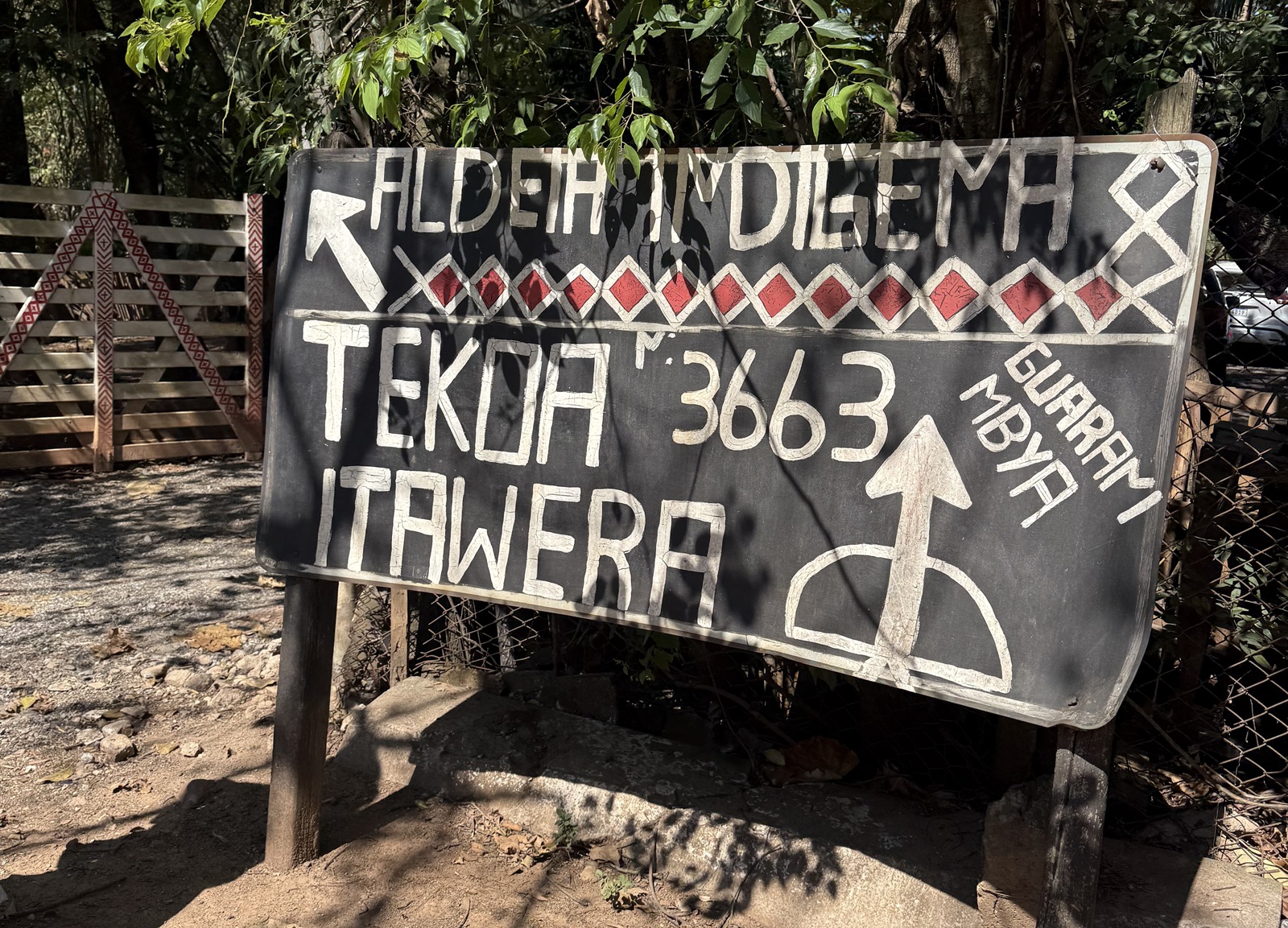
Arriving to the Village
We arrived in the Guarani Village about 45 minutes after leaving our meeting point. This was the first of many surprises for me was how close the community was. Usually, when thinking about Indigenous communities, I would have thought of somewhere remote and distant from the other areas. Not only was the community in a relatively urban place but it also was next to a very popular highway in São Paulo.
The highway, Rodovia dos Bandeirantes, was located right across from the Guarani’s garden and had a very interesting historical context. It was shared to us during the tour that this highway was named after the Bandeirantes who were colonizers in search of minerals and gold. They got their reputation by attacking any communities along their way in search of these goods.
Amongst others, the Bandeirantes committed many violent acts against the Guarani starting from at least the 16th century. Hearing the story of violence and seeing that the community was still successful in growing its people was very beautiful to me. Although the story of the Bandeirantes is heartbreaking, I find the existence of the Guarani village to be a resistance to that story. The Guarani are still preserved and have only grown in population.
Diving into the Way of the Guarani People
My cohort and I were taken to the Guarani’s sacred place of worship, the opy, where we met more Guarani people and learned more about how they live. Everyone was incredibly kind and welcoming, they were so excited to show us how they live their day to day lives. They explained that we would be taking part in a ritual for the day, their process to welcome in the Spring and a new year. Araju, the Cacique, explained that women were not participating in this specific ritual that we would see but that all roles were important. We also spoke more about the Guarani village itself; we discussed the other tekohas in the village, struggles they were having in their villages, and so much more.
The story that really stood out to me was the discussion in regards to their school building. It was shared with us that the school in the area they were trying to build was a long and tedious process. Because of this long process, students were being taught in one classroom or in shipping containers remodeled into a classroom. Once again, I was able to witness this strong sense of resistance from the community. The Guarani were resourceful and still managed to make their community suitable for everyone there. I also think this was one of the many ways Indigenous communities are able to use their environment around them to maintain their way of life.
After getting the introduction to the community and what we should and should not do, we traveled to another tekoha. Sandra, our host, welcomed us into her home and allowed us a traditional Guarani breakfast, lunch, and dinner. Not only was this my first time having Indigenous food, but, it also allowed me to see the influence these communities have on mainstream Brazilian culture. Many of the foods we ate are all different varieties of foods I have tried here during my time in Brazil.
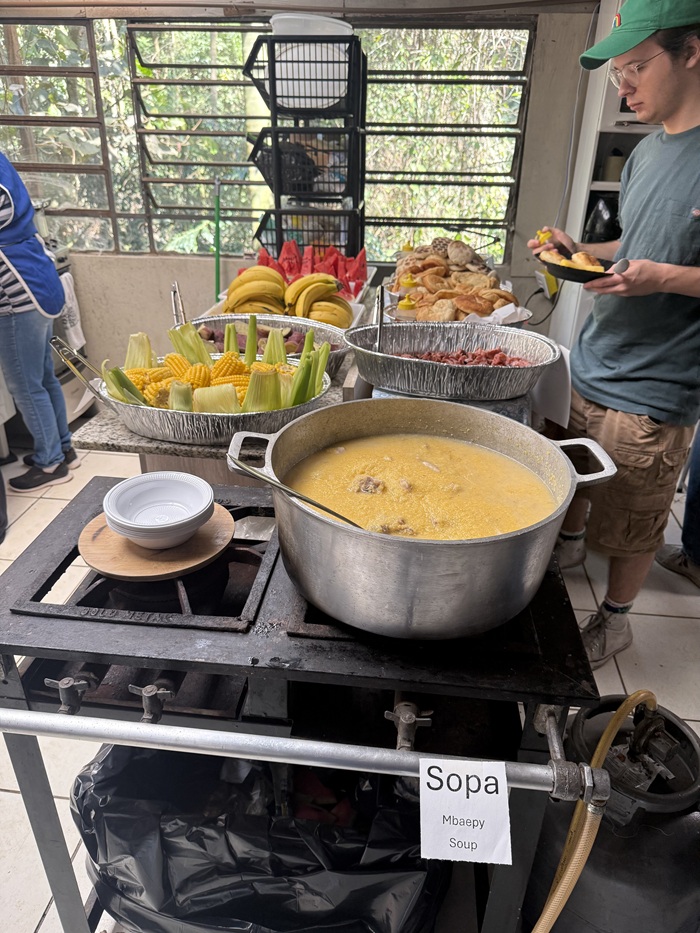
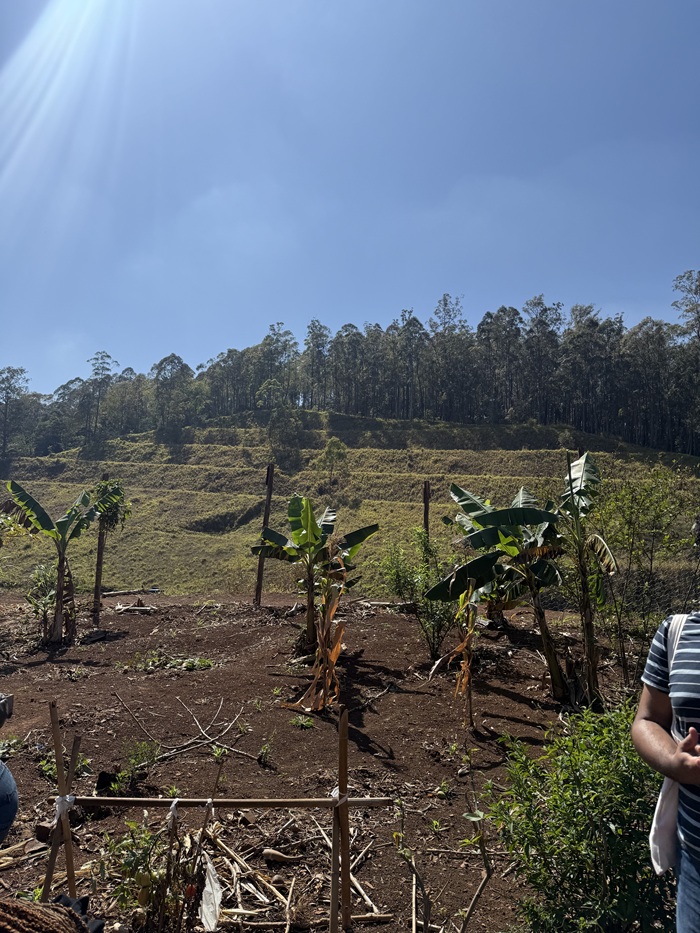
Many of the ingredients the Guarani used to cook with are found naturally in their area. Upon our walk to Sandra’s tekoha, we passed a garden and other areas where their food was harvested. The food was delicious and definitely fulfilling! My favorite dish of the day was pão frito. This was a sort of fried bread which we enjoyed with mel or honey. Other foods included: corn, watermelon, pineapple, and a soup called Mbaepy. We were encouraged to take seconds (even thirds) of the hardy meal; not only were we invited in their home, but also, given food and overall hospitality. It was very humbling to partake in a community we had previously read so much about.
The Ritual
After eating breakfast in Sandra’s tekoha, it was finally time for the ritual. There were no photos or videos allowed in the opy where the ritual took place but this is a memory I am forever grateful for. When we first entered the sacred place, we saw the men of the village bringing up offerings to the front and blessing the herbs. Although the ritual was performed in the Guarani language, the language barrier did not stop the energy in the room. Before we entered, we were informed that this was a ritual to bring in the new year and cleanse the start of their season. The principle of the ritual extended to most of our cohort spiritually. The energy was strong and I truly felt a part of the ritual and the rest of the Indigenous community.
Although we were not able to record during the ritual, it is a moment I will never forget. The ritual lasted about 30 minutes and it was incredibly moving. We were informed that this was the first time CET Brazil was allowed to participate in a ceremony like this so I was extra grateful for the opportunity. Once the ritual was over we exited the opy and went back to Sandra’s tekoha. As the kind women prepared our lunch, we went outside and participated in Guarani activities.
Participating in Guarani Activities
The activities included many different past times of the Guarani. It was fun not only to experience the culture of the Guarani spiritually but also colloquially. This gave us moments to talk to other Guarani people in the village and inquire more about the way they live day to day.
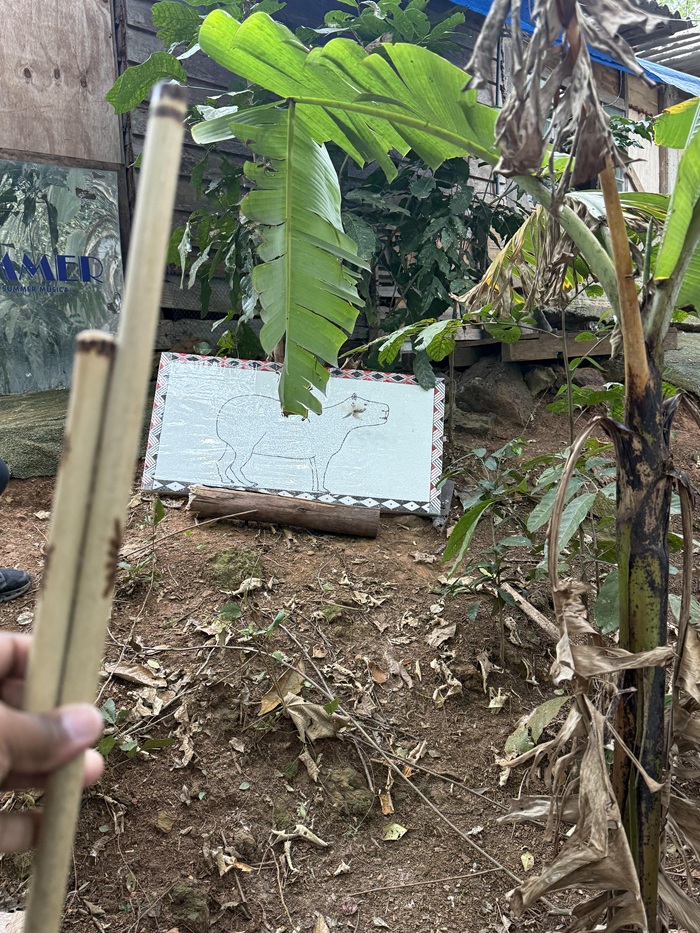
The first activity I tried was bowhunting or zarabatana. This was something I have read about in many textbooks both in the States and here in Brazil so it was super fun to try it in real life! The target provided for us was a capybara and we all had fun taking turns trying to “hit” the capybara; I eventually ended up hitting one of the arrows close to the target’s eyes!
The next activity I participated in was body painting; I sat with some of the women and they painted different symbols on our palms and forearms. Each one meant something different and my cohort and I had a lot of fun discussing who got what. I personally receive a symbol meaning “cobra” or “snake.” This body painting was created with a material called genipa. This was a black liquid-like substance that was drawn on our wrist with a stick and meant to last about 2 weeks. It was very interesting to receive this painting and also talk with the women personally.
Once finished with the body painting, I watched some of the people in my cohort make jewelry! They were taught the traditional method of making jewelry by some of the Guarani people. They showed us examples of necklaces, bracelets, and even earrings. Making the jewelry definitely took hard work and patience but the result was worth it. Everyone had so much fun and a personal item to remember our time spent in the village. Participating in these activities helped me feel closer to the Indigenous people and the overall Guarani experience.

Once dinner was served and we ate more delicious food, it was time for a final debrief of the night. We met with all the people in the tekoha including Sandra and Araju. We discussed more about the ritual we participated in and the importance of what we did. They explained that all the food we ate in the day had been blessed and used with herbs and spices also present in the ritual.
In addition, we discussed other rituals that the Guarani perform and certain rules for these ceremonies. One thing that stood out to me specifically was the lack of specific clothing for the ceremonies. Araju explained that in the specific ritual we participated in, no special clothes were needed. We heard stories about Caciques and how they come about in a tekoha as well as other aspects of their community. We were able to hold a beautiful conversation around the fire pit with both the Guarani and my cohort.
Something I made sure to take home with me is a message given to us at the end of the ritual. The message is important enough for me to share with the blog as well–by learning about the Guarani and other Indigenous peoples, we close the gap between urban culture and theirs. In addition, we learn about their way of life and the respect they give the world around them. Thus, it is our responsibility now to uphold this idea and continue to respect the land the same way they do. This was an amazing experience that I will remember for a lifetime!