Written by Diego Alberto Felix-Trejo, (University of Michigan), Student Correspondent for CET Brazil, (Social Justice), Spring 2026
Although you’ll spend the majority of the program in São Paulo, the city is only a small piece of Brazil and doesn’t reflect the entirety of what the country has to offer. That’s why one of the most impactful experiences you’ll have in this program is the week-long Traveling Seminar to Salvador, Bahia.
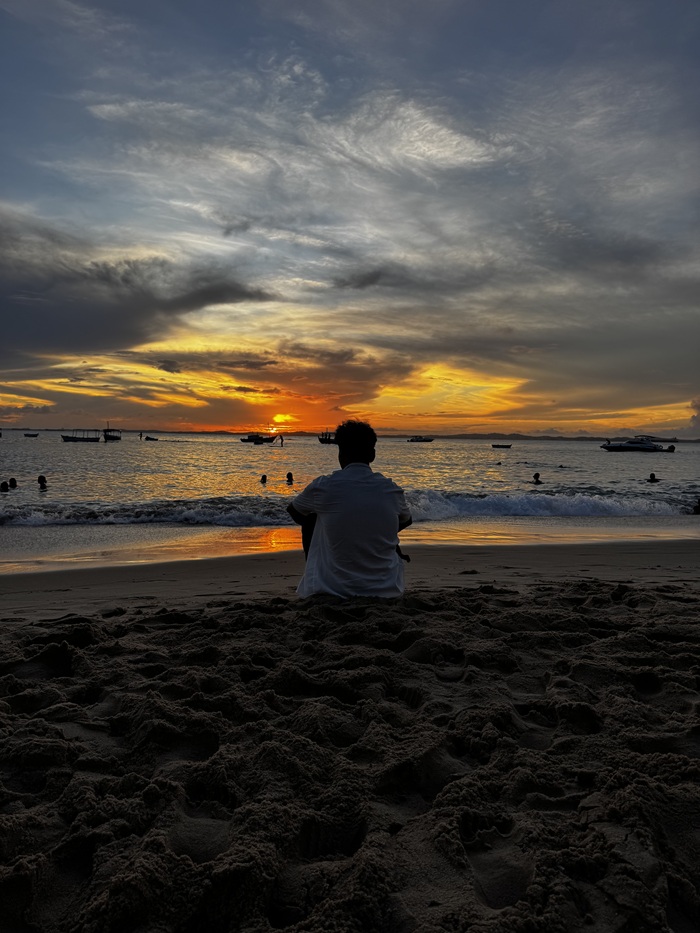
The trip is packed with fun activities that teach you about Salvador’s history. Brazil’s first capital, Salvador, is one of the oldest cities in the Americas. It has an incredible coastline and a long history as a port town. Today, it’s the capital of the state of Bahia, a state that has been incredibly influential in Brazil’s culture and music scene. You might have heard of Gilberto Gil and João Gilberto, but even today the extremely popular band BaianaSystem has a grip on the country’s heart. Because of all the giants Bahia has produced, you might just hear music from these artists blasting from a speaker while you take a walk by the beach during your free time.
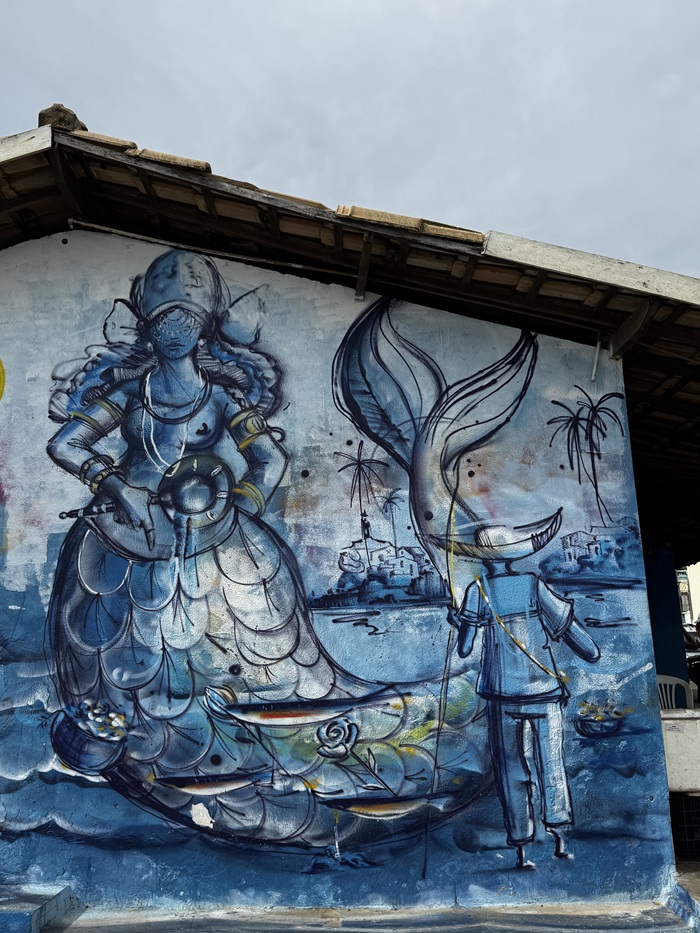
Our group was fortunate to start the week by participating in a Candomblé ceremony, after being invited by one of the practicing houses. Candomblé traces its origins back to West Africa. It was brought to Brazil during the slave trade, and although it has changed due to the influence of the Catholic Church, it is still widely practiced in the country, with a particularly strong presence in Bahia. You might have seen images of certain Orixás, figures representing powerful forces of nature. One of the most notable is Iemanjá, the Orixá of the sea and motherhood. She is especially iconic in Salvador, given its identity as a port town.
There are many Orixás within the religion, and some people feel a particular connection to a designated Orixá. We wanted to be respectful, so we didn’t take pictures of the ceremony, as these ceremonies tend to be private. I want to highlight how much influence Candomblé has had and still has on Brazilian culture, especially because samba originated from the drumming you hear during these ceremonies.
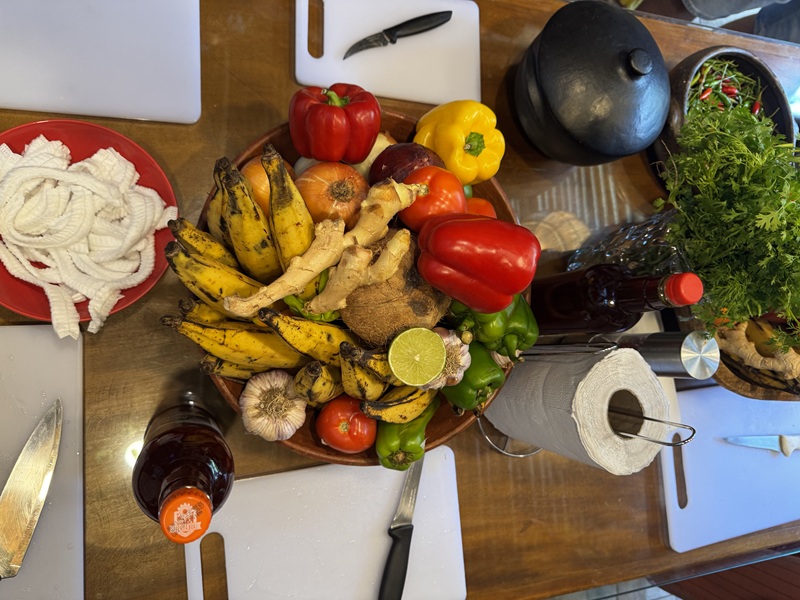
One of the most notable activities we did during the week was a cooking workshop hosted by a local family. As a group, we made moqueca, a traditional dish from Bahia. Since we visited during Holy Week, locals tend to stick to traditional dishes that use a lot of seafood. Catholics more openly accept eating fish during Holy Week.
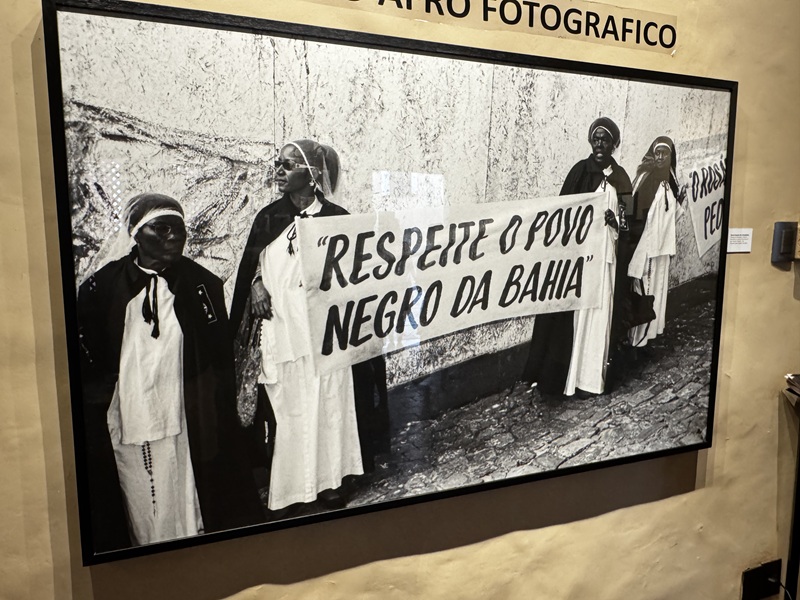
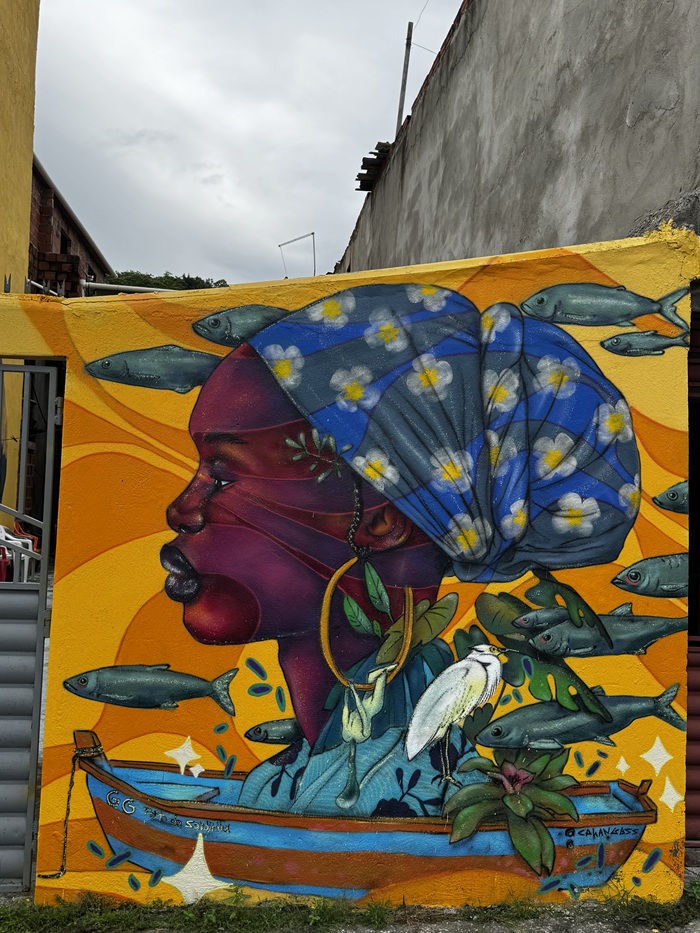
We visited museums and art archives while touring the city. Salvador truly prides itself on being a city close to its African roots, and you’ll find that reflected on practically every street. You’ll hear about past movements and current initiatives happening in the city.
This excursion was so impactful and incredibly insightful. I don’t think I would have learned as much if I had just visited the city alone as a tourist. I really appreciate all the hard work and planning the local CET staff put into this trip.