
Photos taken by Paloma Dean, (American University), Student Correspondent for CET Jordan, Spring 2026
Traveling in Wadi Rum
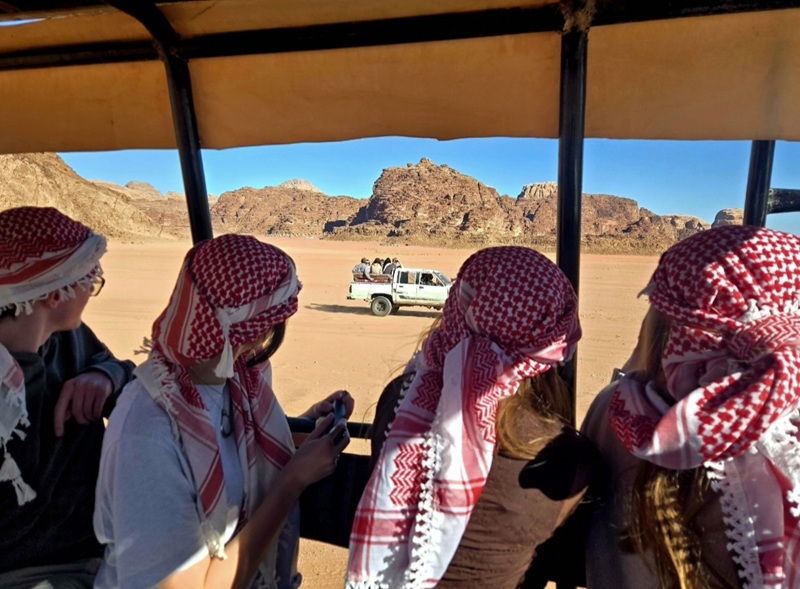
Over the last few weeks I have had the privilege of getting to travel all over Jordan and make connections with a ton of lovely people who were all super excited to share their culture and spaces with us. This first photo is from CETs trip to Wadi Rum and Petra. I took this picture riding on the back of a truck bed as we raced other cars of CET students to one of our many stops in the Arabian Desert. This trip was an amazing cultural experience and one I am incredibly privileged to get to do. Getting to see Wadi Rum with my cohort-mates and talk to the bedouins who live there was an unforgettable experience.
We got into camp in Wadi Rum, just in time to put our stuff away, and then climb a small mountain to see the sunset. I took the opportunity to go a little farther than most of the other CET students and climb a larger mountain just off of that one and I was treated to a spectacular view of the sunset over the desert.
Wadi Rum is visually a place like no other on earth, the landscapes and rock formations are so striking and unique and when the sun hit the sand in golden hour the entire valley just lit up in beautiful glowing reds and oranges. In addition to its stunning geography, Wadi Rum holds significant significance in the Middle East. Wadi Rum has been inhabited for over 12,000 years and carvings in the mountains as well as other anthropological remains trace the evolution of both the Arabic language and of pastoral, agricultural and urban activity in the Levant. This sunset marked the end of my exploration of Wadi Rum’s geographical beauty but during the night we got to immerse ourselves in Bedouin culture and learn first hand about the people who actually live in the valley.
Our Night in a Bedouin Tent
One of the most beautiful things I have learned in Jordan is that cultural conversations go both ways. When I went camping in Jerash two weeks ago the Jordanians we were camping with wanted us to show them our music and teach them traditional American dances—we settled on Cotton Eye Joe which has since been dubbed “The American Dabke”—in Wadi Rum it was the exact same.
One member of our programme is very skilled at the bagpipes and when our hosts learned he brought his with him they had him play a song or three. I love getting to learn new things about Jordanian culture but there is something beautiful about getting to share our own culture in return watching our hosts dance along to bagpipes and even break out their own instruments so they could play with him was incredibly special. Even though all I was doing was sitting there taking pictures it felt like we were truly connecting with them as we all learned more about each other.
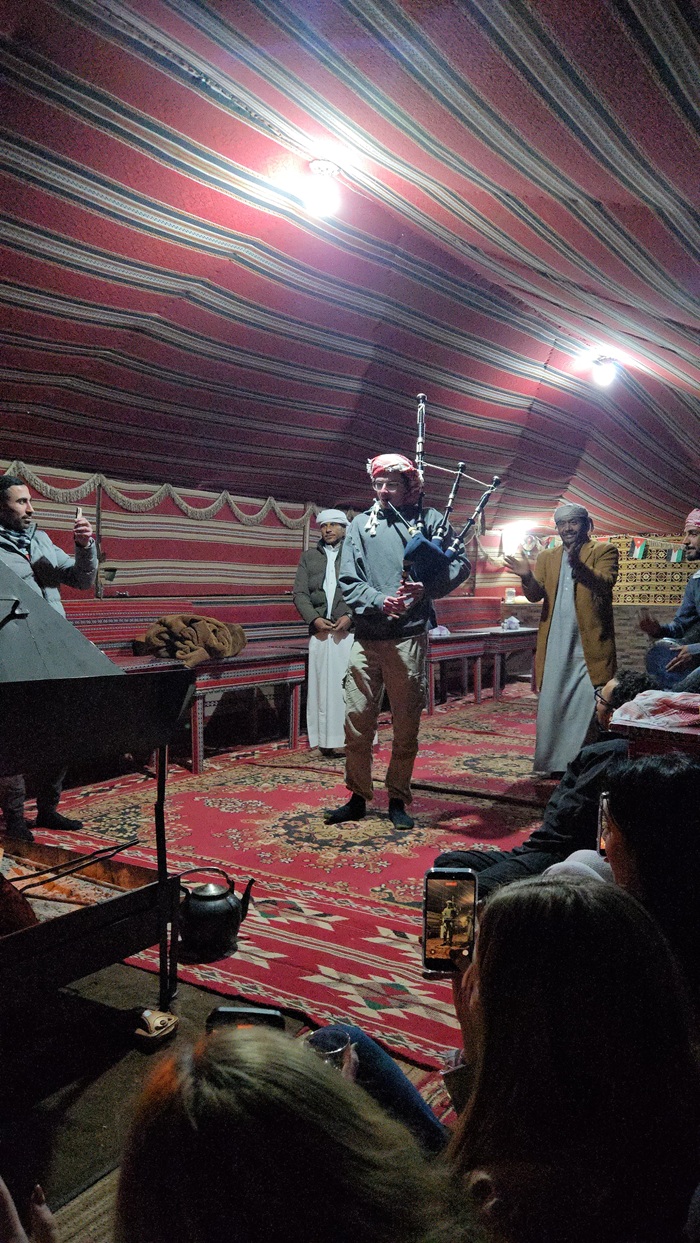

Later in the night, after we had put up the bagpipes and eaten dinner we spent a few hours listening to live traditional music and learning Dabke. It was quite dark in the tent and none of my pictures do it any justice but this was one of my highlights in Wadi Rum. None of us knew how to dance Dabke going into this and the guys in this photo started off pretty slow and hesitant. About five minutes after this was taken however, they were practically flying as one of our hosts led them around the circle. One of the many things that CET has taught me is that sharing culture is about more than just consuming differences, you have to be willing to actually participate and immerse yourself to be able to see a culture as it truly is, I hope that I succeeded in that during my trip to Wadi Rum and that over my travels this semester I can use the language skills I am developing with CET to truly interact with the beautiful cultures all around me.
Petra, The Rose City
After we spent the night in Wadi Rum we visited Petra for the afternoon. Petra’s original inhabitants the Nabateans called it raqmu which means “coloured one” in Nabataean Aramaic and in modern times the city is also known as the Rose City. With the way the sun hit the sandstone in many places it makes total sense. At many places on the path to the treasury the mountains just glowed all around us.
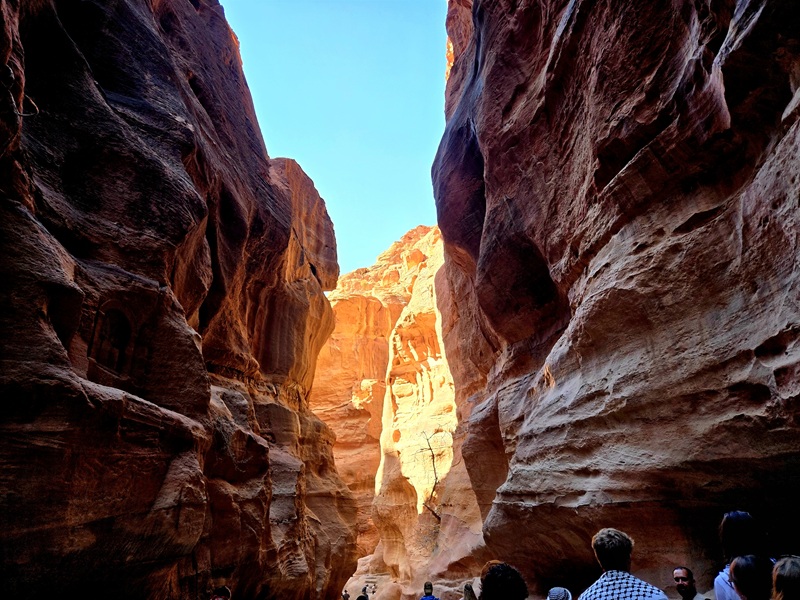
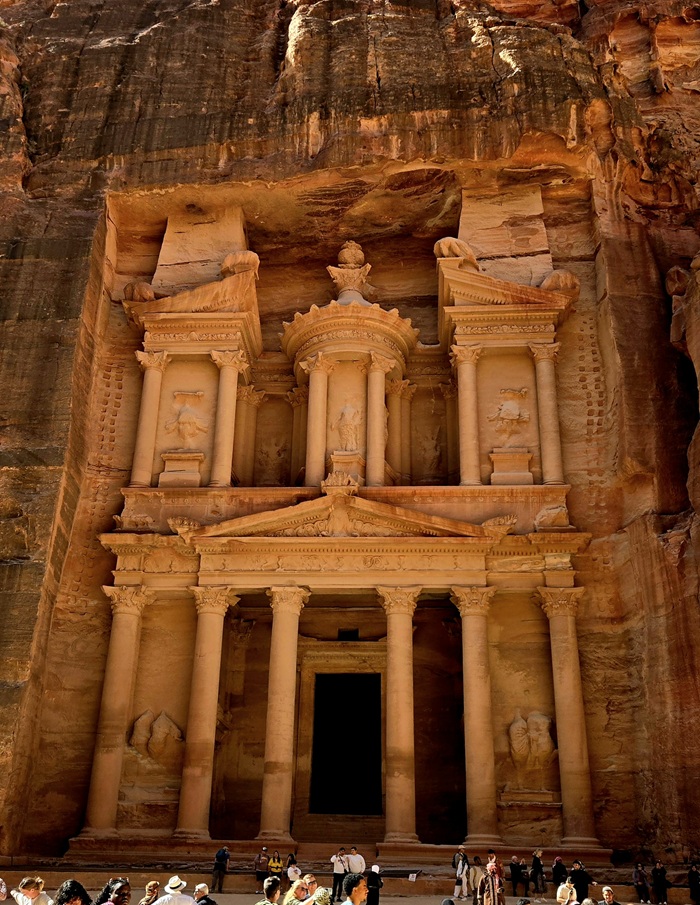
Getting to see the iconic Petra treasury in person was a truly mind boggling experience. The pictures do it absolutely no justice. The rock is a stunning colour and despite being 2400 years old the carvings and masonry are still incredibly vivid. Petra as a city was settled by ancient Nabateans in the 4th century BC and was an incredibly important center of trade and commerce in the early centuries BCE, Petra was then abandoned and lost as trade routes changed before being repopularised in the 20th century. In the last century Petra has become one of the symbols of Jordan and Jordan’s most popular tourist attraction.
Lunch in Jerash
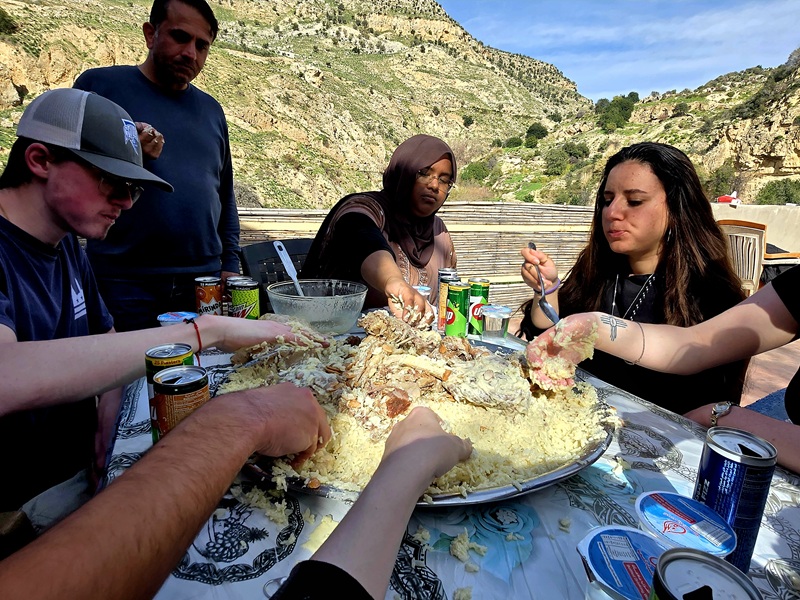
During my camping trip a few weeks ago one of the men hanging out with us invited us to his property for lunch and we were able to go this past Friday. Abd Al-Kareem—the many who invited us—was an amazing host and gave us a lovely afternoon on his property and in his town. The meal he prepared for us was Mansaf. Mansaf is a traditional meal throughout the Levant and the national food of Jordan. As you can see in the picture it is all served in one shared pan and eaten together with a group. Mansaf’s rich history in Jordan and the inherent community building aspect to eating it made this meal really special. As we were all eating we got to talk more with Abd Al-Kareem and learn about his life in Jordan and his family, we also got to talk more with each other and I got to learn new things about my fellow CET members that I did not know.
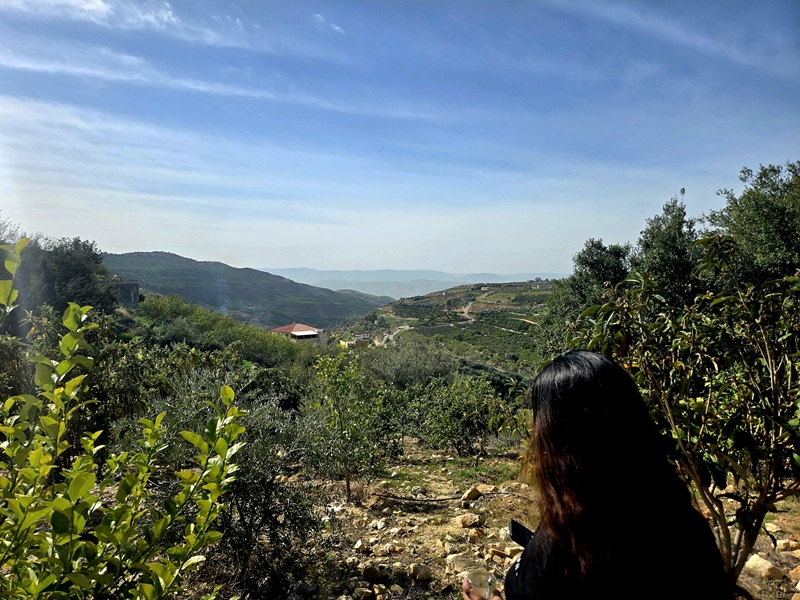
After lunch Abd Al-Kareem took us on a tour of his land and then into town to meet his family. One of the first places he took us was my favorite. In this photo, the mountains in the distance are past the Jordanian border and are a part of the West Bank. This was the first time I had ever seen Palestine in real life and it was a little shocking to see just how close it was. For Abd Al-Kareem and the people in his town, what is happening across the border is unavoidable. Later when we met with Abd Al-Kareem’s father, one of the first things he said to us was how glad he was that the west was finally paying attention to Palestine because our voices have a power that theirs do not. It has been small moments like this that have made me think long and hard about the privilege I have as an American student and the responsibility I have to use that privilege to speak out against the injustices and abuses that exist within our world.
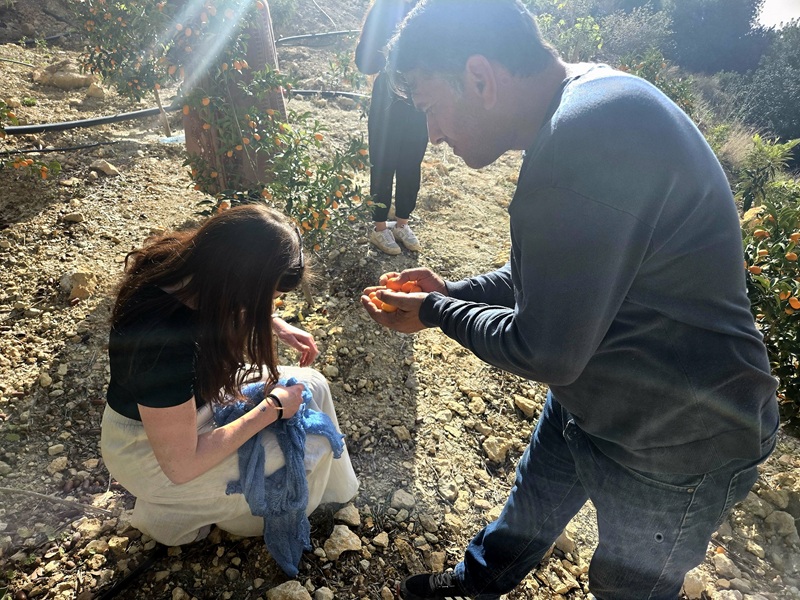
This photo might seem normal at first but it is truly exemplary of the generosity present in every single Jordanian I have met; Abd Al-Kareem’s land had a ton of fruit trees that he let us pick from, one type of fruit he grows is kumquats. As we were hiking through his land he noticed that we seemed to really love the kumquats—and we did, they were amazing—so he picked nearly a hundred of them to give to us to take home. This selflessness present in Jordanian culture—to invite strangers into your home and then insist they take what they like from you—is beautiful and has been amazing to experience.
CET Field Based Component in Madaba
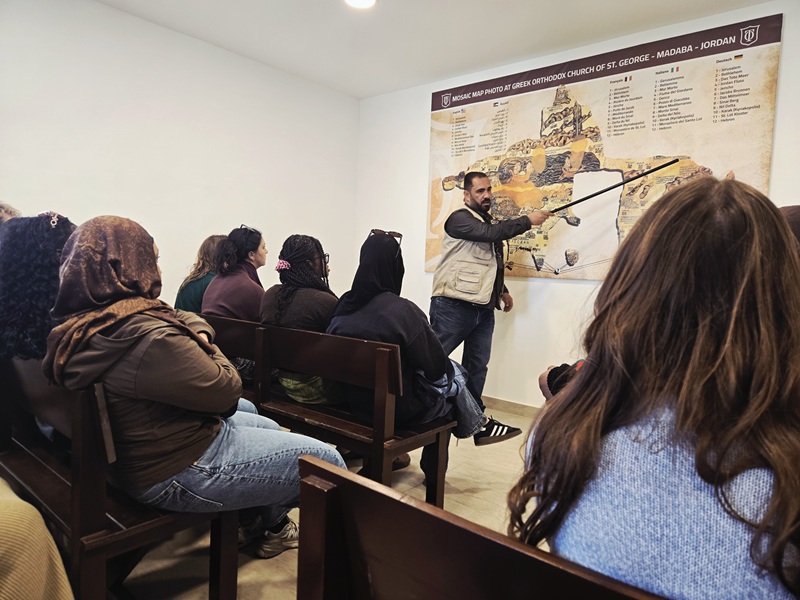
The last place I have traveled to in the past few weeks was Madaba. The CET program took us to the city as part of our field based component so we could not only learn about the religious and political history of the city but also to experience speaking Fusha and interacting with history and religion and a new side to Jordanian culture all in Arabic. Learning about the Christian history seeped into Madaba was a unique perspective on Middle Eastern culture and I am incredibly grateful CET took us here to learn about how Christianity and Jordan intersect.