
Written by Victor Park (Yale University), Student Correspondent for CET Taiwan, Summer 2026
One of the greatest benefits of the CET Taiwan program is having local roommates and language partners. They not only help us practice Chinese, but also allow us to learn more about Taiwanese culture through everyday experiences. We often eat dinner together, go to the gym, explore Taipei, or simply talk about our days. These activities may seem ordinary, but they have become some of the most meaningful parts of my experience in Taiwan.
From Classroom Chinese to Real Conversations
When I first arrived, I was worried about communicating with local students. I had studied Chinese in class, but having a real conversation felt completely different. In the classroom, I usually had time to prepare what I wanted to say. In real life, conversations moved much faster. Sometimes I understood only part of a sentence, and sometimes I knew what I wanted to say but could not find the right Chinese words.
However, my local roommates and language partners were always patient. When I did not understand something, they repeated it more slowly or explained it using easier words. Over time, I became less afraid of making mistakes. I realized that the purpose of learning a language is not to speak perfectly. It is to communicate, build relationships, and understand people from different backgrounds.
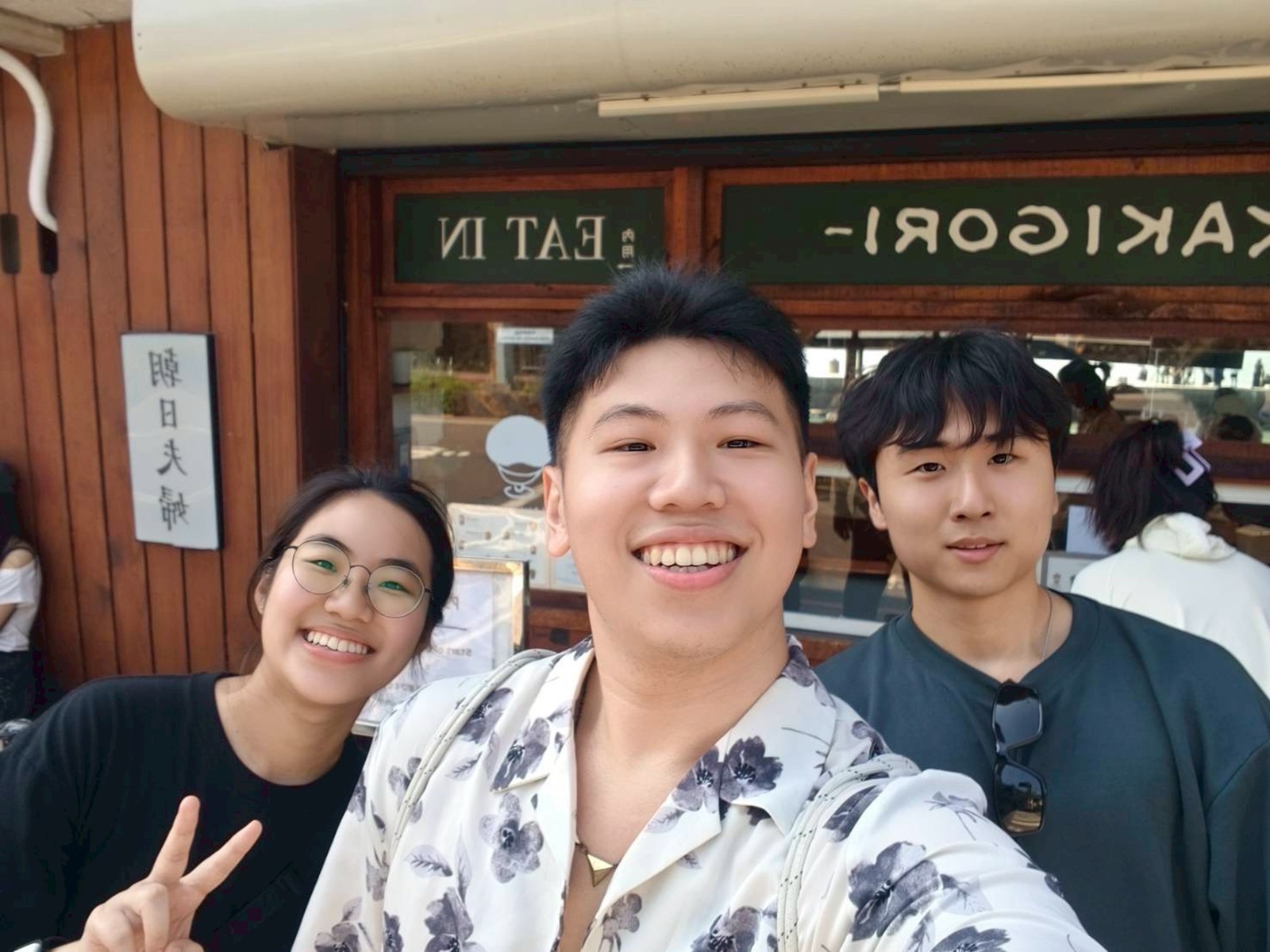
Adventures with New Friends: Night Markets, Hualien, and more
One of my favorite memories was visiting Shilin Night Market, 士林夜市, with other CET students, local roommates, and language partners. Shilin is one of the most famous night markets in Taipei, but what made the experience memorable was not only the place. It was the people I explored it with.
As we walked through the night market, we tried different foods, looked around the small shops, and talked about what we wanted to eat next. The market was crowded, bright, and full of energy. Every few steps, we smelled something different. Some people wanted fried chicken, while others wanted dessert or drinks. Choosing food became a group discussion because everyone had a different recommendation.
Another meaningful experience was traveling to Hualien, 花蓮, with local roommates and friends. Hualien is known for its mountains, beaches, and natural scenery. It felt very different from Taipei. Taipei is always busy, with many people, cars, stores, and MRT stations. Hualien felt slower and more peaceful.
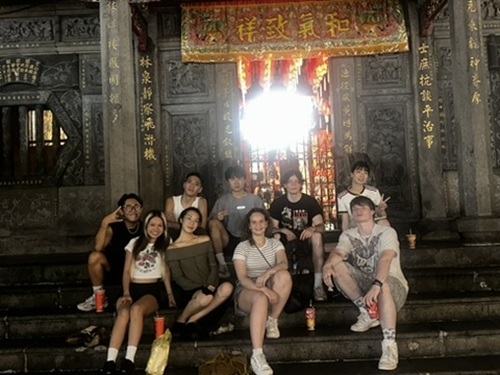
During the trip, we visited the beach, ate local food, explored the area, and spent time together late at night. One of my favorite moments was simply running around near the beach. There was no detailed plan or important destination. We were just enjoying the moment and laughing together.
At night, we stayed up talking and playing games. One game we played was 撿紅點, a popular Taiwanese card game. At first, I did not fully understand the rules. My local friends explained them in Chinese and demonstrated each step. I made several mistakes in the beginning, but that became part of the fun. Every time I played the wrong card, everyone laughed and helped me understand what I should do next.
Beyond Language Practice: Building Real Friendships
Experiences like these are what truly allow me to immerse myself in Taiwanese culture. Chinese class gives me the vocabulary and grammar I need, but my local friends give me opportunities to use them in real life. Everything I learn in class becomes more meaningful when I use it to order food, understand a joke, play a game, or have a late-night conversation.
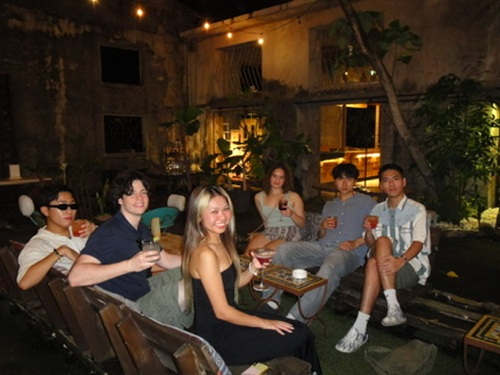
More importantly, these experiences helped us develop real friendships. Our relationship was not limited to language practice. We supported each other, shared meals, traveled together, and created memories. Chinese became the tool that allowed us to connect, but friendship became the reason I wanted to keep communicating.
I am truly grateful for my local roommates, language partners, and the CET Taiwan program. Without them, I could still visit night markets and travel around Taiwan, but the experience would not feel as personal. They have helped me see Taiwan through the perspective of people who live here.
When I think back on my time in Taiwan, I will remember the beautiful places I visited. However, I will remember the people even more. The friendships I built made each place more meaningful, and they gave me the confidence to continue learning Chinese even when communication was difficult. This experience showed me that learning a language is not only about becoming a better speaker. It is also about becoming a better listener, a more open-minded traveler, and a more understanding friend.