
Written by Victor Park (Yale University), Student Correspondent for CET Taiwan, Summer 2026
Adjusting to Traditional Chinese Characters
When I first started studying Chinese in Taiwan, one of the biggest adjustments was getting used to traditional Chinese characters, 繁體字. Before coming to Taiwan, I was more familiar with simplified Chinese, 简体字, so at first even basic reading felt slower than I expected. Sometimes I knew the pronunciation of a word and even understood its meaning, but when I saw it written in traditional Chinese, it looked unfamiliar. This happened not only on signs and menus, but also in class, where I had to quickly recognize and write characters during lessons.
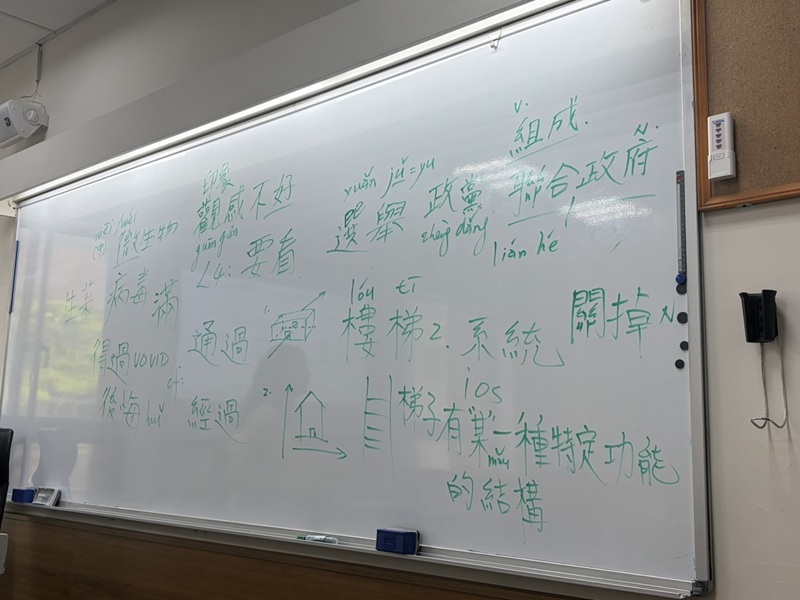
One thing that made this learning experience especially memorable was seeing how much we covered in class. Some days, I would look at the whiteboard and feel both impressed and overwhelmed. The board would be filled with new words, pinyin, explanations, and small drawings to help us remember meanings. Looking at it all at once reminded me that learning Chinese is not just about memorizing vocabulary. It is about slowly building connections between sound, meaning, writing, and daily use.
Learning More Than Just Vocabulary
For example, one class board included words like 微生物, 病毒, 選舉, 政黨, 聯合政府, 樓梯, 系統, and 結構. What stood out to me was how wide the range of vocabulary was. In one class, we were not only learning simple daily words, but also more abstract or academic vocabulary. Some words related to science, like “microorganism” and “virus,” while others related to politics, like “election,” “political party,” and “coalition government.” We also learned practical everyday words like “stairs,” alongside broader words like “system” and “structure.”
At first, this felt intimidating. Learning traditional characters already required more attention because of the extra strokes, and now I also had to learn words from very different topics. But over time, I started to appreciate this kind of learning. It showed me that language is not separated into neat categories in real life. In one day, I might read a sign in the MRT, hear a conversation about politics, and then see health related vocabulary in class. Chinese in Taiwan felt alive because it appeared everywhere, not only in textbooks.
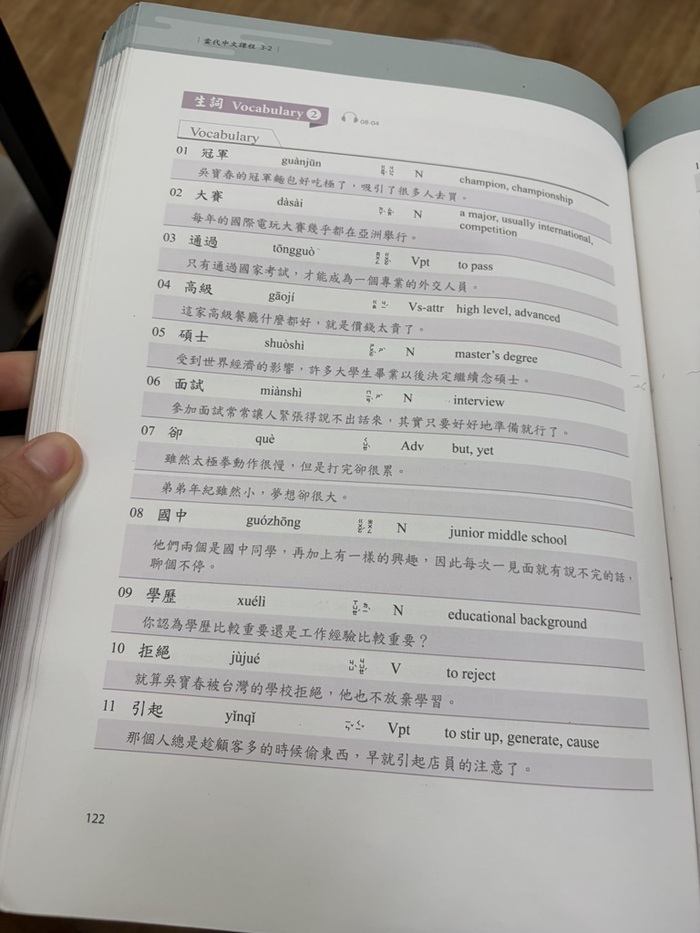
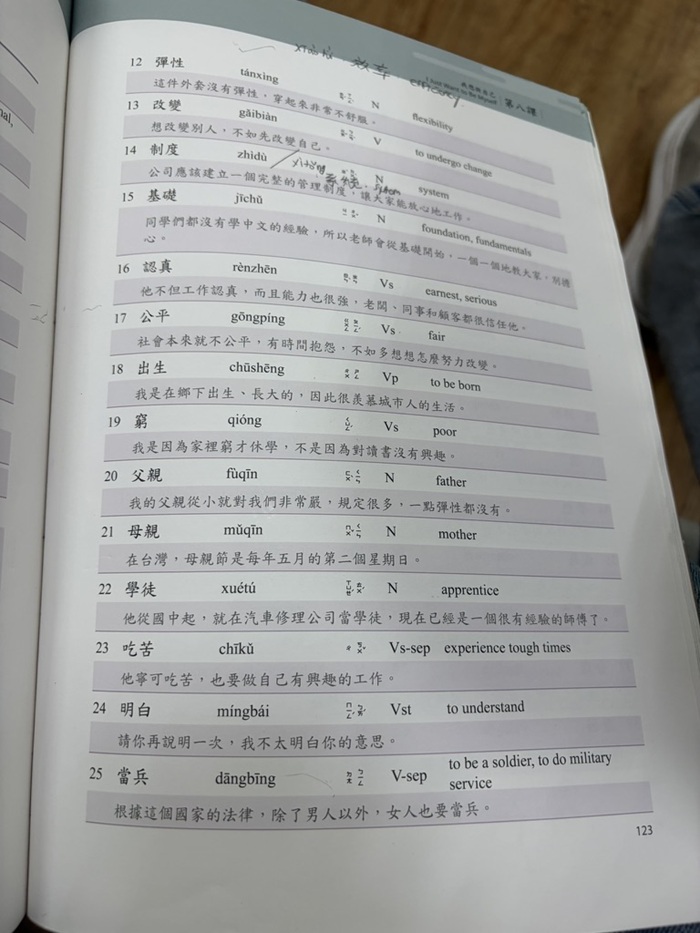
At the same time, our textbooks gave more structure to what we were learning. In class, the whiteboard often felt fast and active, while the textbook helped organize the vocabulary and grammar more clearly. When I looked through the textbook, I could review the lesson more calmly and notice patterns that I missed during class. Sometimes a word that felt difficult during the lesson became much easier when I saw it again in the book with examples and context.
From the Classroom to Everyday Life
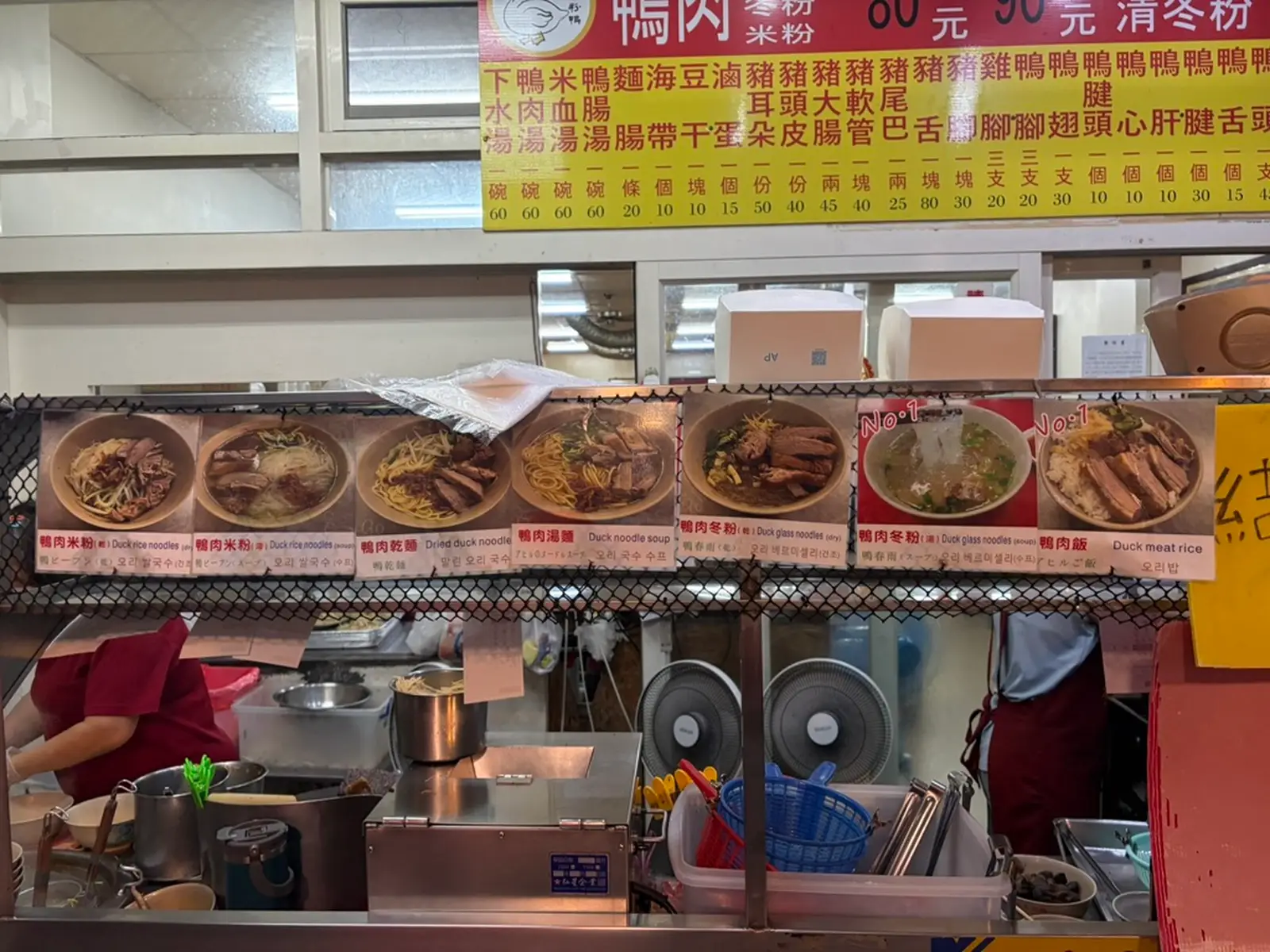
This became even more clear outside the classroom. In Taiwan, traditional Chinese is everywhere. I saw it on restaurant menus, store signs, MRT stations, posters, and classroom handouts. Because of that, learning never really stopped when class ended. Even on a normal walk around Taipei, I was still studying. Sometimes I recognized a character from class while ordering food or reading a sign, and those small moments felt rewarding. They made me feel that the language was slowly becoming part of my daily life.
I also noticed that learning traditional Chinese changed the way I approached reading. In the beginning, I wanted to read quickly, the same way I would read English. But Chinese, especially traditional Chinese, forced me to slow down and pay attention. I had to notice the strokes, compare similar-looking characters, and think more carefully about meaning. This process was frustrating sometimes, but it also made me more patient. Instead of expecting instant improvement, I learned to accept that progress would come little by little.
Understanding Taiwan Through Language
Another interesting part of this experience was realizing that language learning is not only about difficulty, but also about perspective. Before coming to Taiwan, I thought the switch from simplified to traditional Chinese would mainly be a technical challenge. In reality, it also helped me understand Taiwan more deeply. Traditional characters are not just another writing system. They are part of Taiwan’s history, education, and everyday culture. By learning them, I felt that I was not only improving my Chinese, but also getting closer to the place where I was studying.
Looking back, I think the classroom itself became one of the most important parts of this journey. The whiteboard full of words, the teacher’s explanations, the textbook examples, and the small moments when I suddenly recognized a character all became part of the same learning process. Sometimes progress felt slow, but when I compared myself to the first week, I could clearly see growth. Characters that once looked impossible slowly became familiar!
Seeing Progress, One Character at a Time
The transition from simplified Chinese to traditional Chinese has definitely been challenging, but it has also been one of the most meaningful parts of my time in Taiwan. It taught me to slow down, observe more carefully, and appreciate language in a deeper way. I still do not recognize every traditional character immediately, and I still make mistakes, but now they no longer feel completely foreign. Instead, they feel like a challenge I am continuing to grow with every day.
Through this experience, I learned that language study is not only about memorizing new words. It is about learning how people think, communicate, and express culture through writing. In that sense, studying traditional Chinese in Taiwan has been more than a language challenge. It has become an important part of how I understand both Chinese and Taiwan itself.