
Written by Aina Bandele, (George Washington University), Student Correspondent for CET Colombia, Fall 2026
Every semester CET Colombia takes students on a Traveling Seminar to Afro-descendent & indigenous communities as part of their comparative learning curriculum used to explore concepts we’ve examined in the classroom.
Ecotours La Boquilla
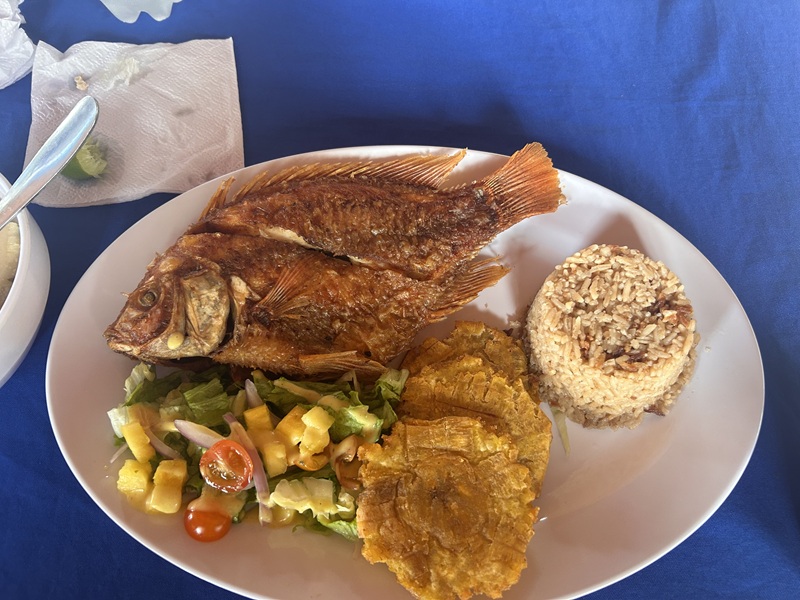
Our first stop was La Boquilla, a fishing village located in the city of Cartagena. We only spent one night here, but we made it worthwhile. The itinerary began with a much needed lunch, at a delicious restaurant on the beach called Cucayo e Coco, which hosted most of our meals during our stay. There we ate a traditional lunch–fried fish, salad, arroz con leche de coco, patacon, and aguapanela.
After our lunch, we had a discussion with a resident and good friend of our program advisors about Law Seventy and the recognition and legal protections it provides for Afro-Colombian and indigenous communities in this case, La Boquilla. We were given a chance to practice our Spanish. We also asked questions about the possible changes the community is facing under a new government administration.
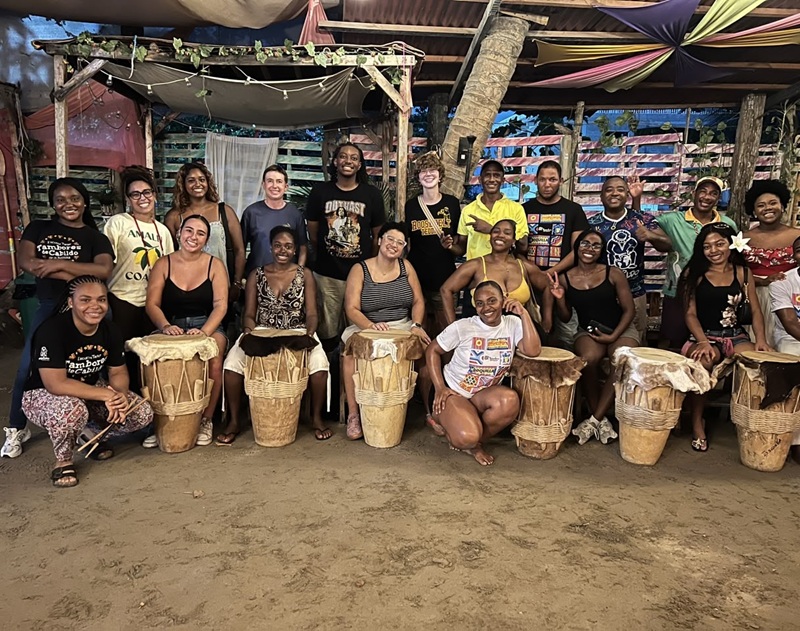
After our chat, we were given time to relax at the beach and I took full advantage of the opportunity. Another student and I swam for about two and a half hours completely losing track of time. That evening we had a drum workshop, with an Afro-Colombian youth led group called Corporación Batámbora. We were greeted with a performance, invited to participate in learning different drum rhythms taught by the students, and then had a fun dance circle to close out the night.
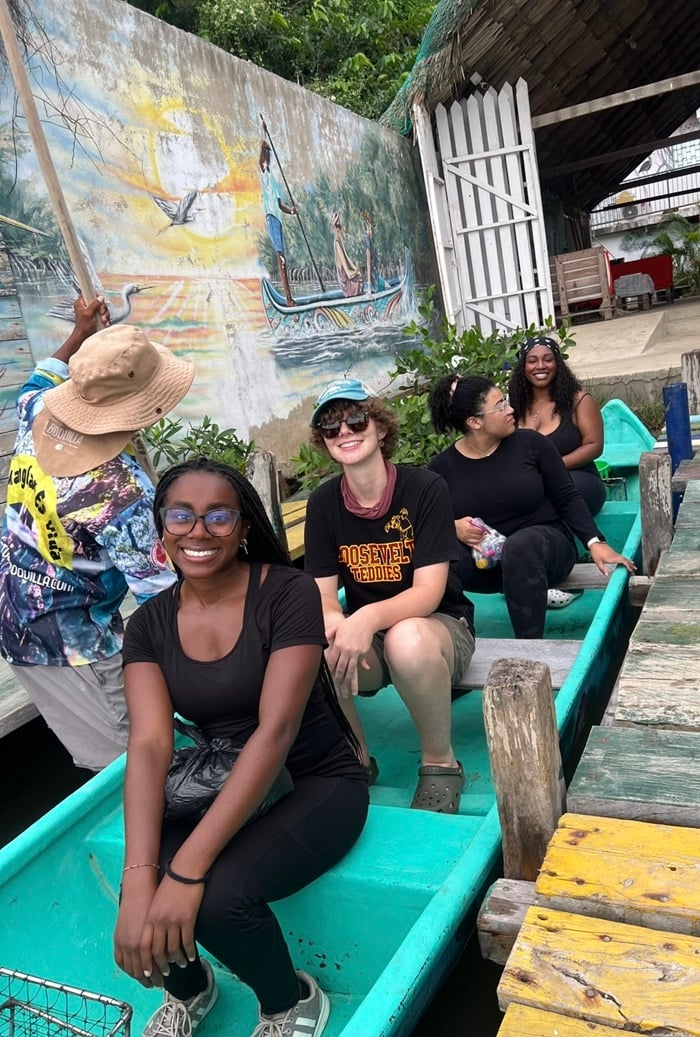
The next day we were up bright and early for breakfast before our fishing tour through the mangrove forest. There were four seater canoes with a guide propelling us through the water. We had a very peaceful ride to our fishing spot, where we practiced casting nets to catch sardines, for crab bait. We set out our traps and left the area to let the crabs come out.
While we waited, we took turns trying to steer our canoe. Let’s just say our guide made it look like light work. There were a few mishaps with live crabs falling directly into our canoe instead of our bucket, but those moments have created lasting memories of chaos that I will look back on fondly.
After the fishing tour, we bought fresh coconuts and got prepared to eat lunch (including our crabs). We spoke with some of the staff about how they became involved with ecotours and how their sustainable fishing practices have maintained their dietary needs and protected their communities mangrove ecosystem. This was a wonderful activity to close out our time in La Boquilla.
San Basilio de Palenque
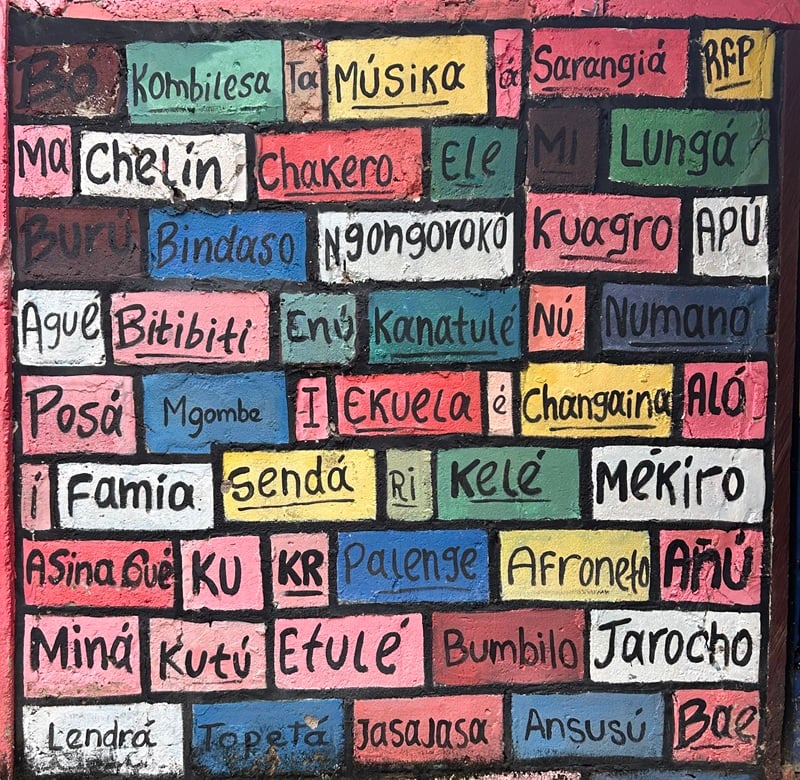
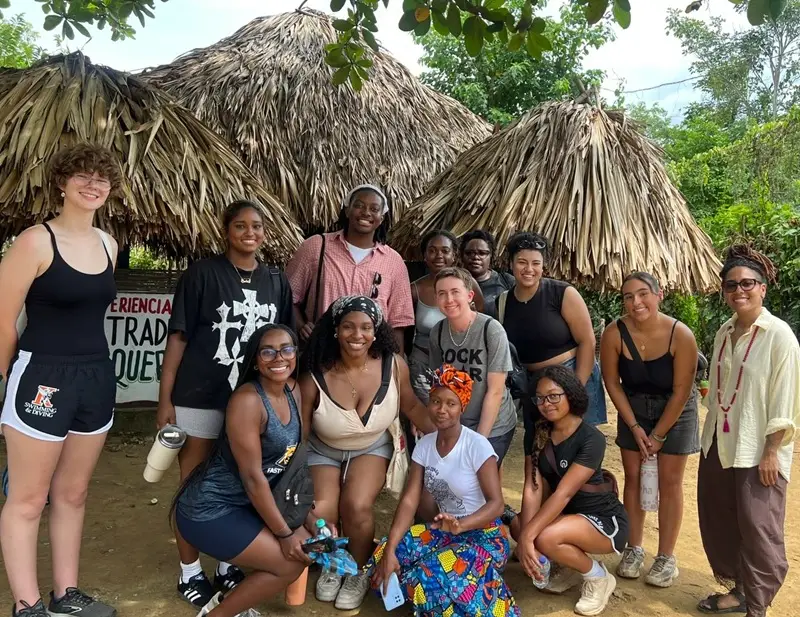
Our next bus ride brought us to San Basilio de Palenque, the first free black town in the Americas. The town was founded in 1604. It was established by enslaved Africans who escaped the largest slave port in Colombia, Cartagena de Indias. For the duration of our three day stay in Palenque, we were welcomed into the homes of different Palenqueros.
Our host mom was incredibly thoughtful. She prepared nearly all our meals and accommodated our dietary needs, since I’m pescatarian and another student is vegetarian. During our downtime, I would detail what we’d done each day to her and her husband which led to us sharing our family histories and talking about how connected our roots are despite living in such different contexts.
On our first day we were given a tour of the town and learned about its founding and the extent to which they preserved their African culture. An example of this cultural preservation is their language Palenquero. This is a creole language that is a mixture of Spanish and African Bantu languages, mainly Kikongo. As we continued on our tour, we visited Casa Museo Simankongo and learned about ecofriendly construction techniques and cooking practices. We were also very briefly taught about their restorative justice frameworks.
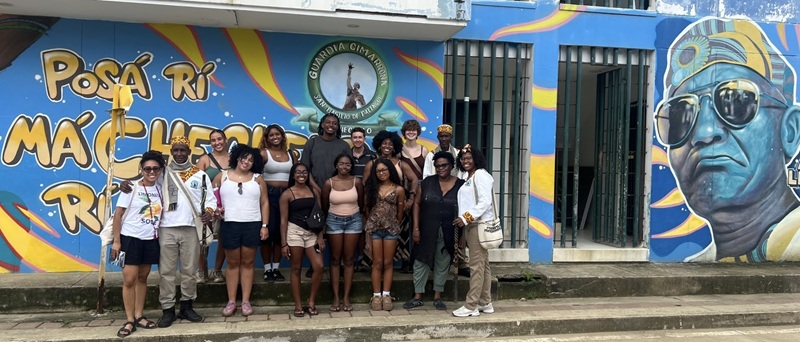
We then headed to the boxing ring for a beginner boxing workshop. Before we put on our gloves we stood around a statue listening to the story of Palenque’s very own, Antonio Cervantes aka Kid Pambelé, the first-ever world boxing champion in Colombia. It was ridiculously hot in the ring, but nonetheless a great experience. We did and learned in Palenque so much more than I can fit into this post. But for now, onward to our next adventure!
Cartagena de Indias
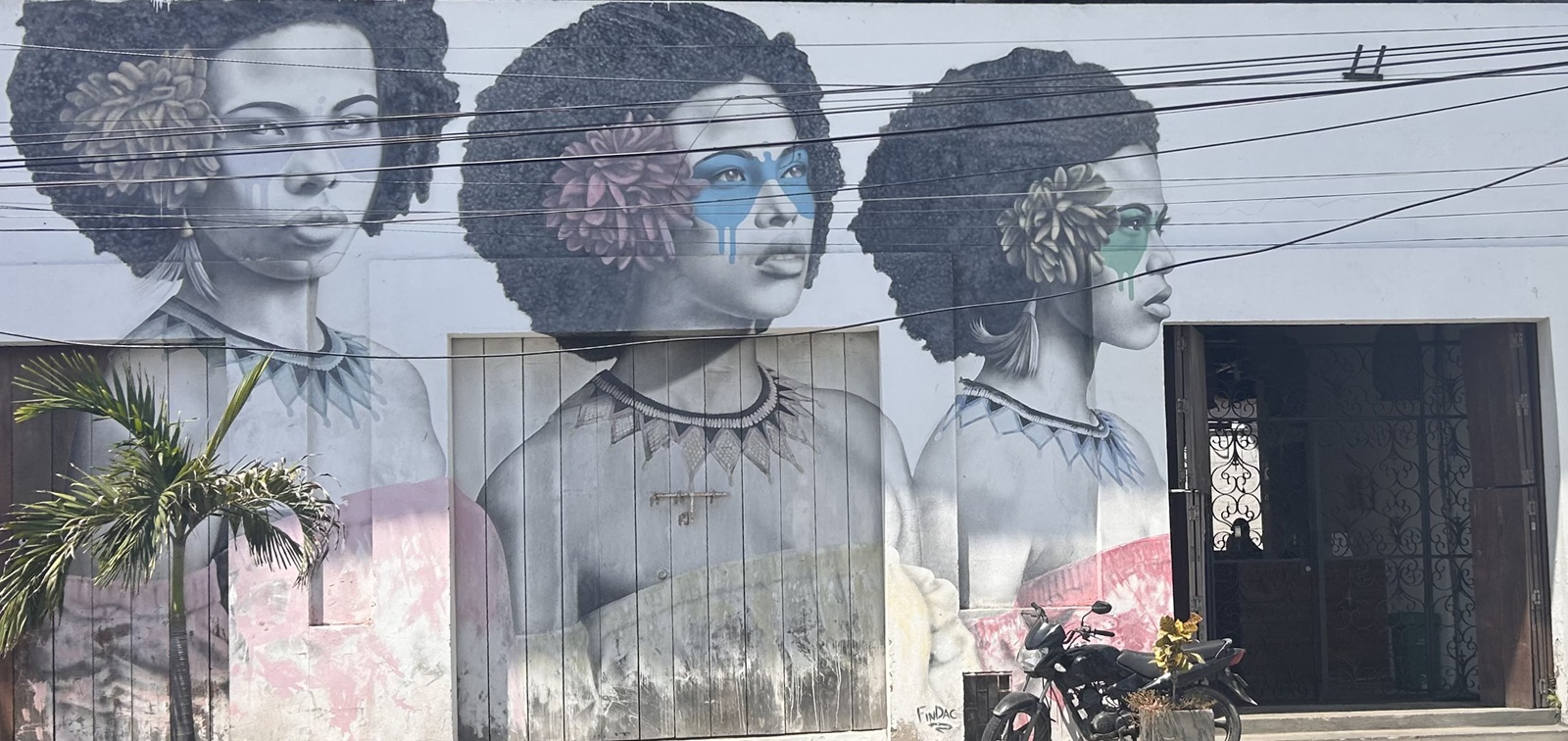
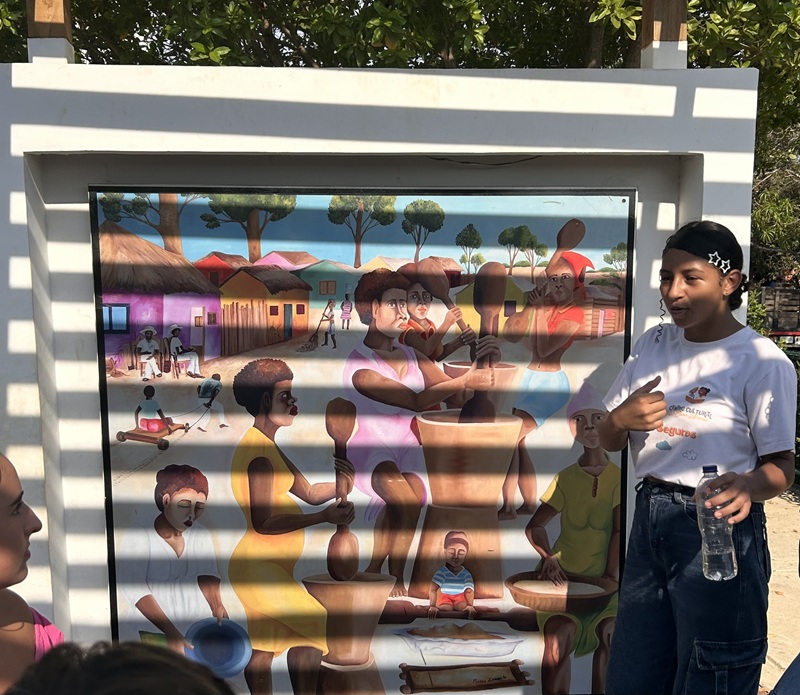
Our final stop was the city of Cartagena, the 2nd oldest city in Colombia. It is now a hypertouristic destination that is built off of the labor and culture of Afro-Colombians, a reality reflected in the iconic images of Palenquera women that appear throughout tourism advertisements and brochures.
We had a workshop with La Canoa literaria, a student-led project dedicated to raising awareness and preventing sexual violence against adolescents. The students, along with a local artist, led us through Tierra Baja showcasing different artwork that reclaims blackness by allowing residents to create their own narratives of themselves in their community. Then we went to their school. They taught us the various ways they actualize their mission from hosting reading clubs to creating songs.
During our stay in Cartagena, our CET staff was gracious enough to give us plenty of free time to explore. They even provided recommendations of places to go and report back on. Our hotel was located very central. So, we were able to walk around Getsemaní and buy from vendors and also check out the beautiful architecture of the Walled City.
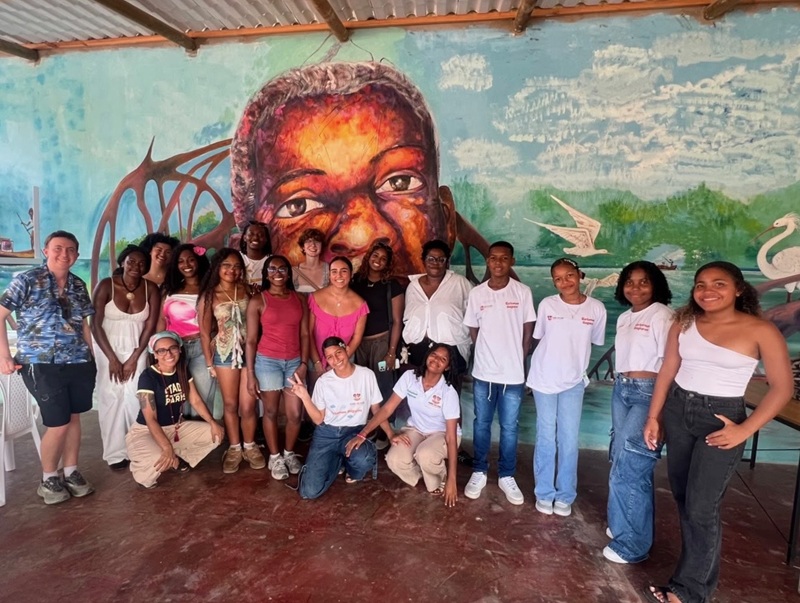
The final activity was a voguing workshop with Corporación Cultural Cosecha. It’s an arts organization that focuses on dance and bodily expression. Our class was also hosted by participants of the Cartagena Ballroom scene who taught us three of the major categories, face, pose, and runway. We even got to compete with each other. It was very cool to learn about the history of ballroom culture in Cartagena. It was even more exciting to try it ourselves.
Reflections
This Traveling Seminar exceeded my expectations by a long shot. From the delicious meals prepared for us every day to the exciting activities that introduced me to new experiences, including fishing, voguing, and boxing, there was so much to appreciate. If you’re ready to broaden your horizons, this CET Colombia Traveling Seminar could be just the experience you’re looking for.