
Written by Magdalena Poling, (Carleton College), Student Correspondent for CET Colombia, Fall 2025
Weekend in the Jungle: San Cipriano
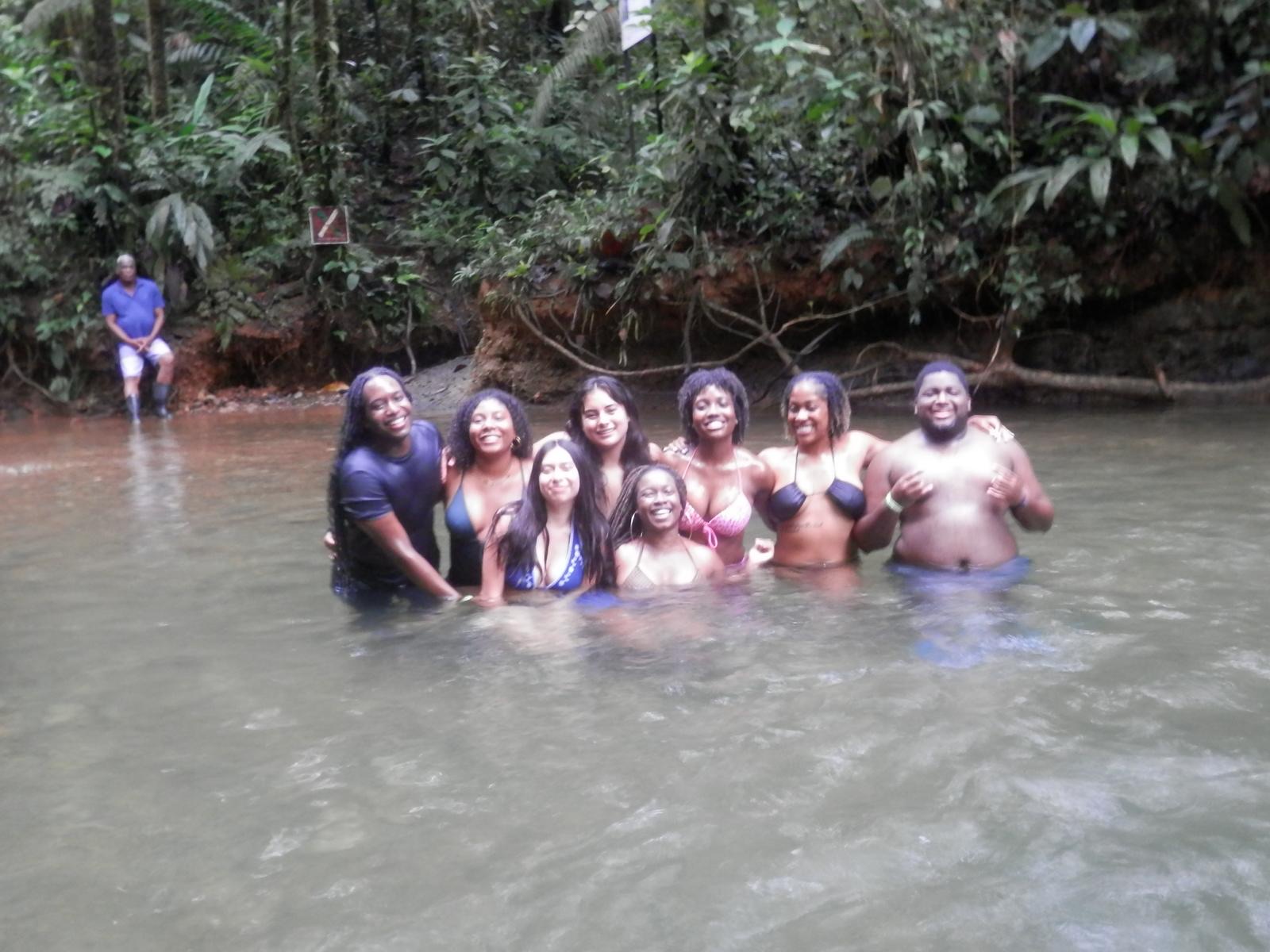
This past weekend we traveled to San Cipriano, a small town a few hours from Cali and close to Buenaventura, which is one of Colombia’s largest and most important seaports. Before going, we learned about its unique history. The community of San Cipriano is protected by Ley 70, a law passed in 1993 that recognizes and protects the rights of Afro-Colombian communities—especially their land, culture, and collective organization.
The town sits deep in the jungle, so to get there we crossed a river bridge and then rode the brujita, a hand-powered or motorized rail cart, through the forest. Once we arrived, we met with the Reserva Natural San Cipriano, an organization that preserves the rivers, waterfalls, plants, and natural beauty of the area. During their presentation, we learned about zoteas—gardens passed down for generations that provide medicine, culinary herbs, and aromatics—as well as San Cipriano’s history and how the reserve protects Colombia’s biodiversity.
Some highlights included playing games with local children, trying regional dishes, tubing down the river, and hiking through the jungle to reach waterfalls and natural pools. On our hike we even gained a new friend—a sweet dog who followed us everywhere. Brooklynn Tucker, another CET student, named him Chico Bean, and he floated down the river with us too! Exploring outside the city helped me connect classroom lessons with real experiences and deepened my understanding of Colombia’s complex history.
The Beautiful Botanical Garden of Cali & Being a Tourist
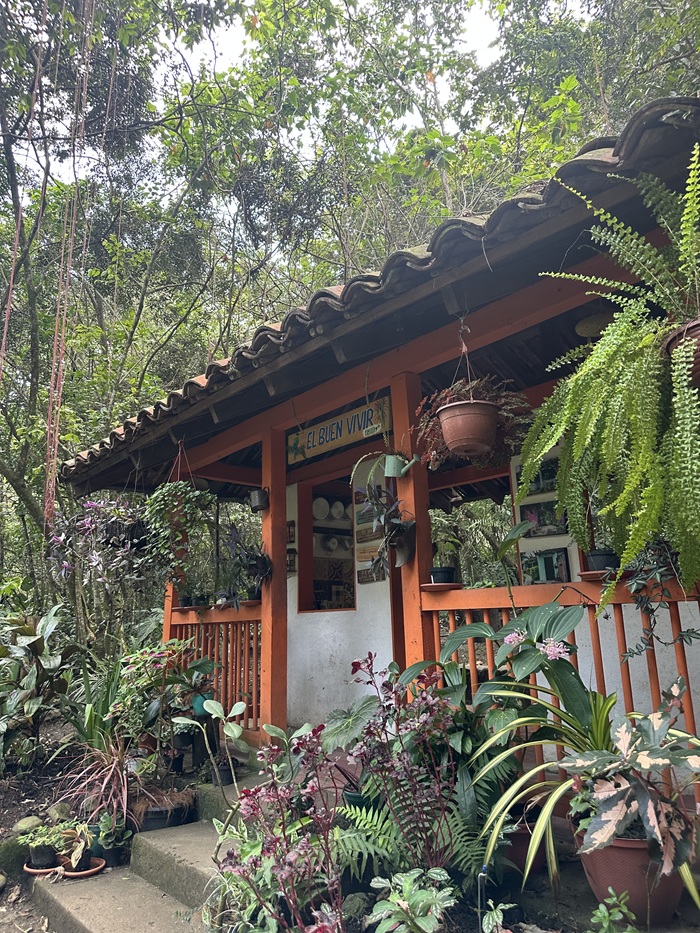
Cali is surrounded by natural beauty, including the Jardín Botánico de Cali. Founded in 2001, the garden is dedicated to conservation, research, and environmental education of plant species from Valle del Cauca. It features trails, educational stations, and reflection spaces that allow visitors to connect with nature. Entry is just 20,000 COP, and it’s located just outside the city, alongside the Cali River.
There are 14 educational sections covering a wide variety of plants from various climates. We spent about two hours walking the trails, and my favorites were the lily ponds, the lookout point with views of Cali and Cristo Rey, and the Casa Campesina—a house inspired by traditional Andean architecture. I loved how close the garden was to the city yet how much it showcased the Andes’ rich biodiversity.
A highlight of study abroad is embracing being a tourist: taking photos, asking questions, and having conversations. On the drive back, we met a lovely woman who was curious about why we were in Colombia and what we thought of it. Encounters like these are common—people often recognize you’re American and want to chat. Colombians are very friendly, and in Cali you’ll always hear buenos días or buenas. My recommendation: don’t be afraid to greet people and start conversations—it’s one of the best ways to practice Spanish and learn more about the city.
Food Life in Colombia: Trying New Foods, Restaurants, and More!
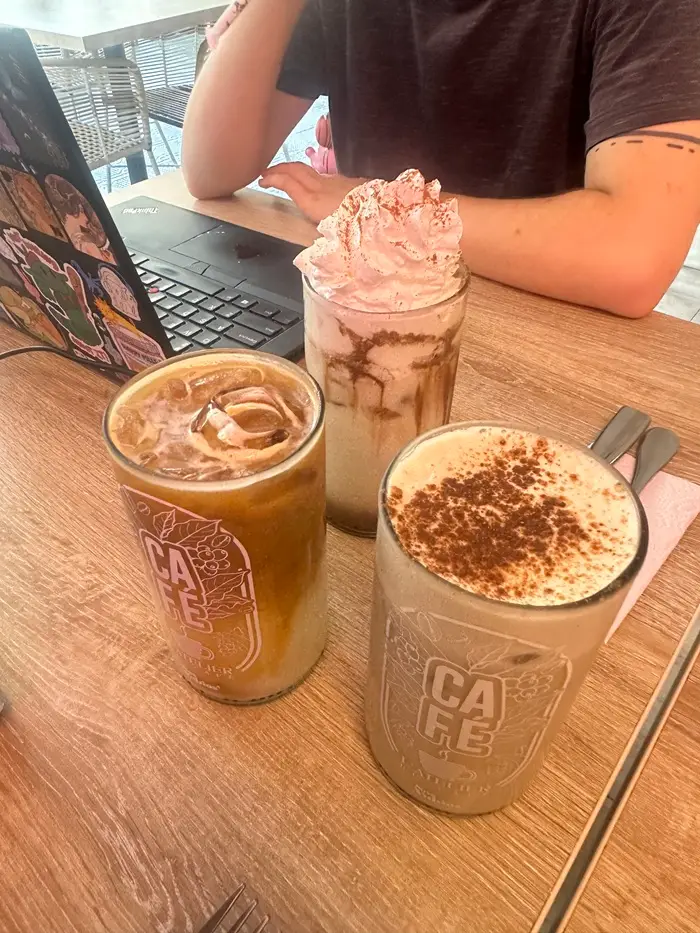
One of the most enjoyable parts of my time in Colombia has been the food. Our apartments are close to affordable grocery stores and many wonderful restaurants. From bandeja paisa to aborrajados, cholado, and plenty of cheese and plantains, the variety is amazing. Cali also offers international cuisine—Japanese, Italian, Mexican, Chinese, and French. And of course, Colombia is famous for coffee. Cali is full of coffee shops, including several right by the CET house.
Before arriving, I knew a little about Colombian food, but after a month and a half, I can honestly say I’ve had some of the best (and most affordable) meals of my life. I’ve also been cooking more—arepas, pasta, fried rice—especially since groceries here are fresh and inexpensive. Next week we’ll even learn how to make sancocho, a traditional soup.
At first, I worried I’d miss food from home, but the variety of restaurants and groceries within walking distance has made me feel comfortable. Exploring Colombian gastronomy has not only been delicious but has also taught me independence in surprising ways.
Building a Schedule in Cali: Everyday Life During Study Abroad
Now that I’ve been in Cali for six weeks, my everyday schedule is starting to take shape. Adjusting to a new country means navigating a different language, meeting new people, becoming more independent, and learning about yourself. Like any semester, it’s about finding balance between school and daily life, but here that also means exploring everything Cali has to offer.
Through CET, I’m taking courses on Race and Identity, Environmental Conflicts, Spanish Language, and the Cultures of Afro-Descendants in Colombia. At the Universidad Autónoma de Occidente (UAO), we’re also enrolled in a History of Armed Conflict class, which gives us access to UAO’s facilities, art, and sports clubs. I’ve tried taekwondo, joined the soccer team, and used the gym—all great ways to meet new people, especially since everyone is so welcoming.
Outside of school, there’s always something to do: museums, coffee shops, parks, and weekend trips to the Pance River to swim in crystal-clear water. Cali is also the salsa capital of the world, so music and dance are everywhere. Our CET apartments are close together, and we share access to pools, gyms, and sports areas.
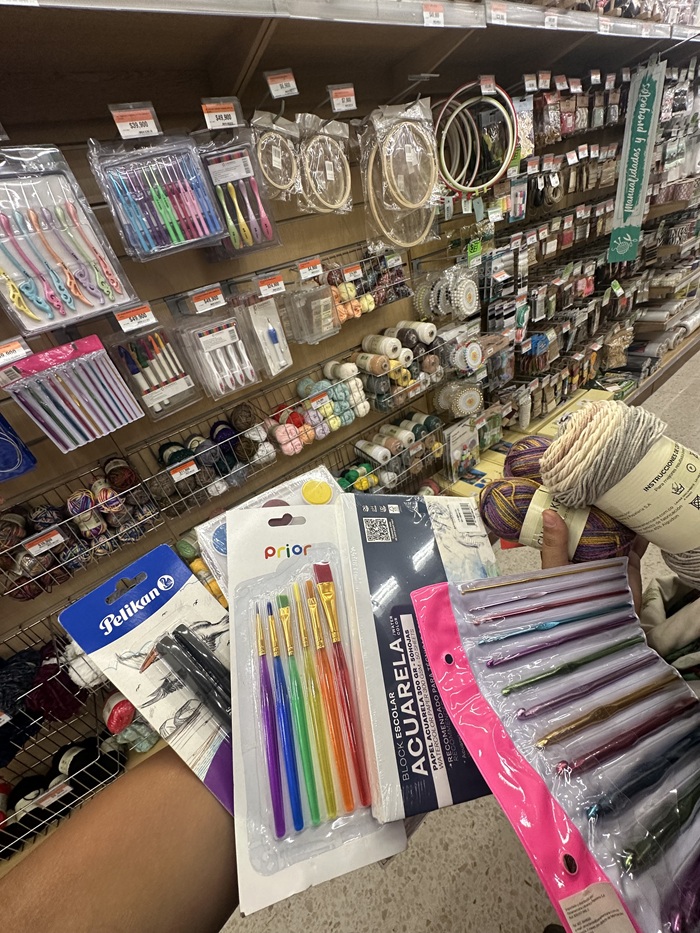
When preparing for this trip, I was not able to pack many comfort objects but at the mall there is an art store and a big bookstore! My friend and I went to the art store, and I was able to get watercolor paints and brushes to do some art work while I am here! In this picture you can see our art store haul!
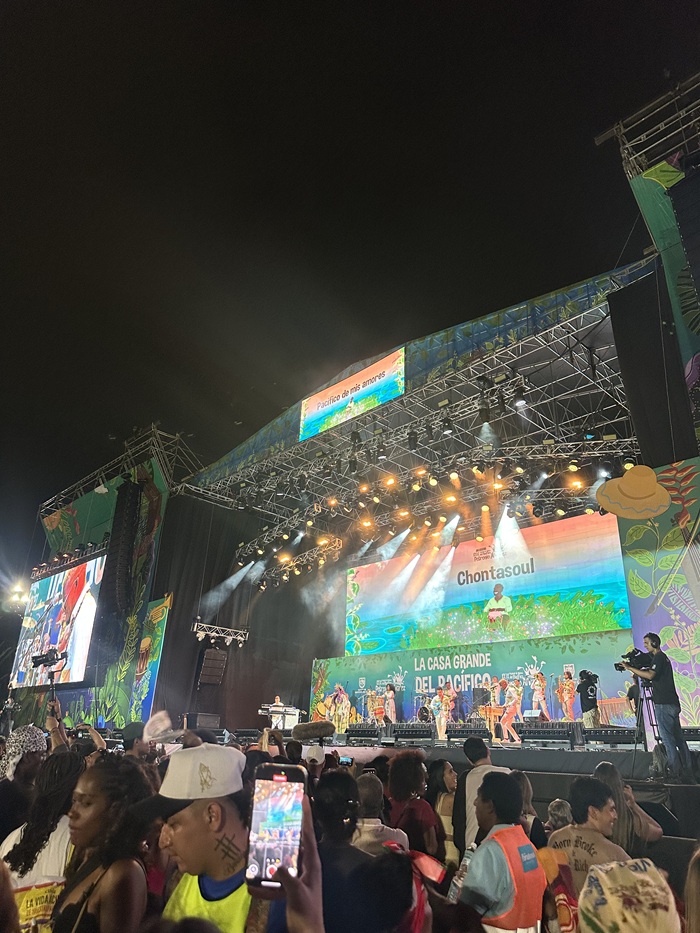
Festival de Música del Pacífico Petronio Álvarez
The Petronio Álvarez Festival celebrates Afro-Colombian Pacific culture through music, dance, storytelling, jewelry, games, and food. Held every August in Cali, it lasts six days and is considered one of the most important Afro-Colombian cultural events in the world.
Some of my favorite parts were trying drinks made from sugar cane, like agua de panela and guarapo, and tasting papa rellena de camarones. The concerts featured groups from across the Pacific, each with their own unique style, including marimba, currulao, chirimía, and bunde.
I attended twice—once with CET and again on the final day—and both times I was struck by the energy. People from all over Cali and the Pacific came together to celebrate their history and identity. As I continue learning about Colombia’s rich and complex history, Petronio Álvarez gave me a deeper, more personal connection to Afro-Colombian culture.