
Written by Tanner Lee (Lewis & Clark College), Student Correspondent for CET Japan, Fall 2026
I called a man an idiot in Osaka, and I thought I was being friendly.
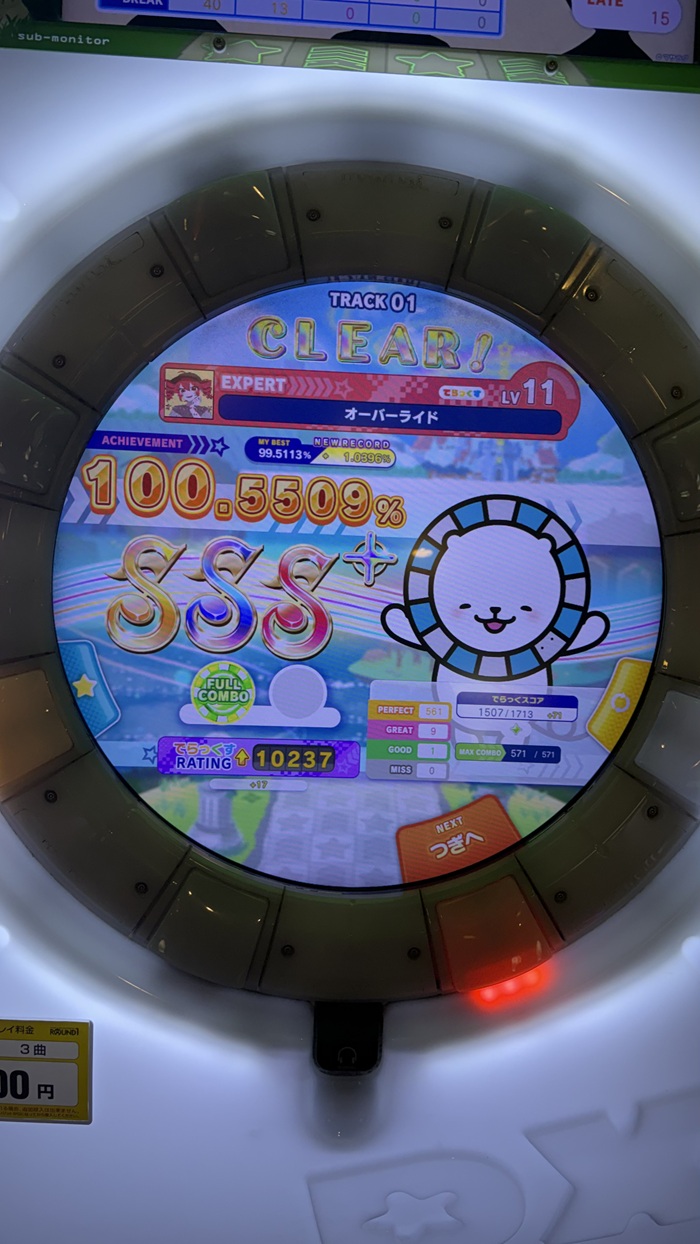
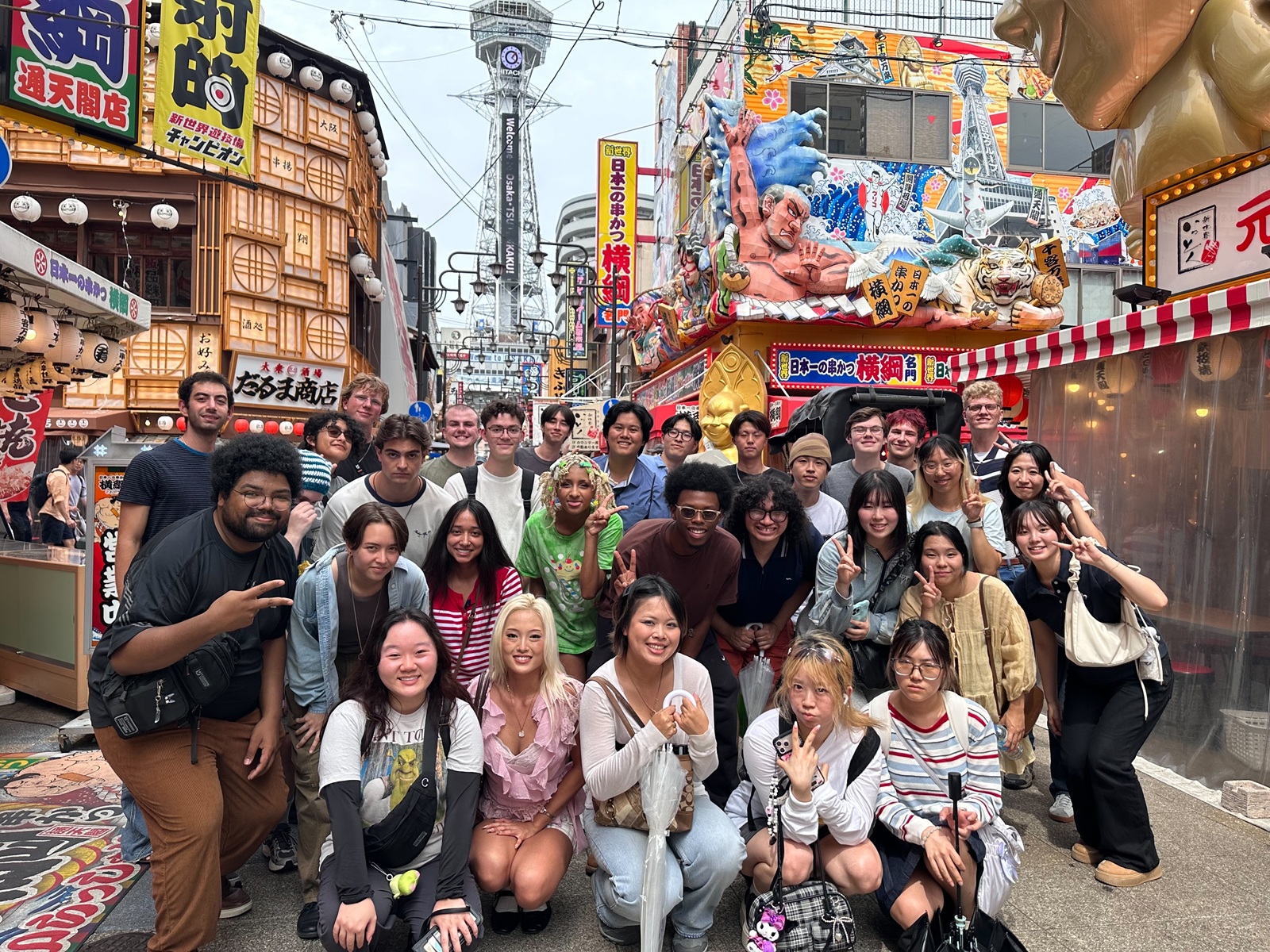
It happened at a Round1 arcade, where I wound up after a CET excursion to Shinsekai the first week of class. My game of choice is maimai, a rhythm game that bears a striking resemblance to the average front-loading washing machine. Notes fly out of the center from a circular screen and you tap or slide on a ring of buttons around the edge to match them. When the arcade is busy, it’s not unusual to share a machine, since maimai fits two players side by side. That afternoon, a man invited me to join his game.
Halfway through a song, I messed up a relatively simple move, and he said to me 「アホやなあ!」(aho ya naa, “You absolute idiot”), grinning. It was clearly a jest. A few minutes later, he fumbled a section himself. I figured he was open to friendly banter. So, I fired back with the teasing word I’d used all last year with friends in Tokyo: 「バカだなあ!」(baka da naa, “You absolute idiot”)
He froze, then turned back to his screen. The awkward silence lasted until the next round started, and he finished it without a word. Then, he excused himself quickly and walked off–friendly mood gone. I stood at the machine with no idea what I’d done, wondering if I messed up somehow.
It wasn’t until I described the whole scene to one of the CET student language partners from Osaka Gakuin University that I understood my mistake. He winced and then explained: In the Kansai region where I live, the word for idiot, アホ (aho) is considered the affectionate jab, and バカ (baka), another word for idiot, is the one people take offense to. This was the exact opposite of what I had learned from my Tokyo friends, where baka is the playful word, and aho sounds much harsher. The man at the arcade had likely felt insulted. To him, I answered his friendly tease with something that sounded genuinely harsh.
What stung the most was that I’d already studied abroad in Japan once before. Last year, I spent my Spring and Summer at Waseda University in Tokyo. I thought I was past the beginner’s mistakes and cultural misunderstandings. However, I realized quickly that Tokyo had only given me a general sense of Japanese. The Osaka program was asking for something more complex and immersive.
This is where CET’s full language pledge changes things. The pledge means I speak only Japanese with anyone who understands it, and I have no English to fall back on. Last year in Tokyo, I would have reached for my translation app without thinking and typed out an explanation for what I actually meant. Then, the moment would have been smoothed over. Here, I couldn’t even have explained myself in English, and my Japanese wasn’t yet good enough to repair a misstep that delicate. I had to just let the moment sit, uncomfortable and unresolved.
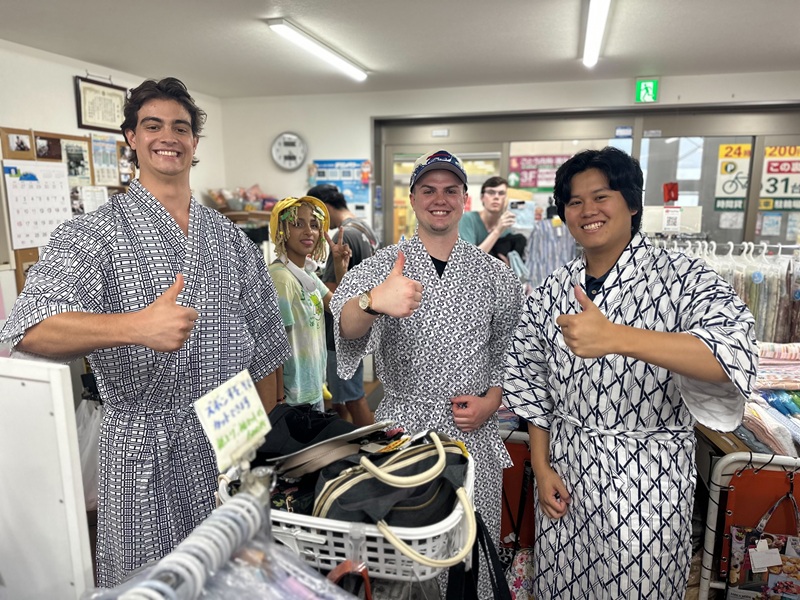
That discomfort is what made the lesson stick. Looking back, the arcade moment is the best argument I have for the pledge. It shows what the pledge actually does. Taking away English sounds like it would make my life harder. In reality, it simply removes the safety net so you can find out what you can do without it. Before the pledge, I assumed my Japanese had a ceiling. Now, I notice how much I’d been underestimating myself. My daily intake and comprehension have easily tripled what I got in Tokyo. Everything from the mundane to the complex happens in Japanese. This goes for ordering lunch, reading train announcements, sending emails, joking with friends, and even talking about Japanese politics with local residents. Nothing is reserved for the “Japanese time” of the day. It’s simply the language that I live in.
The biggest surprise is how much I already knew. When you’re pushed to try–and we’re really pushed to try–you find you can communicate far more than you thought. My peers always say the same thing after long discussions in Japanese: “Wow, we actually knew how to say all of that the whole time. We just fell back on English because it was easier.” The pledge makes that realization happen over and over, and it just continues to reinforce our language learning.
The arcade mistake showed me that textbook Japanese only goes so far. Nothing I studied covered how aho sounds in Kansai, or the way Osakans say ちゃう (chau) for “no,” or the slang that changes every semester. The exchange goes both ways–the CET students also have spent the semester slowly introducing American slang to Osaka locals through direct translation.
Many local students now understand when the Americans say “Clock it.” The most used word in CET Japanese vocabulary became 集中する (shuuchuu suru, to focus) with the introduction of “Lock in.” And the exasperated “Oh brother…” translated roughly as ご兄弟 (gokyoudai, a formal word for sibling) or ‘Bro-kyoudai.’ However informal, this cultural exchange actually teaches me more than classes can, because the vocabulary comes with the tone, the grin, and the situation attached.
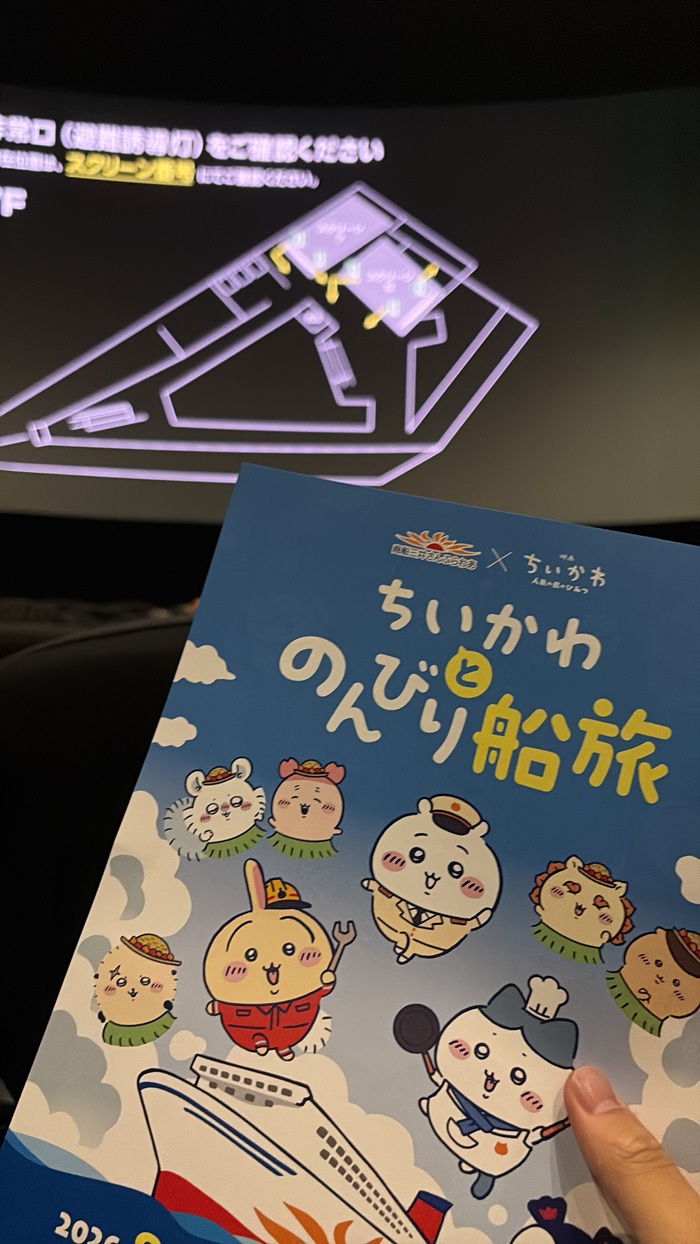
In more structured terms, the clearest change has been in my daily life. In my previous study abroad, my roommate and I mixed languages. Whenever I got stuck I switched away from Japanese. This time, that option disappeared. Since the pledge started, I have held long conversations with my housemates and local friends discussing complex topics in Japanese–on East Asian international relations, gender dynamics in Japanese dating culture, and even the social impact of the new Chiikawa movie. Now, we talk for hours entirely in Japanese, and I don’t think about switching at all anymore.
Two months ago, I would always have a tab open on my translation app. Now, I feel comfortable walking around town without even bringing my phone with me. If you’re looking to greatly improve your Japanese conversation and comprehension, here’s what I’d say: Let the embarrassing moments happen. Mine at the arcade turned into one of the most useful lessons of my semester. Talk to people outside class. Osaka’s locals are known to be friendly and approachable. They are always happy to engage you in conversation if you show a willingness to learn. Use the Japanese you already have. Constant flashcard practice may expand your vocabulary, but all the memorization in the world pales in comparison to actually using what you know. You know more than you think.
The pledge is uncomfortable at first, but it’s the most comprehensive way to level-up your language skills. So don’t be afraid. The embarrassing moments and mistakes are temporary, but the fluency isn’t. All you have to do is remember that aho is the friendly one in Osaka.