
Written by Isabella Moss, (Oberlin College), Student Correspondent for CET Brazil, (Social Justice), Fall 2026
A few weeks ago, we had the pleasure of spending the day at the Jaraguá Village in the North of São Paulo City. We danced, ate, made art, and learned a lot about culture and history.
We started the day in the prayer house. This is the same way they start every day in the village, essentially their way of greeting the day. During the ceremony, we played a game where we ran in circles and had to “dodge” certain obstacles. Although it seemed playful, the purpose of it was to mimic the roadblocks they may encounter when running away from attackers. This is an unfortunate reality for many Indigenous groups, even today.
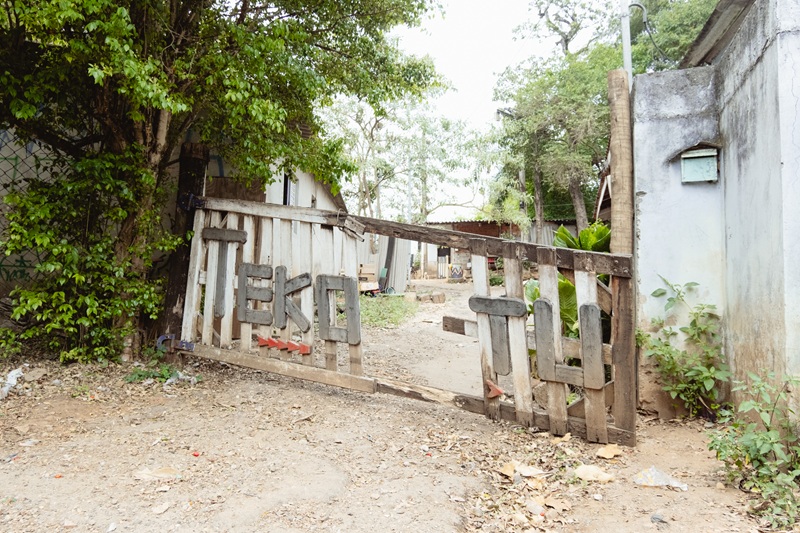
Next, we headed over to Sandra’s house, who is one of the women leading the tour, for breakfast. They served us sausages, bananas, and the most delicious baked and fried bread. On the way, we passed by this gate that really caught my eye. It is supposed to spell “Tekoha Ytu,” which is the name of one of the six smaller villages that make up the Jaraguá territory.
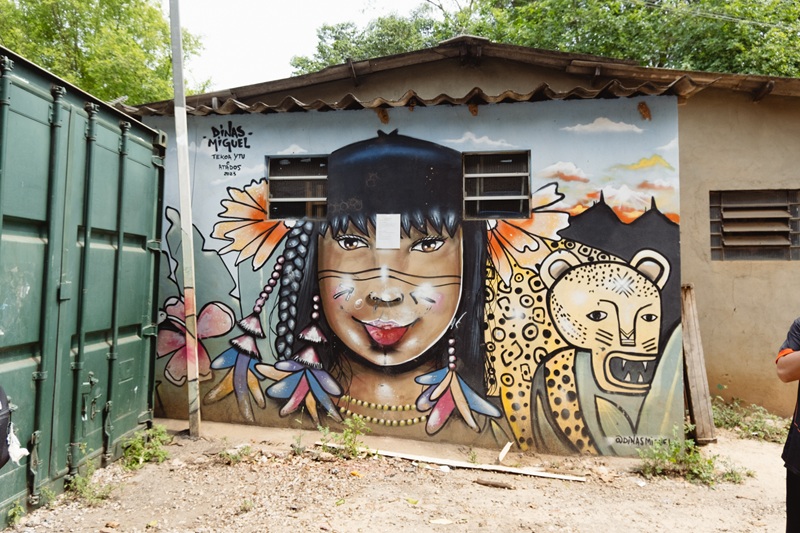
After our breakfast, we began a tour of the village. I was very inspired by all of the art on the side of their homes or other buildings, one of which being this mural.
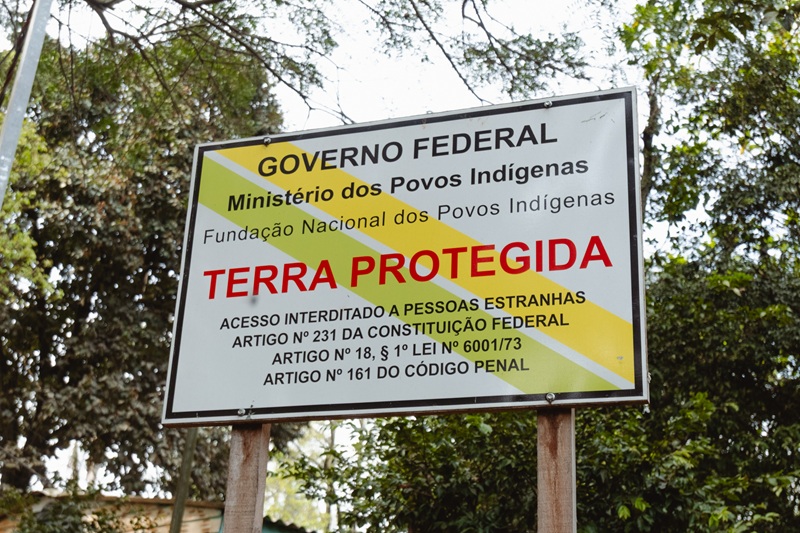
We also passed by the sign dedicated to the official demarcation of their territory, which only happened last year after almost forty years of demands. The fight for territory recognition is a pressing issue across the country, even for groups who have already had their land demarcated as it could still be taken away.
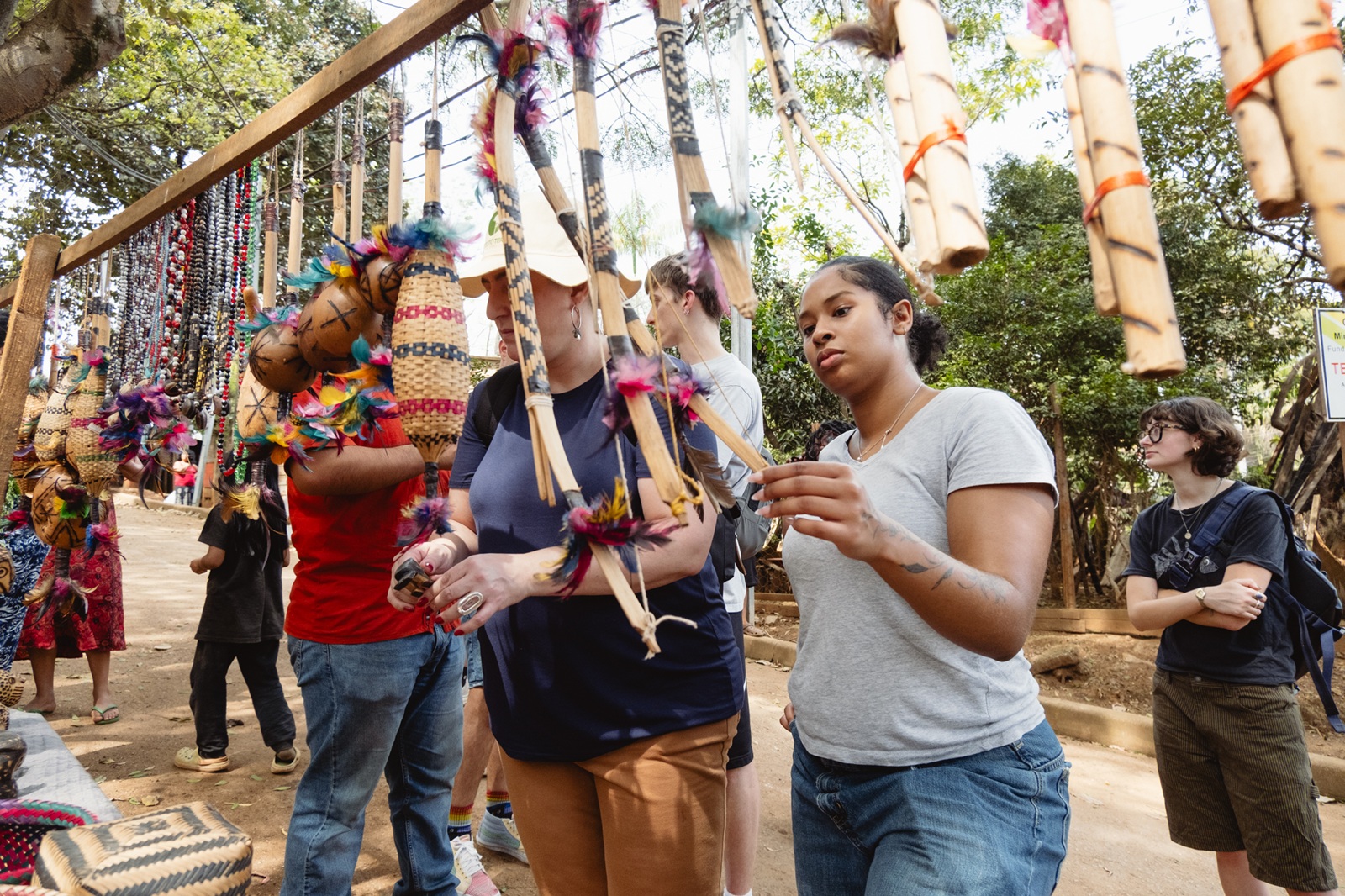
Afterwards, we checked out some of the local handicraft vendors. They had lots of woodworking, beadwork, weaving, and some handmade toys and instruments. Many of my friends bought bracelets, earrings, and necklaces. I took home a small wooden turtle!
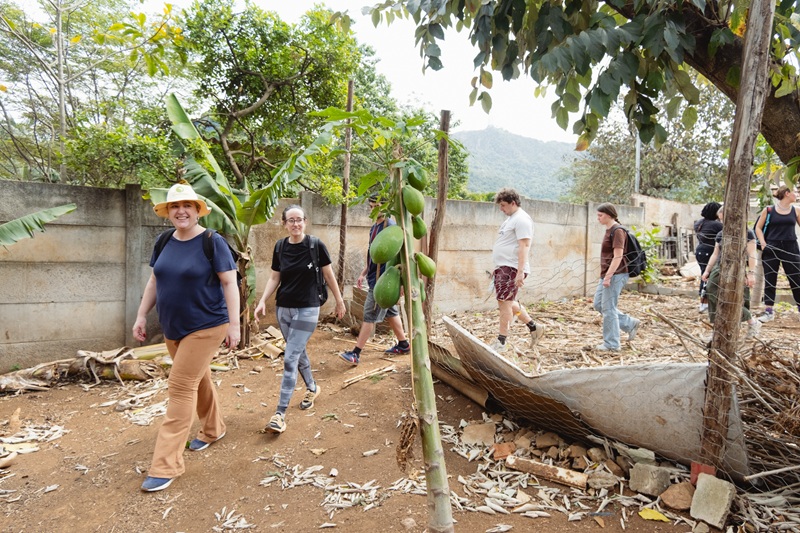
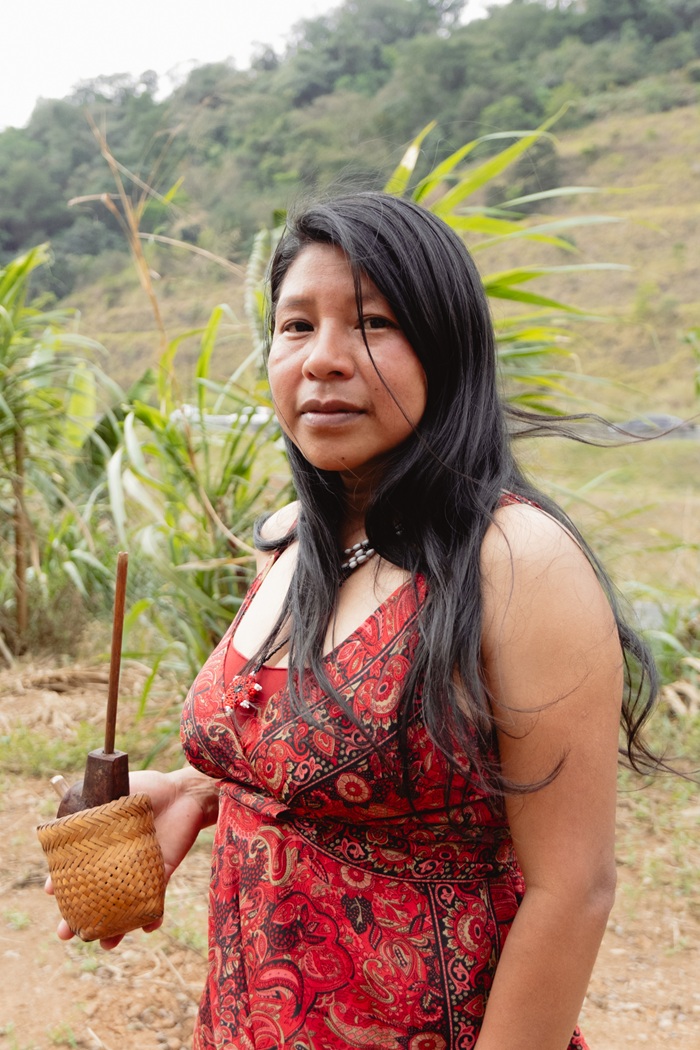
We also got to walk through some of their gardens, among which was Ará’s garden! Ará was another one of the lovely women who showed us around. Along with tending to her garden, she is a very talented beadwork artist. She also gave us a workshop later in the day.
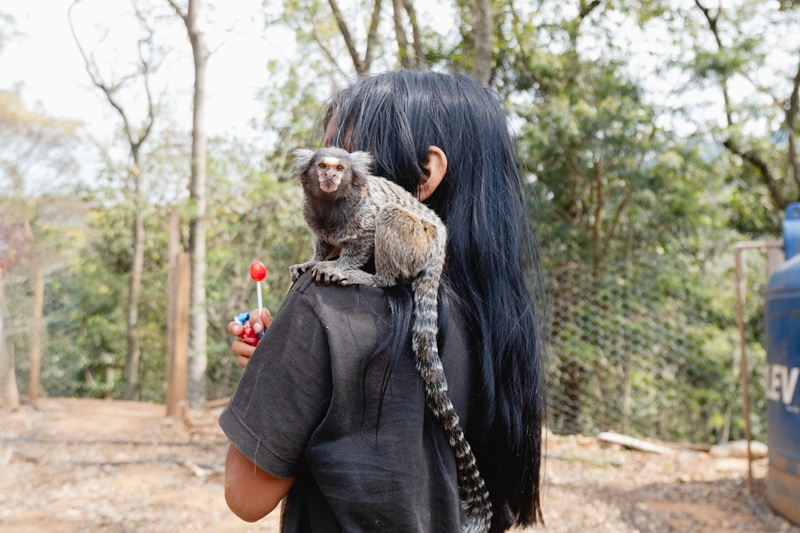
Our guides told us that many children live in the village and might be curious about us. They recommended bringing snacks to share. One of my friends gave a girl some lollipops, and they somehow ended up in the hands of a sagui, or a little monkey! This was an incredible moment that really showed the interaction between the people of the village and the flora and fauna that surrounds them.
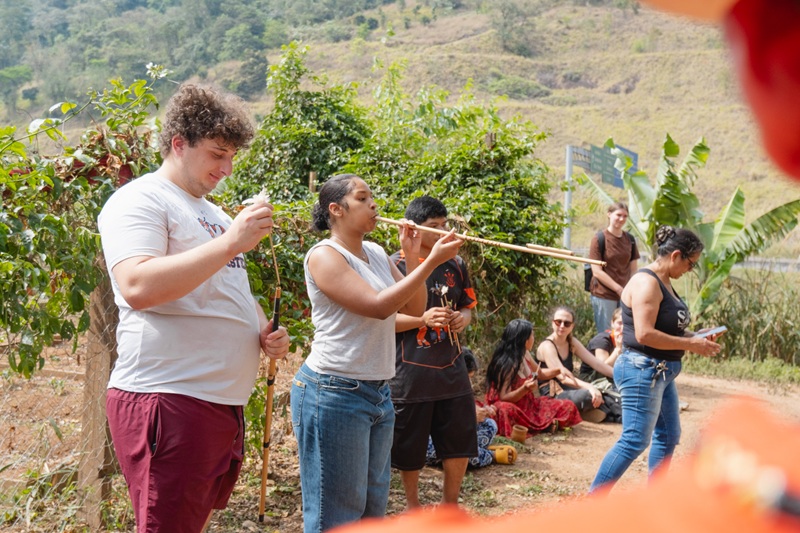
We then played blow-darts, which brought out the competitive side among us. Not to flex, but I hit all of mine on the target. We also had a small dance lesson with live singing and guitar.
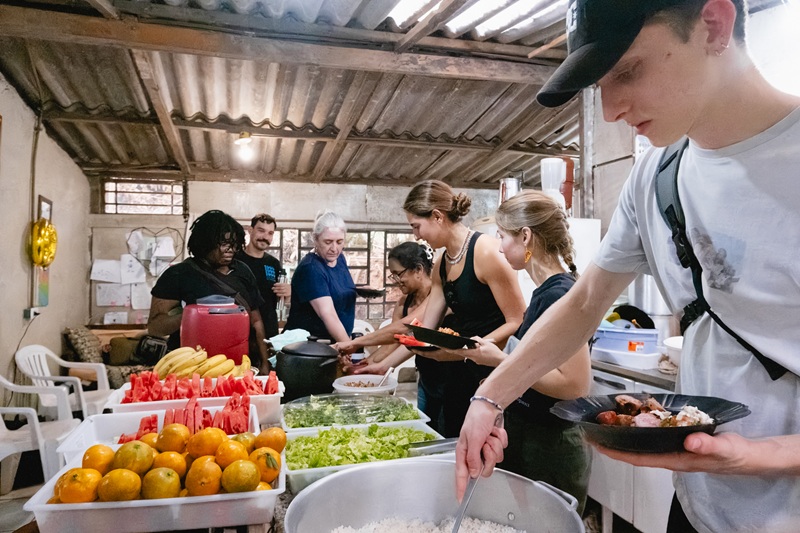
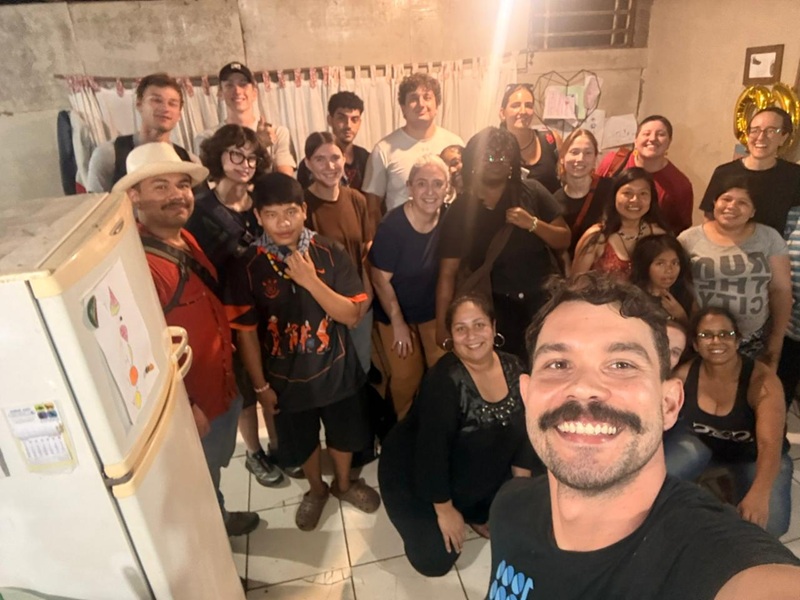
The day ended with lunch, which was a buffet of fruits, rice, beans, and meats, which were all very delicious. We had a bit of time after to chat. Then, we had the opportunity to learn some beadworking, making either earrings or a bracelet, which was very meditative. We then ate dinner and had a meaningful reflection around the firepit.
Overall, I felt very inspired by my visit to the village. I am very glad I had the opportunity to learn about and participate in their culture! I am eternally grateful to the kind people who welcomed us into their community and their homes, and spoke so openly and beautifully about what being Indigenous means to them. This was surely an experience that will stick with me for a long time.