
Written by Sam Lambert, (Berea College), Student Correspondent for CET Colombia, Spring 2026
Hola buenas!
Something huge in the CET Colombia program are the traveling opportunities it features—this semester, the first brought us to San Cipriano for a weekend. The second was an entire week during a Traveling Seminar, spent in La Boquilla, San Basilio de Palenque, and Cartagena. These trips are designed to augment our studies and provide real-life context to the things we’re learning in class. We left for San Cipriano at the end of February, excited and ready to go!
San Cipriano is a Black Community about two and a half hours away from Cali. Under Law 70, certain Black Communities with ancestral ties to pieces of land were granted those areas to build their own settlements—it functions similar to United States Native American reservations, though in my understanding, Law 70 communities possess more rights and have a gazillion protections in place. As one of the final projects of a class that we share will be to build a fictional Black Community with our own amendments and clauses to Law 70, this trip was intended as educational—but we still had some fun!
Trip to San Cipriano
Leaving at 5:30am on Friday was not part of the fun. I dozed on the bus ride until we arrived at a breakfast spot, where I tried aguapanela for the first time, which is a drink made from sugarcane juice. Then we were right back on the road!
The only passage to San Cipriano involves crossing a rickety bridge that sways as you move across a muddy river, then riding a railway cart powered by a motorcycle. The innovation that led to the creation of those carts is astonishing. Where did they even come up with that?
The streets of San Cipriano are dusty and resplendent with dogs and cats. We are strictly not allowed to pet animals, as we were loudly reminded by our supervisors every time Chico Bean and his mom (two of the stray dogs) came begging for pets. The dogs even followed us to the meeting building where we learned about the origins of San Cipriano.
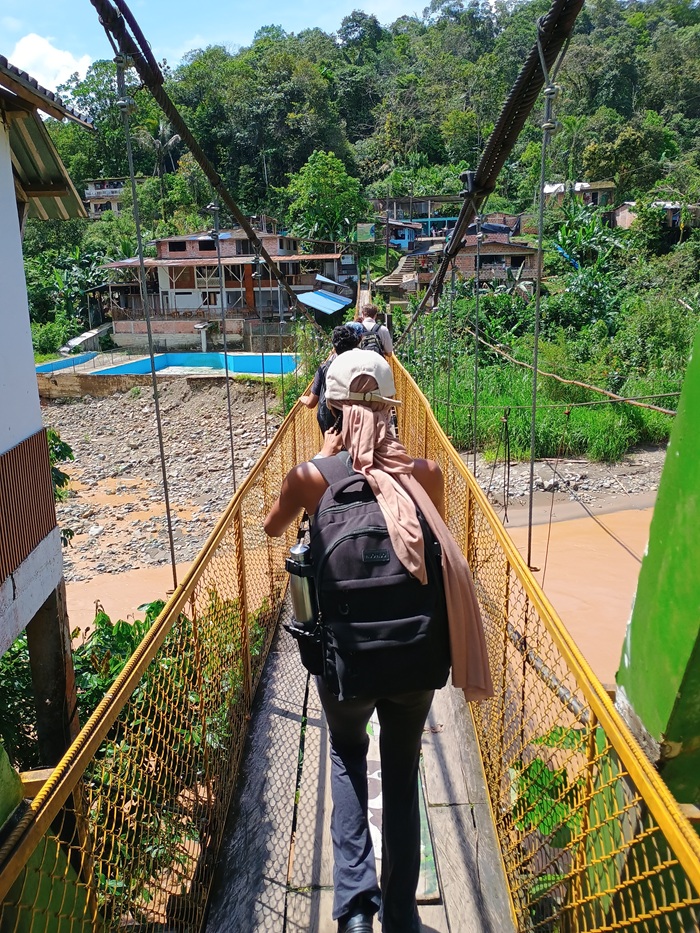
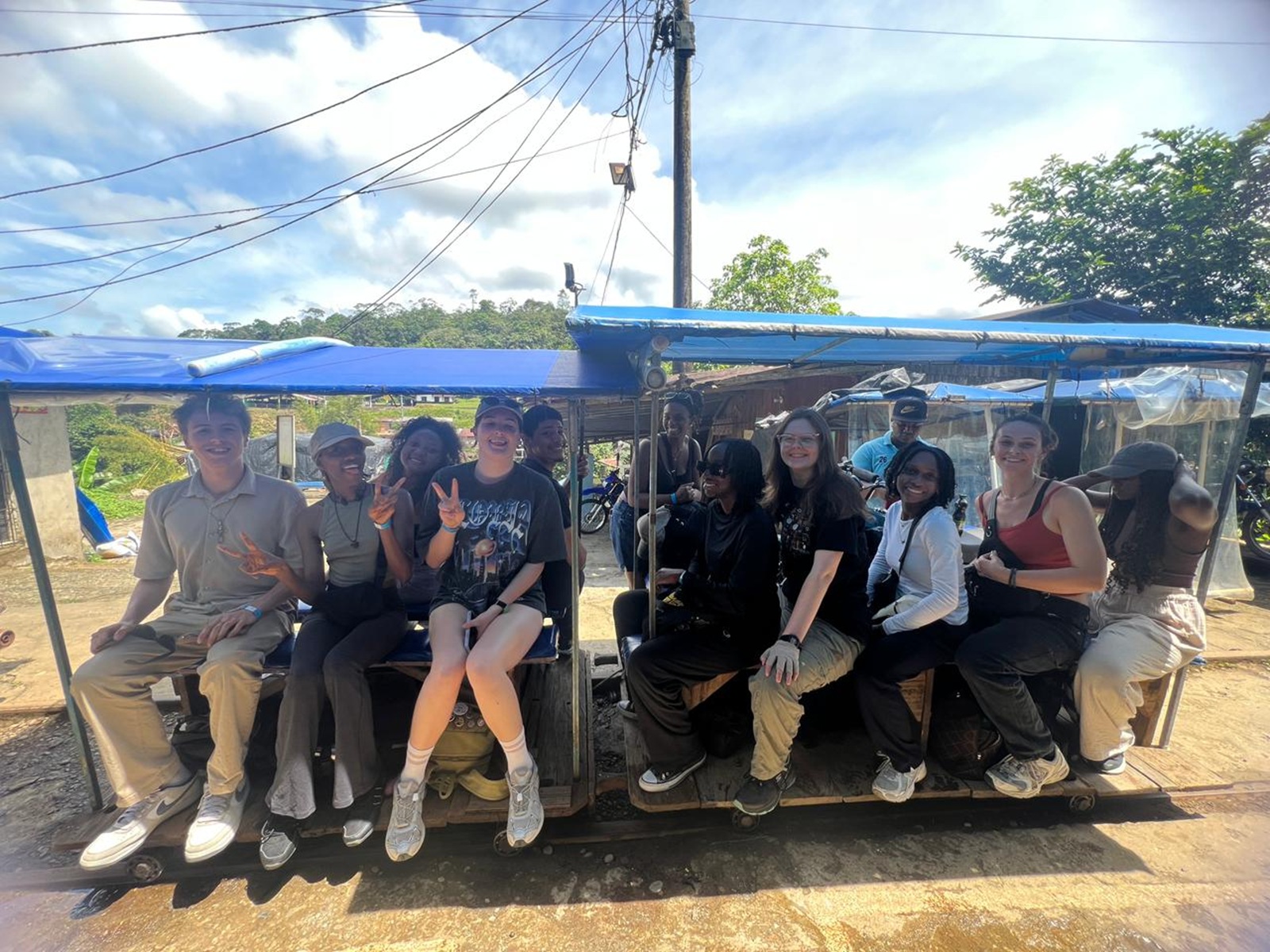
San Cipriano is probably best known for its river. That first day, we went down to the river and played about. We ate most of our food in the cafeteria that they have for visitors and campers, so food was free with our program. They fed us a LOT of food. I finally have had a proper arepa and it was delicious, but with the scrambled eggs and beans and meat that they came with I was almost too full to finish them. It was a good breakfast for our second day, though, when we went on a nature hike through the jungle.
We were told that it was possible to see monkeys on that hike, and I maybe saw one far away in a tree! Unfortunately, we were not advised to pack our wet shoes, so those of us who didn’t trekked through the river in socks and tennis shoes. The first steps were pretty miserable, and my shoes didn’t dry out until we got home.
At the end of our hike, we went tubing down the river! Again, fully socked and shoed, in my dinosaur swimsuit, desperately holding onto a friend’s hand as we practically starfished to try not to scrape ourselves up on any of the many rocks in the shallow parts of the river.
We played in the river until lunch, with one of the local roomies (who had grown up there) sharing one of his favorite childhood pastimes—feeding the fish. With a bag of cheeto puffs, we crouched motionlessly in the shallows of the river and encouraged the fish to get closer and bolder. One of them pulled a cheeto right out of my hand!
We had a bit of time to eat lunch and rest before our next activity—teaching the local kids American games. I started to feel a bit nauseous about an hour after lunch, but I grabbed my umbrella (it had just begun to pour) and trekked out toward the basketball court, thankfully covered. There, we taught about thirty kids and teens how to dance the Cupid Shuffle. Feeling too nauseous to continue, I sat out for the following relay race and various gym games.
Unfortunately, both myself and another student were out for the rest of the weekend with food poisoning. I won’t bother you with all the gross details, but we returned home the next morning and were given plenty of time to recuperate.
Part 1: Traveling Seminar to La Boquilla
Two weeks ago, we embarked on our Traveling Seminar! We had to leave our apartment at 5:30am to catch our flight on Monday. I dozed on the bus ride out, which is a solid hour even if we don’t account for the people from other apartments we have to pick up. Once we arrived, we flew out to Cartagena!
We did not stay in Cartagena. We immediately got on a bus and drove to La Boquilla, a Black Community protected under Law 70, similar to San Cipriano. La Boquilla is a fishing town practically built on the beach. That first day, we ate whole fried fish (head and eyes included), spent some time playing in the ocean and chilling on the beach, and attended a drum circle workshop. We watched dancers perform and learned some basic drumbeats—La Boquilla has a drum school that was built to preserve the African drums tradition that the community has as part of its heritage. We were privileged enough to have a lesson with them!
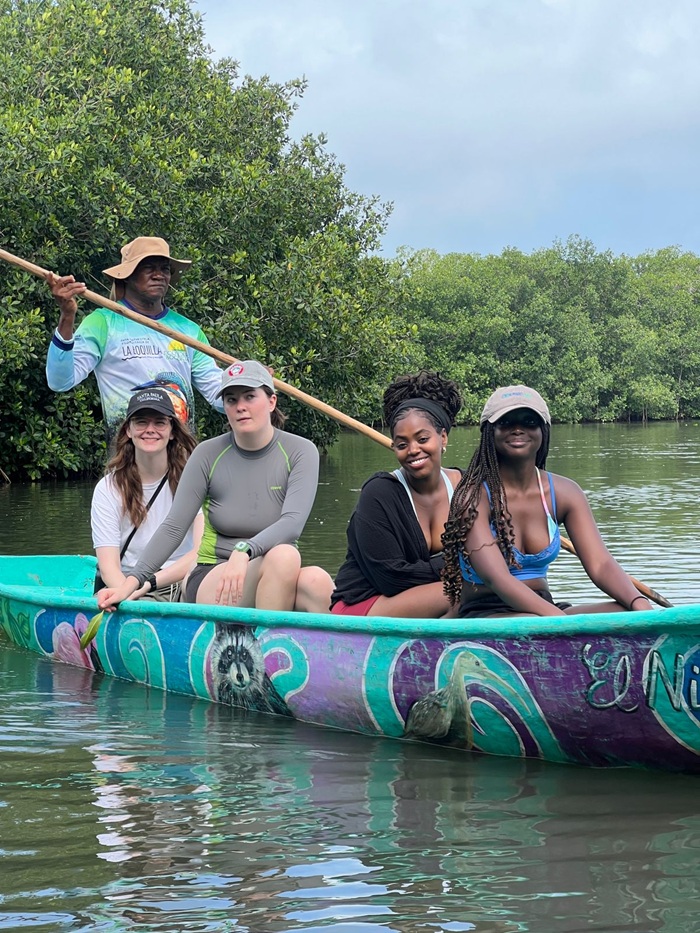
Tuesday morning we went out crab fishing in the mangrove forest! That was genuinely so fun: we went out in canoes, learned how to row them, and learned how to cast nets! We tromped about in the water (it rarely came above our knees) and searched for wildlife, occasionally spotting a crab, snail, or jellyfish! It was one of my favorite activities of the whole trip. Afterwards, we were served for lunch the crabs we just caught.
After lunch, we packed up our belongings and boarded the bus to head on to our next destination—San Basilio de Palenque!
Part 2: Traveling Seminar to San Basilio de Palenque
I loved Palenque so, so much. Palenque is the first free town in the Americas, founded by runaway African slaves in 1603. A community protected under Law 70, it maintains much of the original culture and its own language—Palenquero, a language developed from the combination of Swahili, Portuguese, Spanish, English, and other African languages. The locals still speak Palenquero and observe the same religious traditions as their ancestors did in the 1600s, combining with modern Colombia to create a really beautiful society unlike any other that I’ve heard of.
In Palenque, everyone knows everybody else. The town is split into two neighborhoods, and every person is a member of a cuadro. A cuadro is made up of everyone born that year in your neighborhood, and you remain a member of that cuadro for life. You attend school together, spend time together, make decisions together—everything.
The evening of our second day there, we went to the basketball court and hung out with the kids as they played soccer. I sat there, watching them play, and it was almost obvious who were in cuadros together. They all played together the same, but there was a different kind of bond between cuadro-mates. The way they had already assumed or been assigned roles in their cuadro was apparent in the way they behaved. It reminded me of The Giver, but not like that at all—in Palenque, the color of history is essential to everything they do.
The justice system of Palenque was enviable, to say the least. They don’t have police. Rather, certain members of the community are trained in social work and act as a volunteer police system. The only weapon we use, they told us, holding up a staff, is this. The weapon of authority and respect. For committing a crime like robbery, the thief is required to pay for the amount that they stole. Jail sentences last only until they pay it—and the max jail sentence is four days. They told us that they usually only have a serious incident once or twice a year, and since everybody knows everybody and there’s someone on every street with the social work training, it’s usually resolved almost immediately.
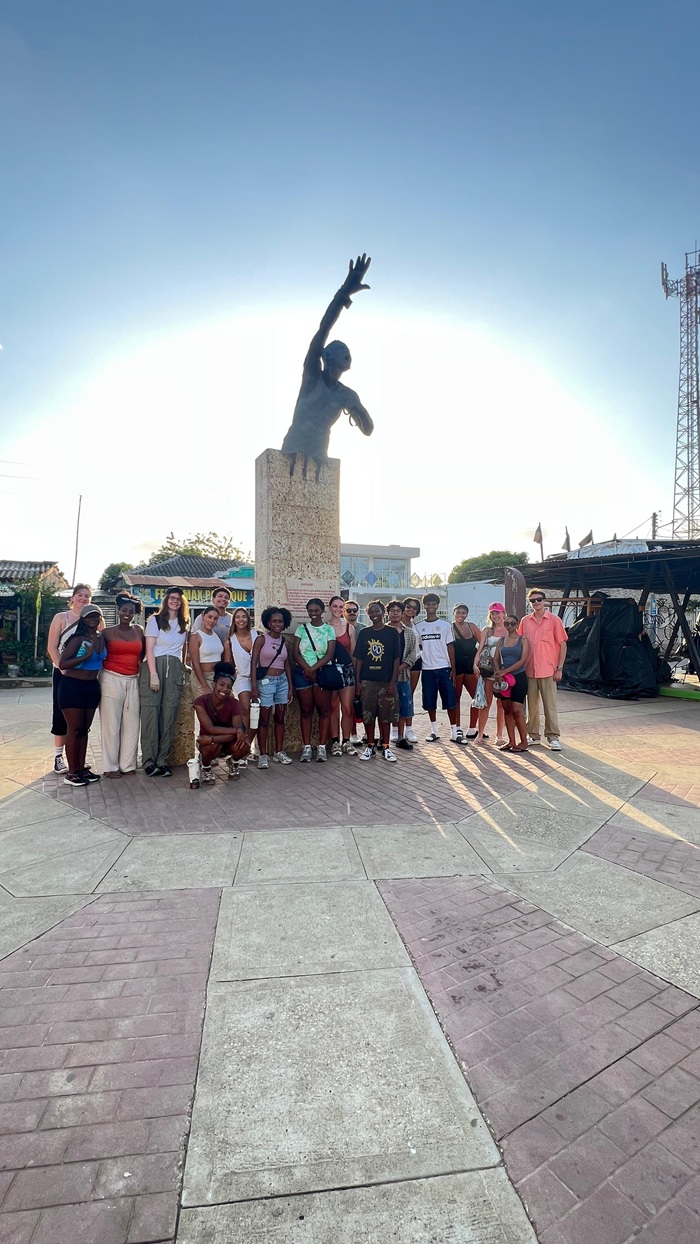
We stayed in Palenque for two nights, split into groups of three or four to stay at the homes of various community members. My two roommates and I were lucky to be placed in the only home with air conditioning. We also had running water, but not for the shower—that was to be a bucket shower. I was nervous about it at first, but I have now become one with the bucket shower. I have never had a more productive shower in my life. It was lovely (and the water was perfectly cool after a day of 96 degrees out).
We spent a final workshop with the women of the community on Thursday morning in the peanut fields, which we could only access by moto! At that workshop we did so many things. The women washed our feet with a special concoction, taught us traditional games and songs, and how to make coconut candy. Then they showed us how African women hid peanuts in their hair to transport them to Palenque, how to plant peanuts, and how to wrap a turban and some different methods and their attached meanings.
We ended with a communal soup. They laid massive leaves on the ground, spread various typical soup contents all over them (typical for here, so full pieces of chicken, yuca, and plantain) then served us each broth, which we in turn populated with whatever we wanted from the leaves. I ended up spilling a lot of scalding soup on my backpack. Pretty typical of me, to be honest.
Part 3: Traveling Seminar to Cartagena
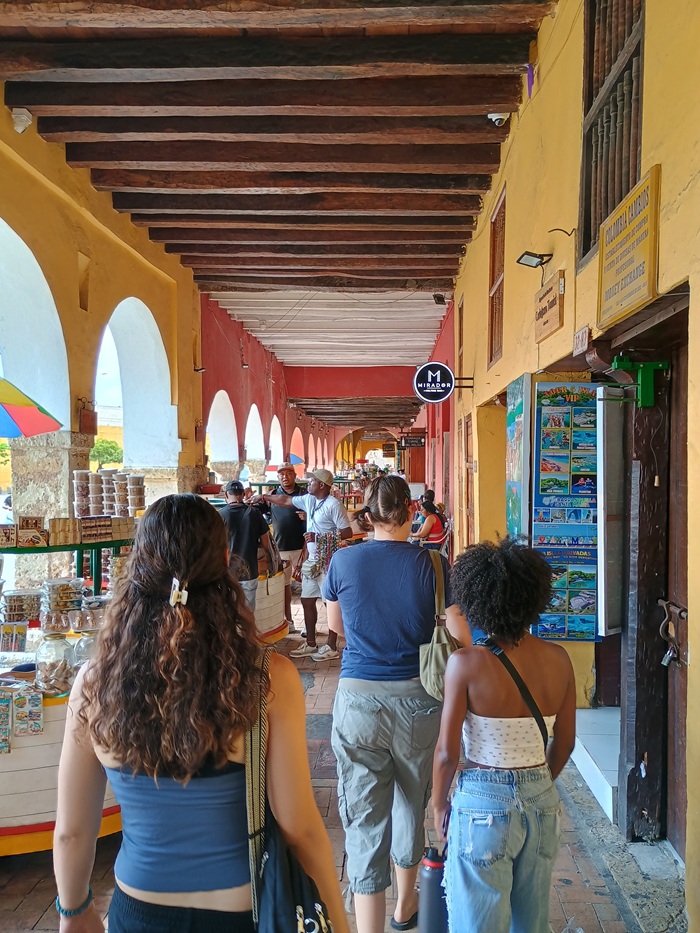
Back on the bus! We made it to Cartagena for realsies this time, where we stayed in a hostel/hotel (hostel vibes, but hotel rooms). Friday we got once again on the bus and drove to an area called Tierra Baja on the outskirts of Cartagena. Here, we got to learn about a school program for kids and by kids formed to prevent sexual assault of minors, which is unfortunately prevalent in the area. They showed us the book they’d written and the song they’d recorded, showed us around town, and organized an activity for us all to sculpt clay together.
Saturday’s activity took us to various historical sites of Cartagena (in groups) to critically analyze the impact of tourism. My group went to Plaza de los Coches, a popular attraction of a beautiful piece of the city that used to be a prime location for the slave market. In the afternoon, we journeyed to a workshop with a queer dance group. We did some improvisational dancing and learned how to Face on a runway. Shockingly, when we made it a competition, I made it through a round of elimination. Time to look into modeling?
Sunday at around noon, we boarded our plane to return to Cali. I am so, so tired, but I learned so much. From drumming to crab fishing to candy making to vogueing, our workshops were incredible and so varied. The communities were welcoming and excited to have us, and I’m so grateful to have had the opportunity to visit and learn from the people there.
Overall Thoughts
I feel incredibly lucky to have been able to go on both these excursions. Plenty of tourists passed through places like San Cipriano and Palenque, but they didn’t stay in their homes, eat with them, laugh with them, learn with them. We had that privilege, and I can’t emphasize enough that it was wonderful.
By the next time I write, we’ll be getting ready for final projects and presentations! It’s crazy that we only have two months left in Cali, but I plan to make the most of it.
Much love,
Sam