Vietnam

Toggle view

Journalism in Vietnam

Bookmark and Share

Written by Kate Maruyama, CET Japan and Vietnam Program Manager

For a journalism student, Vietnam provides a particularly interesting case study. Some are interested in how the Vietnamese perspective of the war differs from US textbooks; others find the rapid modernization alongside the traditional fascinating; nearly everyone loves the food. For two weeks in May, Washington and Lee University professor Robert de Maria and 11 students journey through Vietnam on the customized program designed to explore these themes. Read the group blog and find out more on their first impressions of Vietnam, thoughts on the museums, and reactions to speakers. Common themes include:

  • Eating pho at the same restaurant of a famous person (places so far: Bill Clinton & George Bush, Brad Pitt and Angelina Jolie)
  • Seeing the party line at the War Remnants Museum is really [sobering, makes you think about what it means to be an “American”]
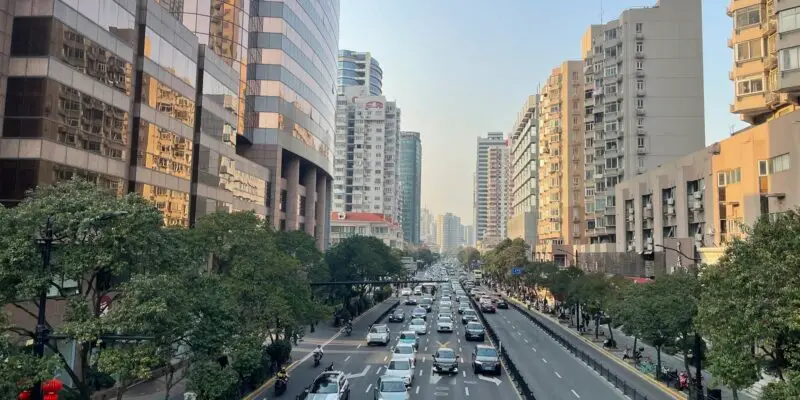
  • The traffic is crazy. I know I was told that, but it really is crazy.
  • I never thought of the war from that perspective, but I can see where they are coming from…
  • It’s really, really, really hot and humid.
  • Wow, I never realized how much I’ve always taken [understanding the language, the luxury of being able to drink the water, etc.] for granted…
  • That was a really long flight…

Now, the group leaves cosmopolitan HCMC for the Mekong Delta and then the Central Region. Stay tuned!

2012 CET Campus Ambassador Awards!

Bookmark and Share

While CET is proud of all our program alumni, we are especially happy to brag on a special group of returnees today!

Each year we invite approximately 50 students to serve as CET Campus Ambassadors upon their return from study abroad.  Our hope is to give these CET program alumni a professional platform from which they can discuss their experiences abroad and internationalize their home campuses.

These students are nominated by our overseas staff as exemplary participants and leaders on their program.  Members of our Campus Relations team train these students to organize events and coordinate projects which assist study abroad offices and appropriate academic departments.  These outreach projects include things such as helping at a PDO, writing an article about study abroad for a school newspaper, teaching a cooking class or presenting at a conference.  Creativity is certainly encouraged!

The 50 Campus Ambassadors then write reports, submit reflective essays, and gather recommendations for a committee that evaluates the professionalism of their projects, creativity, depth to which they internationalize their home campuses, and level of helpfulness.

This year the top five CET Campus Ambassadors were given a partial plane ticket in order to return to the country where they studied abroad!  Congratulations to the following students who were selected for their excellent CET alumni achievement for the 2011-2012 academic year:

*   Quincy Ross – Vanderbilt University – Chinese Studies & Internship in Shanghai

*   Terral Boisfontaine – Vanderbilt University – History of Art & Italian Studies in Florence

*   Julie Hooper – Bowdoin College – History of Art & Italian Studies in Siena and Intensive Italian Language in Sicily

*   Tin-Yan Chan – Clark University – Vietnamese Studies & Service-Learning in Ho Chi Minh City

*   Melanie Bianco – University of Virginia – History of Art & Italian Studies in Siena

Each year, our students do amazing things with the award.  For example, a China program alum won the award two years ago, and she returned to do volunteerism for an extended period of time.  Two girls who studied in Siena for a semester used it to return and see the biggest event of the year there which takes place each summer – the Palio.

Everyone at CET would like to thank our 2011-2012 Campus Ambassadors.  They have worked hard throughout the year and certainly deserve recognition!  We are incredibly proud of all CET alumni who tell others about the value of study abroad and share what they learned with their classmates and communities.

Coffee Talk and Making Friends with the Locals

Bookmark and Share
Written by Taegan Williams (Bates College), Student Correspondent

These past weeks have also been great because we are starting to branch out and make new friends. We were able to go to a coffee talk that was hosted by one of our roommates clubs. The issue on the table for discussion was gender issues in Vietnam. This was an eye opening experience for sure. The Vietnamese youth are modernizing with a more western mindset, yet the country has such a generational divide that these young adults feel frustrated. They can’t break free from the traditional old values, yet want to desperately explore being young and free. In the United States we certainly take all aspects of our education for granted. They do not have health class here in Vietnam, which was a huge issue that was discussed. I wish in the United States more students were inspired to go and just talk about issues like this that pertain more to the States or even other international issues. We had a great time at the talk and at one point they had to dress a boy as a girl and a girl as a boy. With no one volunteering, I raised my hand and the girls had a great time making me a tie and mustache. Since that talk we have seen some of those girls since and we went and played lazer tag with them.

Vietnam, roommates

CET Vietnam students and roommates

This past weekend all of us went to Mui Ne for a fun beach excursion. It was nice to get out of the bustling city life. We got to sit on the beach and take a cool tour of the Fairy Springs, the Red and White sand dunes, lotus lake and a fishing village. All the sites were pretty cool, but the Vietnamese sand dunes could not compete with the ones in Dubai. Although in Vietnam we got sleds to go sliding down the dunes. I was completely covered in sand by the end of the day. Mui Ne was very beautiful and we all had a great time.

I have now also been on a motorbike! It is truly terrifying the first time you do it, but there is a method to their madness. You just have to go with the flow. I met the girl who was taking me on her motorbike only seconds before hopping on the back of her bike. I was clutching her so tightly that I think at one point she turned around and asked me to loosen up and I was like please just look at the road. After surviving my first ride, Khuyen was excited and decided to take me on a night ride to see the city light up. While traveling by motorbike is not my first choice, it is certainly is an experience.

These past few weeks have been so amazing. I have now been out of the country for a month and time is flying by. We just booked our spring break trip to the Northern cultural hotspot Sapa. Our midterms are just around the corner as well. While all of these sites have been so cool to go to, some of the most amazing snippets have been just looking out the window on our bus as we travel from place to place. Witnessing every day life and seeing the rural workers in the fields gives you a better sense of the unique culture of Vietnam. The poverty level is astronomical and some of the images are very depressing to see. Children in the streets begging, large families living in small one room houses and old women laying in garbage are just a few of the sad images that I have seen. Interestingly today in our Vietnamese studies class a communist party member came to speak to us about the Vietnamese political system. He trains party members and his outlook on the poverty level was quite interesting. He claimed that the party has policies installed to help these poor people, but there needs to be poverty for the economy to grow. Personally I haven’t seen a lot of efforts being made to help these people out and neither has my roommate Khuyen who has spoken adamantly about how much she hates the government here. This trip is continuing to broaden my horizons and I am enjoying every moment of it.

Tourism in Vietnam

Bookmark and Share
Written by Taegan Williams (Bates College), Student Correspondent
.

This past weekend we got to go to some famous war sites with both an American War Vet and a Vietnamese War Vet. Both men were very eager to share their stories and it was interesting to hear what they had to say. Both deeply regret the war and the negative repercussions that both America and Vietnam has had to suffer. The first stop was Kim Phuc’s house. She was the young woman in this iconic picture that shook the whole world.

Her life was turned upside down when her village was bombed and she was showered with napalm. Undergoing many surgery’s, Kim’s life was eventually saved, but there was a time that a lot of doctors thought the burns were too bad to overcome. Watching the footage of her skin falling of her body was horrific and in one clip there was a mother carrying her baby who was burned to death. Visiting her house right on the road of where the bomb dropped was surreal and while Kim now lives in Canada, her relatives run a little coffee shop in the house. They show the movie about Kim’s life and how her life since the bomb has progressed from being an innocent girl to now a piece of war propaganda.

Next we were off to the Cao Dai temple. Cao Daism is an old religion that was established in Southern Vietnam. Those who follow this religion are on a spiritual journey to free themselves from the cycle of birth and death. The temple is a beautiful site. Then we were off to the famous Cu Chi tunnels. This was an under ground network that runs throughout the country. These tunnels were the Vietcong’s home base during the war. All of their fighting was stealth and the American troops were often caught off guard by the guerilla fighting strategies. The Americans did figure out that the Vietcong were hiding under ground, but because the tunnels were so well hidden the Americans found themselves struggling to find the entrances to this massive underground database. One way to access the tunnels was through the river. Underground they had everything: layers of rooms where families lived, and even a hospital for their injured troops! There were meeting rooms where the operations for the Tet Offensive took place and they even had kitchens. The Vietcong came up with a brilliant system for letting the smoke out of the tunnels without giving themselves away. Through a layer of chambers the smoke slowly dissipated until just a wisp of smoke was released on the ground above. It was scary to see how the Vietcong used the jungle to their advantage. In one exhibit they show how the traps worked if you stepped on one. Anyone who stepped foot in one of these traps suffered a slow and painful death. For example there was a trap called the see-saw trap. If you stepped on it you fell into a ditch and the spiked boards caught on to your skin and swung you up and down only to fall on more spikes when your skin was torn through.

We got to crawl through the tunnel as well. This was really cool and the tunnel was so small. It has even been made wider to fit tourists, but I don’t think a lot of average Americans would be able to fit through the newly fashioned tunnels. This site was certainly eye opening because the Vietcong’s style of fighting is never taught in America. There are still bomb ditches where American bombs were dropped and in the central region there are still many land mines that have killed many people in recent years.

While Vietnam’s history is ridden war and destruction, the country’s future has had to face a completely different kind of battle. The reconstruction of Vietnam since the war has been somewhat of a rocky road. The country is not only caught amidst international power struggles, but it also finds itself fighting internal battles as well. Tourism has become a huge economic pull for Vietnam, yet it is also extremely controversial. The image Vietnam has chosen to promote in many of its tourist attractions allows for tourists to fulfill phantasmal ideas they hold about the war. Yet, the country also wants to promote themselves as “more than just a war.” With the pressure and desire to become a world power, Vietnam has placed itself into quite a sticky situation.

Scholar Victor Alneng argues that Vietnam’s tourist business promotes ideological ideas that westerns have about the Vietnam/ United States war. He calls this understanding, “Phantasmic” The Cu Chi tunnels is a perfect example of this phantasmic understanding foreigners dream of. While it is a historical site and that played an important role in the American War, it has also been turned into an amusement park. There is a hotel there and other tourist attractions, and most controversial of all, a stop on the trail where you could pay $2 to shoot a huge gun. Here is where Vietnam’s future identity is muddled. This tourist attraction has pulled large groups of Westerners in because it plays up this fantasized idea about the war. These envisioned images people have engrained in their mind about the war such as the heavy artillery and the chemical weapons come from Hollywood films and westerns expect to have that sensation of war when they step foot in Vietnam. While Vietnam is making money off these tourists, the country only seems to be plunging its image into this western obsession with the war. By doing this, the country’s global image is tainted and the country’s wishes to move past the war cannot be met due to country’s creation of a tour-able place.

Overall, I believe that Vietnam has every right to remember the war in any way they want. The war left the country in ruins and the damage is still present today. There can be a lot learned from tourist sites such as the Cu Chi tunnels, but you must be careful with what kind of image you are promoting. If Vietnam continues to support the fantasized ideas that Hollywood projects, then the country will never truly be able to move forward. Maybe Vietnam shouldn’t focus as much on the war as the main attraction for tourists, yet the country makes money off war because war sells. If Vietnam did minimize the focus on war there is a risk that people would be less inclined to visit thus eliminating some cash flow to the country. Quite an interesting juxtaposition.