Jordan

Toggle view

Enter NAFSA’s Video Contest

Bookmark and Share

NAFSA video logoJoin NAFSA in celebrating international education—enter NAFSA’s second annual video competition and highlight your international education programs. Share your videos showcasing the real and positive impacts of international education.

Submit a video (five minutes or shorter) by 11:59 p.m. (EDT) on Wednesday, April 17. The winning videos will be featured at the 2013 Annual Conference & Expo in St. Louis, Missouri, USA. Visit the contest home page for more details.

Culture Shock in the Middle East

Bookmark and Share
Written by Ana Thor (Syracuse University),
CET Intensive Arabic Language Program in Irbid, Jordan, Student Correspondent, Spring 2013
.

Culture shock is almost unavoidable when traveling to a different place. Here in Jordan the tightly wrapped women and cat calling men might seem like the biggest culture shock but these are my stories on what surprised me the most…

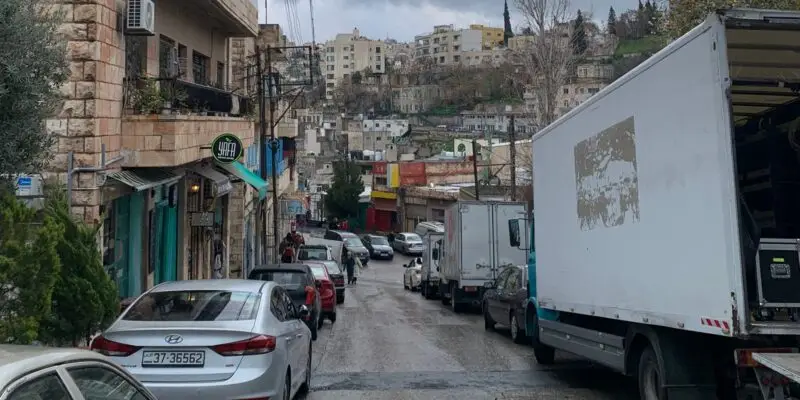
Luckily for me I dodged the carcass that I almost collided with while walking on the sidewalk. I did not think it was meant for me to run into but it was hanging in the middle of the sidewalk. The meat hanging from the ceiling by a chain looked like something Rocky would run up to at any moment and start punching. But it’s actually for sale. One day I will get up the nerve to try buying a hunk from the meat sack, but for now I will just try to dodge it.

Irbid, Jordan

Being partially adopted by a Jordanian family has shown me how important the family is in all aspects of life here. I had the opportunity to spend the weekend with a Jordanian family for my cultural class. While in the US families are usually spread out across the country or world in Jordan they are usually spread out on the same road in the same town or city (except for the token cousin who is somewhere in the US). A major difference between families in the US and in Jordan is the amount of time they spend together because of the importance of family. Because Friday is a day for the family Jordanians will spend the day with their close family as well as extended family gathering together eating, talking, and replacing drinking (as in the US) with shisha.

Irbid, Jordan

Five times a day the call to prayer echoes throughout every street and alley. Like the call to prayer the Islamic religion is echoed all around, in the language, the dress and everyday life. With my adopted family I had the opportunity to go to a Mosque service and experience what many Muslims do every Friday. Upon entering the Mosque my shoes came off but I was covered from head to toe with a coat as tall as me and a scarf wrapped around my head. While religions try to bring people together it was hard to feel this unity with the gender separation, which makes life here very different from the US.

Irbid, Jordan

A Jordanian Connection

Bookmark and Share
Written by Richard Hancock (University of Colorado – Denver),
CET Intensive Arabic Language Program in Irbid, Jordan, Student Correspondent, Spring 2013
Jordan, Irbid

Leaving the bustling music scene of Denver, CO I was initially worried about being homesick. However, after the first week of immersing myself in this unique culture it was easy to leave Denver behind. The only other culture shock I’ve experienced and can relate to is when I lived in a tent in the Rocky Mountain National Park for an entire summer. While living in the woods and living in Jordan are two very different settings I can relate the two by a principal I’ve always believed in. That is, being very open with people and making new friends. In my experience I can make friends with almost any person whether they are homeless or the opposite end of the spectrum.

Jordan, Irbid

By the end of the first week I had met a local Jordanian named Fuad. He came up to me and asked in Arabic, “Do you want to be friends?” Never have I been so lucky to make a friend like this because Fuad and I have become very close. At first we met in cafes and restaurants to get to know each other better. Then two weekends ago I went to his house for coffee and tea; the next day he invited me and a number of the people in the CET program to meet his entire family. We were all amazed with their beautiful house. I found the architecture with its ornamental arches and golden leaf chairs to be quite different than homes in the United States. This past weekend we all went to Fuad’s house to have a traditional meal called “mansef.” This was the first time I had ever eaten with my hands, aside from chicken wings, and it was very delicious.

Jordan, Irbid

When I first arrived on campus I realized my Arabic skills were sub-par to everyone else’s, however, after becoming friends with Fuad and consistently studying very hard I have quickly gained ground. This is why I believe the key to having a successful language and cultural study abroad experience is making a close connection with a local person(s). I believe I have marked the right impression on Fuad as a person and where I study because he is now in the process of applying to the University of Colorado at Denver. I am extremely thankful for making a connection like this because we will now always be friends.

Jordan, Irbid

Learning a City, Learning a People, Learning to Live

Bookmark and Share
Written by Haley Edwards (Western Kentucky University),
CET Intensive Arabic Language Program in Irbid, Jordan, Student Correspondent, Spring 2013

Jordan, Irbid
In a sun-lit office in Yarmouk University’s Archaeology and Anthropology building, my Archaeological History of Jordan professor said, “You will notice this: the call to prayer, and the bus schedule to Amman are the only things in Irbid that run on time.” This statement struck me as indicative of two things that are true about Irbid; the first being the exact sentiment of this bit of wisdom, and the second being the complete honesty and genuineness of the people here. Our professor was born and raised in Irbid, but lived in D.C. for a considerable chunk of her adult life. She’s got an insider’s perspective with empathy for the outsider point of view. And though not every person we meet has been to the States (in fact, a vast majority of them have not,) they all share this sense of honesty about Irbid, and to a larger extent, Jordan. When you strike a conversation with a man in the souq or a woman in a mat’aam, they say, “Welcome to Jordan.” If you reply with, “She is beautiful,” there follows always a sly look, an understanding of what you mean, of what this city is, and of what it means to live here. Often there is a chuckle or a retort: “sometimes.”

Jordan, Irbid

And I understand them, as do many of the students in this program. What they mean is not that Irbid is not beautiful, but that the sidewalk is pitted and broken, trash lines the streets and the alleys, traffic clogs the city, and it is, indeed, beautiful. This intimate knowledge and understanding of Irbid’s flaws and treasures defines our relationships with the people who live here. Irbid is a love shared between those who inhabit her. If you are quiet enough, if you listen and watch closely, it is in the fingers that thump apples in the fruit market across the street. It’s in the feet that navigate the broken tiles and pathways like lifelong friends. It is the flap of skirt-hem in the wake of a honking taxi passing too close for the comfort of some foreigners.

Jordan, Irbid

And we are certainly foreigners. In the first days after we arrived, we travelled in groups, drawing stares and laughter. But still, the city felt welcoming. “Ahlan wa Sahlan. Welcome, welcome.” Men came to doors and motioned us into restaurants and shisha cafes, they smiled at us, “come in, come in.” And even after only two weeks, we are on the cusp of letting the city envelop us. In respect of our language pledge, we politely decline what little English is offered to us, instead using our hands, working through communication with surprisingly helpful and patient people. Waiters will correct our pronunciation, store clerks teach us currency, making us repeat “Wahid dinar wa khamsa wa sittain” until it moves from our mouths smoothly. They reward us with smiles, “Mumtaaz!” These things, the unprompted friendliness and the hectic street song which will make itself home to us, are the treasures of Irbid.